PiCK
After $360 Million Exit, Seung-yoon Lee Makes Third Bet With Toss on AI Data
Summary
- Seung-yoon Lee said Poseidon has formed a partnership with Toss on a user-participation AI training data business, launching an experiment in a participatory data economy.
- Poseidon said it has built a structure to collect the first-person behavioral data essential for physical AI through the DATA network, the Numo mini app and a Task-to-Earn model, while providing transparent compensation.
- Poseidon said it aims to secure leadership in the physical AI era by supplying datasets to global frontier AI research labs, backed by a $15 million seed investment from a16z and partnerships including Oto on Hugging Face and Miso, a robotics data partner.
Forecast Trend Report by Period


Seung-yoon Lee’s AI venture Poseidon
Becomes Toss’s first AI partner for its 30 million users
Integrates data-collection mini app Numo
“We will lead the physical AI era”

Seung-yoon Lee, who sold web novel platform Radish to Kakao for about $360 million and later built blockchain project DATA, formerly Story, into a company valued at more than $2 billion, is now entering the AI training data market. It is the third major bet by the serial entrepreneur, who has raised money from Silicon Valley venture capital firm Andreessen Horowitz, or a16z, four times. For his first partner, he chose fintech super app Toss, which has 30 million registered users.
Lee is one of the most closely watched young founders in the startup industry in South Korea and abroad. While studying at the University of Oxford, he became the first Asian president of the Oxford Union debating society. After launching a media business, he entered the public spotlight with the Radish exit in 2021. This year, the World Economic Forum named him a 2026 Young Global Leader alongside Samsung Electronics Chairman Jay Y. Lee and Hyundai Motor Group Chairman Euisun Chung. More recently, he was invited as a key speaker, alongside Dunamu Chairman Song Chi-hyung, to a cryptocurrency-related event hosted by US President Donald Trump.
Testing a participatory data economy with Toss’s 30 million users
Lee merged DATA with Kled, a data company backed by investors including LVMH and Waymo founders, and handed management of the foundation to a new leadership team led by Chief Executive Officer Andrea Muttoni. Kled founder Avi Patel will serve as chief data officer. Lee will remain a strategic adviser on data while moving into the roles of chief strategy officer and chairman at Poseidon, where he will lead the new business directly.
The goal is to build a model that goes a step beyond Scale AI, the data-labeling company Meta acquired for $28.8 billion. As his first move as Poseidon’s CSO, Lee struck a partnership with Viva Republica, the operator of Toss, on a user-participation AI data business. It is Toss’s first collaboration in Web3 and AI data.
At the center of the partnership is an effort to build a participatory data economy that returns the value of data, long concentrated in large platforms, to users. The aim is to create a system in which users directly provide data needed for AI training and receive transparent compensation in return. The two companies will launch Poseidon’s data-contribution app, Numo, as a mini app within Toss.
Data collection will be carried out only with prior consent. The service will run on a task-to-earn model in which users choose assignments they want to complete. Those tasks could include recording speech in the Gyeongsang dialect, filming themselves washing dishes with both hands, or uploading photos of damaged roads. Users will receive preset rewards after data quality is verified.
Poseidon will use the DATA network to track the source of each dataset and the value of each contribution without tampering. Toss will handle user verification and settlement, supporting a structure in which the value of contributed data is compensated transparently. Toss also plans to review, in stages, links to next-generation Web3 infrastructure such as crypto wallets, stablecoins and payment networks, depending on the regulatory environment.
First-person behavioral data is key to physical AI; Korea seen as an ideal test bed
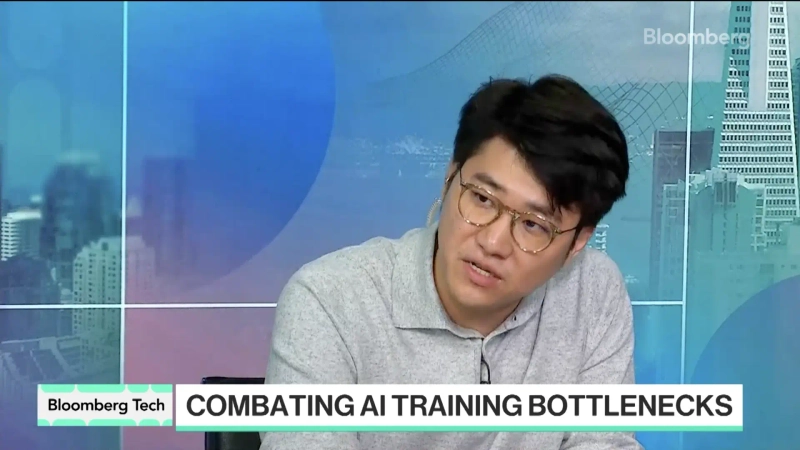
Poseidon is primarily targeting physical AI fields such as robotics and autonomous driving. Unlike generative AI, which centers on text and images, physical AI must move and make decisions in real-world environments. That makes first-person behavioral data — covering how people walk, pick up objects and drive — a core resource. It is an area that cannot be reproduced with synthetic data or gathered from the internet without permission. Nvidia Chief Executive Officer Jensen Huang has said that “the ChatGPT moment for robotics has arrived” and that the biggest bottleneck in building physical AI is data.
Poseidon and Toss view South Korea as an ideal test bed for collecting such physical AI data. They say the country’s advanced urban infrastructure and high smartphone penetration should allow first-person daily-life data to be collected quickly and at scale. They also see strong synergy with South Korea’s manufacturing and robotics base, including Hyundai, Samsung and LG.
The two companies plan to expand the model globally after validating it in South Korea. Chang-hoon Seo, a Toss executive in charge of new business, said demand for high-quality data is rising rapidly as the AI industry grows. Toss plans to make it easier and more natural for users to participate in the data economy while expanding structures that ensure the value they contribute is rewarded transparently.
Former NASA and Google executives join as Poseidon targets leadership in physical AI

Poseidon’s leadership team includes prominent figures from technology and academia. Sandeep Chinchali, a former NASA researcher and a professor at the University of Texas at Austin, joined as co-founder and chief scientific officer to oversee the technology. David Lee, who previously led Google’s international business operations, was named president. The company also secured a $15 million seed investment from a16z, underscoring investor confidence in both its technology and business model.
The business is already gaining traction. Beyond Toss, Poseidon has added Oto, a voice-data app that drew attention on Hugging Face, and Miso, a robotics data partner, as it broadens its ecosystem. Based on that network, it is already supplying refined datasets to major frontier AI research labs globally and generating revenue.
Lee said the model in which big tech companies take data without permission and use it for training is unsustainable because it runs into repeated limits, including copyright lawsuits. Poseidon will build infrastructure where lawful data can be traded and compensated, he added, with the aim of securing leadership in the physical AI era.

Doohyun Hwang
cow5361@bloomingbit.ioKEEP CALM AND HODL🍀