Conservative-Leaning US Supreme Court Blocks Trump on Birthright Citizenship While Advancing Broader GOP Agenda
Summary
- The US Supreme Court preserved birthright citizenship and ruled that President Donald Trump's executive order was unconstitutional.
- The court also issued conservative rulings by expanding the president's power to dismiss members of independent agencies and upholding limits on participation by transgender athletes.
- The court also effectively lifted restrictions on the use of campaign funds, allowing the Republican National Committee to sharply increase spending in the midterm elections.
Forecast Trend Report by Period


Trump policies, including his bid to curb birthright citizenship, face repeated setbacks
Court reaffirms citizenship based on birthplace
'Those born in the US can join the political community'
Campaign finance restrictions eased
Presidential power over independent agencies expanded
Rulings broadly favor Republican priorities
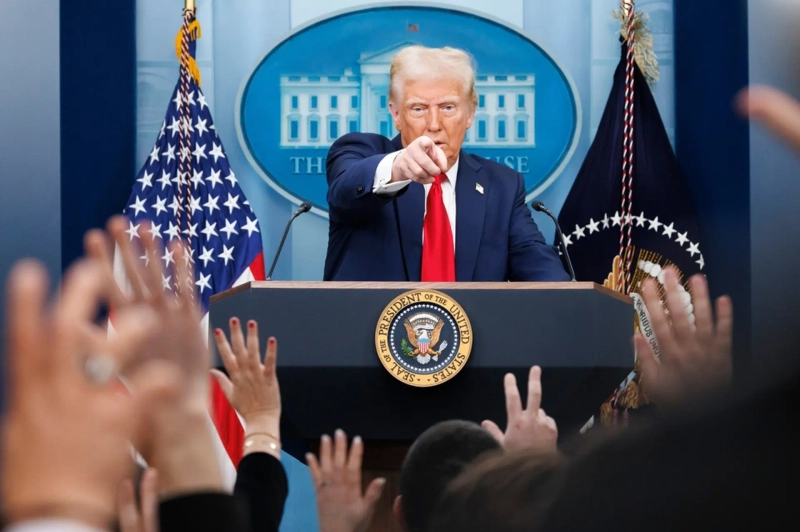
The US Supreme Court ruled on June 30 to preserve birthright citizenship, which automatically grants citizenship to children born on US soil. The court found that an executive order President Donald Trump signed in January last year, aimed at denying that right to children born to foreign parents without permanent residency, violated the Constitution. At the same time, the justices gave the president much broader authority to remove officials at key independent agencies. They also took a conservative stance by allowing restrictions on transgender athletes' participation in sports.
Court reaffirms birthright citizenship
The Supreme Court issued decisions on nine major cases over two days beginning June 29. The rulings came in a burst ahead of the court's two-month recess through August. The most closely watched was a 6-3 decision reaffirming the principle that citizenship is determined by place of birth.
Chief Justice John Roberts wrote that Trump's executive order violated the 14th Amendment, which says all people born or naturalized in the US are citizens regardless of their parents' origins or social status. He added that the amendment promised citizenship to all people born free in the country so they could participate in the political community. "Today, we keep that promise."
The court's three liberal justices joined Roberts, Amy Coney Barrett and Brett Kavanaugh in the majority. The ruling amounted to a rebuke of Trump, who has often used court appearances, including attending arguments in person, to bolster his political standing. Trump later said Congress could effectively nullify birthright citizenship through legislation. Still, legislation that conflicts with the Supreme Court's ruling would face long odds in Congress.
Election rulings favor Republicans
Other decisions reflected a broader conservative shift. The ruling on transgender athletes underscored the limited support for issues championed by Democrats and the broader left. The court held that West Virginia and Idaho were justified in barring transgender women from competing in women's sports. Kavanaugh, who has long worked as a women's basketball coach, wrote that allowing transgender athletes to compete would displace or disadvantage female athletes. "We cannot ignore the hard realities of sports."
The expanded presidential power to dismiss members of independent agencies pointed in the same direction. The court sided with Trump in a case involving his removal of Rebecca Kelly Slaughter, a Democratic commissioner at the Federal Trade Commission. The ruling overturned a 91-year-old precedent and sharply strengthened executive branch influence over more than 20 independent agencies modeled on the FTC.
The court also handed down several politically sensitive rulings ahead of the November midterm elections. Republicans had argued that a Mississippi law allowing mail ballots to be counted if they arrive within five business days after Election Day was unconstitutional. The court rejected that challenge. But several other rulings could help Republicans. Most notably, the justices allowed Alabama to use congressional district maps in this year's midterm elections even though lower courts had found them racially discriminatory. The decision followed the court's April ruling refusing to recognize a minority-majority district in Louisiana, extending its conservative approach to protecting minority voting rights.
The court also effectively loosened restrictions on how money can be used in federal election campaigns. Under current rules, a candidate can receive no more than $7,000 from an individual donor. Parties can raise money separately, but there had been major limits on how those funds could be spent. The system had been viewed as more favorable to Democrats, who rely more heavily on small-dollar donors, than to Republicans, who have more large contributors. The ruling means the Republican National Committee, which already has substantial funds on hand, can sharply increase spending in the midterm elections, the New York Times and other outlets reported.
Lee Sang-eun, Washington correspondent, Hankyung.com selee@hankyung.com

Korea Economic Daily
hankyung@bloomingbit.ioThe Korea Economic Daily Global is a digital media where latest news on Korean companies, industries, and financial markets.