PiCK
South Korea’s Government, Parliament Push to Speed Second-Phase Digital Asset Legislation
Summary
- The government and parliament said they have formed a consensus on the need to speed up second-phase digital asset legislation in the second half of the year.
- Rep. Lee Jung-moon said stablecoins, tokenized securities (STO) and real-world asset tokenization (RWA) are creating a new financial order and stressed the need to complete the delayed second-phase framework.
- Vice Chairman Kwon Dae-young said South Korea should broaden corporate and financial institutions’ participation in the virtual asset business and accelerate a comprehensive law including stablecoins to lead the market with the K-brand.
Forecast Trend Report by Period


Digital Asset Investment Insight Forum 2026
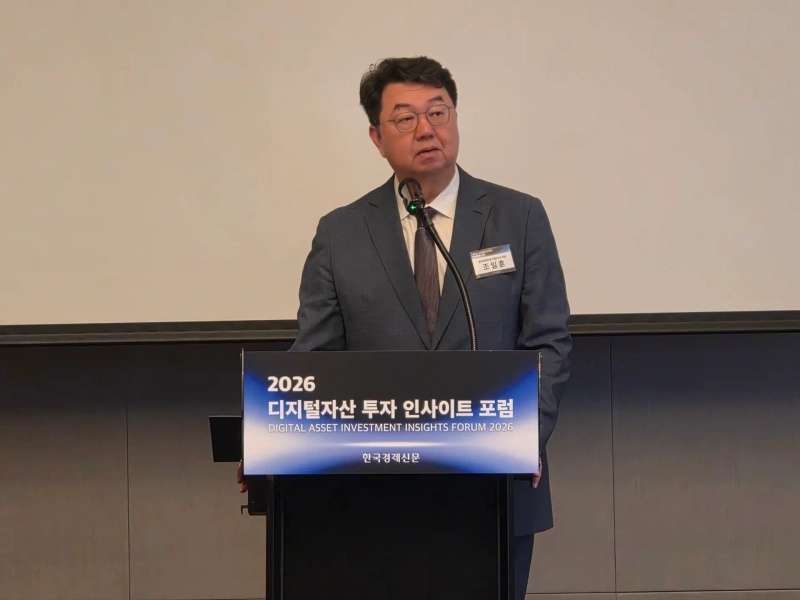
South Korea’s government and parliament have reached a consensus on the need to accelerate second-phase digital asset legislation in the second half of this year, as policymakers move to fully institutionalize the sector and foster industry growth.
Media executives, policymakers and financial regulators attending the Digital Asset Investment Insight Forum 2026 at the Conrad Seoul in Yeouido on July 2 emphasized the digital-asset market’s rapid shift and the need to move faster on building a regulatory framework.
Cho Il-hoon, chief executive of the Korea Economic Daily, said in opening remarks that digital assets are driving sweeping changes across global financial markets.
“Just a few years ago, digital assets were only of interest to a limited group of investors, but the situation has now changed completely,” he said.
He pointed to stablecoins in particular as an increasingly viable tool for payments and remittances. Major economies in the U.S., Europe and Asia are also treating digital assets as a future growth engine, he added.
Cho said the priority now is to consider how digital assets will reshape the future and spur innovation while also protecting investors and building a balanced regulatory framework. He added that creating an ecosystem where industry and technology can grow together is essential, and that the forum was part of that effort.
Lawmaker Urges Faster Second-Phase Rules to Boost Financial Competitiveness
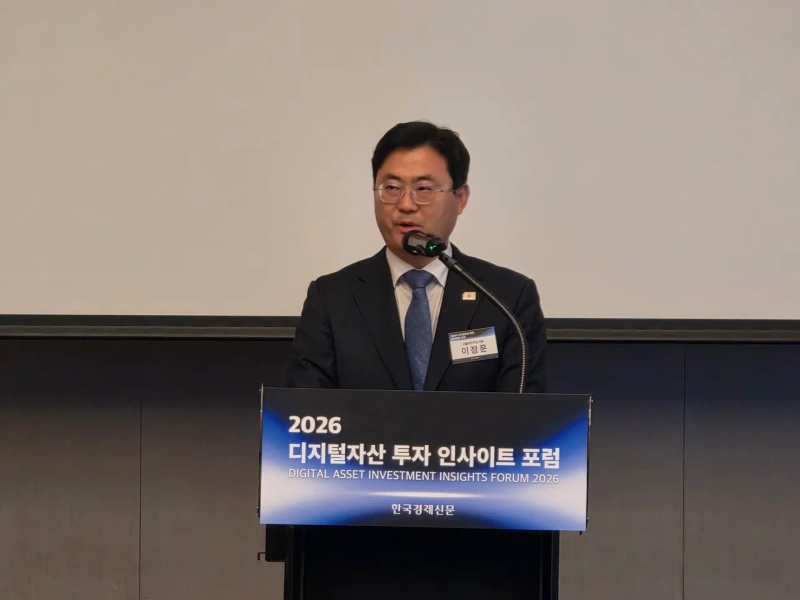
Lee Jung-moon of the Democratic Party said in congratulatory remarks that digital assets including stablecoins, tokenized securities and real-world asset tokenization are no longer limited to experiments in niche areas.
They are already changing payments, remittances, asset distribution and corporate fundraising in the real economy, while helping shape a new financial order, he said.
Lee said institutionalizing digital assets is central to national financial competitiveness. South Korea established a basic framework through the Virtual Asset User Protection Act, but has yet to complete a second-phase system covering the market as a whole, he added, expressing regret over the legislative delay.
Lee previously led legislative discussions as head of his party’s digital asset task force. He pledged continued support even after his standing committee assignment changed from the Political Affairs Committee to the Culture, Sports and Tourism Committee.
“If the government and relevant agencies take a more forward-looking stance and the National Assembly adds legislative efforts, delayed discussions can gain new momentum,” Lee said.
“Innovation can continue only within trust,” he added. “I will continue to support efforts to build an institutional foundation that balances innovation, stability and user protection so digital assets can move beyond a temporary investment boom and take root as a growth engine for finance and industry.”
FSC Vice Chairman Backs Broader Corporate Participation, Faster Comprehensive Law
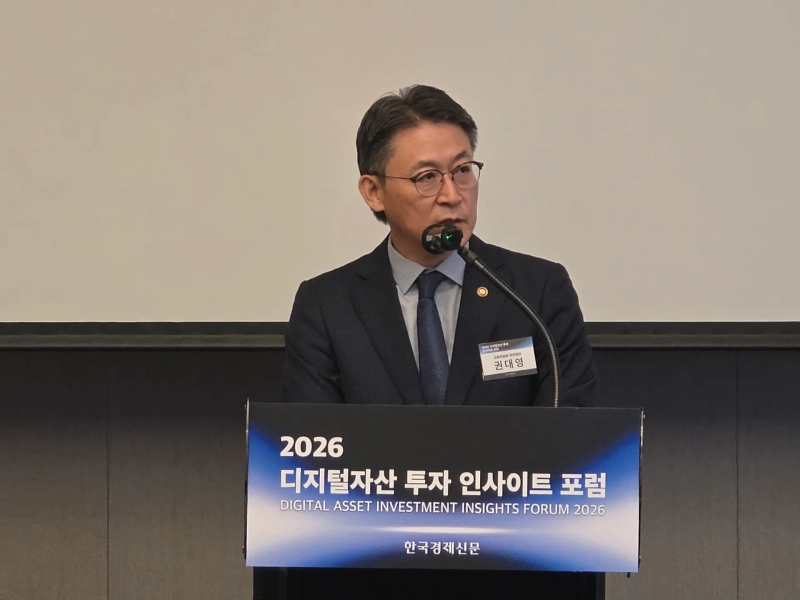
Kwon Dae-young, vice chairman of the Financial Services Commission, said South Korea may be at a turning point as the country faces a key test in institutionalizing digital assets.
The market is expanding beyond retail trading, with more corporations and financial firms seeking to participate directly in the business and to issue and distribute financial products, he said.
Kwon said fiat-backed stablecoins warrant particular attention. As programmable money, they are drawing interest for practical uses including conditional payments and fund settlement, he said, adding that activity around stablecoins has picked up sharply among financial institutions and global companies alike.
He identified trust, regulatory compliance and safety as core preconditions for industry growth. Legislative efforts in major jurisdictions, including the U.S. CLARITY Act, the European Union’s Markets in Crypto-Assets regulation and sandbox programs in Hong Kong and the U.K., are also focused on preserving innovation while securing trust and stability, he said.
Kwon also signaled the government’s willingness to move quickly on a comprehensive law.
“We need to accelerate legislation that covers the industry, the market and users,” he said. “There is also a need to remove uncertainty surrounding the direct and indirect participation of financial companies and corporations in the virtual-asset market and improve predictability.”
To that end, the government plans to gather market views through a private-sector stablecoin consultative body and the Virtual Asset Committee and reflect those views in the institutional framework.
Kwon added that linking the now fundamentally changed value of the “K-brand” with the digital-asset industry could create substantial real-world cases. The government will do its best to ensure that this trend becomes a path for South Korea to lead the digital-asset industry, he said.

Doohyun Hwang
cow5361@bloomingbit.ioKEEP CALM AND HODL🍀