KakaoPay CEO Says Company to Build ‘Super Wallet’ for Digital Assets
Summary
- Shin Won-keun, CEO of KakaoPay, presented on-chain finance as a core trend in global financial markets and said the company will build a super wallet that holds stablecoins and tokenized assets.
- He said South Korea ranks among the world's highest in stablecoin usage and that tokenized assets are rapidly expanding their role within traditional financial markets.
- Shin said global financial firms including Visa, Mastercard, Citibank and Circle are investing in on-chain financial infrastructure, and added that KakaoPay's blockchain infrastructure buildout and legal frameworks such as the Digital Asset Basic Act will determine national competitiveness.
Forecast Trend Report by Period


Digital Asset Investment Insights Forum 2026
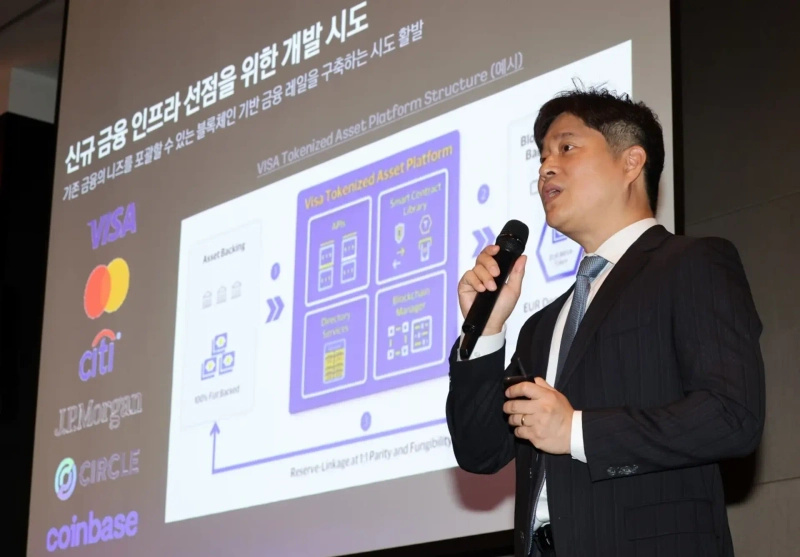
"The biggest change in global financial markets today is on-chain. The shift toward trading every valuable asset on blockchain networks has already spread across the broader financial industry."
KakaoPay Chief Executive Officer Shin Won-keun made the remarks at the Digital Asset Investment Insights Forum, or DAIF 2026, held at the Conrad Seoul in Yeouido on July 2. He described on-chain finance as a core trend in global markets and said KakaoPay plans to compete in next-generation financial platforms by building a "super wallet" that can hold stablecoins and tokenized assets.
Shin identified stablecoins, tokenized assets and financial infrastructure as the areas where on-chain innovation is moving fastest.
Global stablecoin market capitalization has expanded to about $347.8 billion, while monthly transaction volume has topped $724.6 billion, he said. Even excluding the 2021 cryptocurrency boom, market turnover has continued to increase.
He also highlighted South Korea's high level of adoption. Based on 2024 data, stablecoin circulation as a share of gross domestic product was 1.1 in the U.S. and 3.2 in South Korea, according to Shin. Excluding exceptional emerging-market cases such as Venezuela and Ukraine, South Korea is at the top tier globally in stablecoin usage, he said.
Shin said asset tokenization is also spreading quickly. BlackRock launched BUIDL, a tokenized money market fund, and is using it as collateral and as an underlying asset for other financial products. Tokenized assets are rapidly broadening their use within traditional financial markets.
In global markets, tokenized stocks can already be traded around the clock through Telegram wallets, he said. Companies are also focusing on infrastructure that connects legacy financial networks with blockchains.
Competition among global financial firms to secure on-chain infrastructure is also intensifying. Visa, Mastercard, Citibank and Circle are actively investing in the sector, Shin said. KakaoPay is preparing its own "super wallet" to make stablecoins and tokenized assets easier to use.
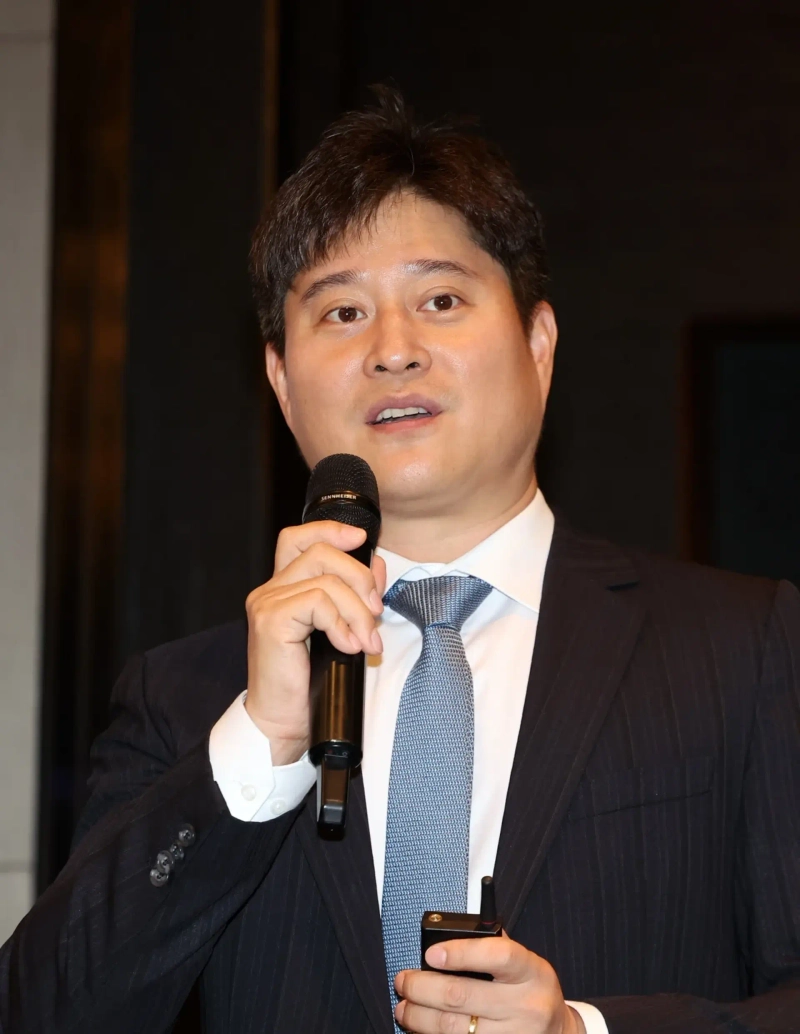
The goal is to connect remittance, payment and financial services used by 40 million people with stablecoins so users can access them conveniently without needing to think about blockchain technology, he said. KakaoPay plans to maximize accessibility and usability around the KakaoPay wallet built into KakaoTalk.
To do that, KakaoPay is building blockchain infrastructure and establishing interoperability with existing financial companies and stablecoin service providers. Shin cited Dunamu's Kiva Chain and Hashed Open Finance's Maru Chain as representative domestic blockchain infrastructure examples, adding that South Korea is steadily building the capacity to compete globally in infrastructure.
Still, he said rapid legal and institutional preparations are essential for on-chain finance to reach full mainstream adoption. As new technology is applied to finance, stability and security matter above all, he said. Institutional frameworks, including the Digital Asset Basic Act, or second-stage legislation, need to be put in place quickly to support that.
Shin said ongoing policy discussions on stablecoins and security tokens, or STOs, should soon create a firmer foundation for business. How quickly asset tokenization is brought into the regulated system will determine national competitiveness in global finance going forward, he added.
Hwang Du-hyeon, Bloomingbit reporter / Oh Yu-rim, Bloomingbit reporter

Korea Economic Daily
hankyung@bloomingbit.ioThe Korea Economic Daily Global is a digital media where latest news on Korean companies, industries, and financial markets.