Korbit Research Head Says Asset Tokenization Is Irreversible, Urges Faster Push on Won Stablecoins
Summary
- Kim said the tokenization of assets and the shift of finance on-chain are irreversible, and that South Korea should move quickly to build a won stablecoin ecosystem.
- He said Bitcoin prices have become directly tied to macro factors such as the Federal Reserve, the Trump administration’s tariff policy, and asset tokenization since the approval of spot ETFs.
- Kim said that as the US fosters a stablecoin ecosystem and boosts demand for US Treasuries, South Korea risks losing domestic investment capital overseas if it falls behind on won stablecoins and leveraged investment because of regulation.
Forecast Trend Report by Period


Digital Asset Investment Insight Forum 2026
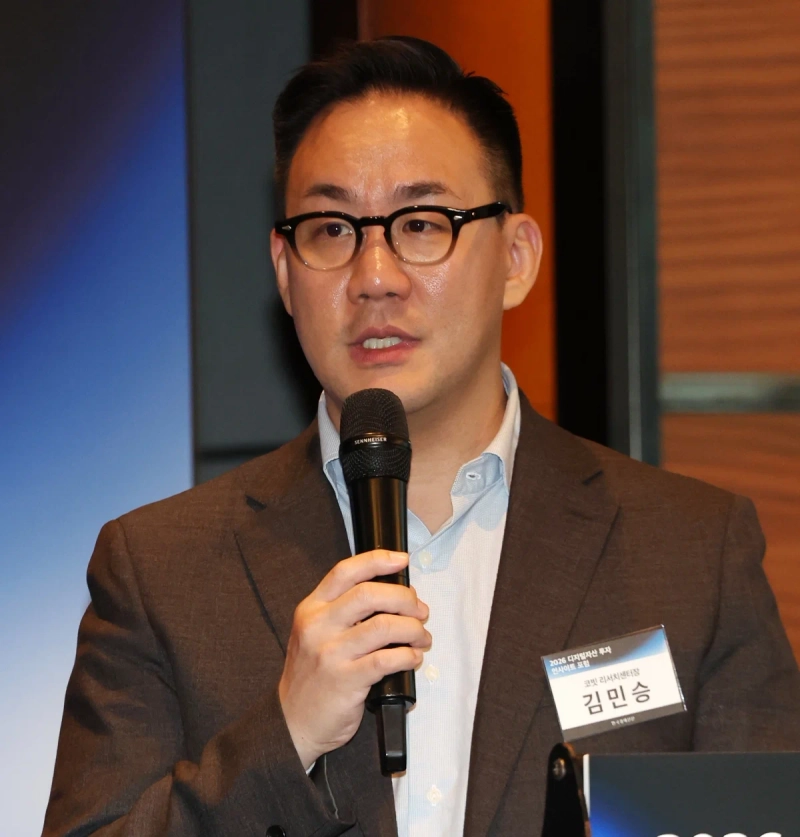
“The tokenization of assets and the migration of finance on-chain are irreversible. South Korea needs to move quickly to build a won-denominated stablecoin ecosystem if it wants to avoid falling behind in the vast on-chain financial market led by the US.”
Kim Min-seung, head of research at Korbit, made the remarks on July 2 at the Digital Asset Investment Insight Forum 2026 at the Conrad Seoul in Yeouido. He warned that South Korea could see substantial domestic investment capital flow overseas if it remains hamstrung by regulation while the US moves at the national level to secure leadership in asset tokenization and stablecoins.
Kim said Bitcoin’s traditional four-year cycle is breaking down. Since the approval of spot exchange-traded funds, inflows from the stock market have made prices more directly responsive to macroeconomic variables such as Federal Reserve rate moves and tariff policies under the Trump administration. The biggest force driving the digital-asset market now is the US-led migration of finance on-chain and the tokenization of assets, he added.
He described on-chain finance as the trading of real-world assets such as stocks, bonds and gold on blockchain. The on-chain real-world asset market is currently valued at $30 billion. About half of that consists of US Treasuries, but stock tokenization will drive the market’s expansion going forward, Kim said.
He said investors should pay close attention to Depository Trust & Clearing Corp., the largest securities depository and clearing institution in the US, as it begins a full-scale push into stock tokenization this month.
“Stock tokens created by existing crypto exchanges were merely derivatives without voting rights or dividends,” Kim said. “DTCC’s tokenization effort, by contrast, is a formal institutional service based on a no-action letter from the US Securities and Exchange Commission. If the service, which includes participants such as Nasdaq and BlackRock, officially launches in October, it will usher in the era of tokenized securities.”
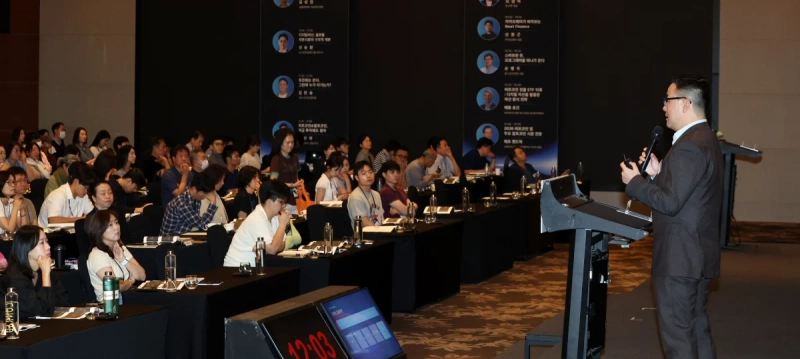
Kim also said the US public and private sectors are pursuing a so-called super-app ecosystem where all assets can be traded in one place. With strong backing from the Trump administration, the SEC, Coinbase and BlackRock are all fully committed to expanding capital markets through tokenization, he said.
“The US is serious about fostering a stablecoin ecosystem because it ultimately wants to preserve dollar hegemony,” Kim said. “As assets trade around the clock in on-chain markets, demand for stablecoins will surge. That, in turn, directly increases demand for US Treasuries, which serve as reserve assets for those stablecoins.”
He added that while the global financial market is rapidly being reorganized around on-chain infrastructure, South Korea remains trapped by outdated regulation.
“South Korea still blocks perpetual futures trading and leveraged investment, and demand for those products has already shifted in large volume to overseas exchanges,” Kim said. “Even triple-leveraged products tied to South Korean stocks are trading on Binance with 50x margin, and won-based stablecoins are already being created and circulated overseas.”
“In this sweeping shift of finance on-chain, won stablecoins should be at the core, yet there has not even been a proper discussion,” he said. “South Korea needs to seriously consider how its market will be affected once the US-led on-chain financial market opens on a large scale.”
Hwang Doo-hyun, Bloomingbit reporter / Oh Yu-rim, Bloomingbit reporter

Korea Economic Daily
hankyung@bloomingbit.ioThe Korea Economic Daily Global is a digital media where latest news on Korean companies, industries, and financial markets.