Samsung Electronics 2Q Operating Profit Estimate Cut 10% on Bonus Costs, Korea Investment Says
Summary
- Korea Investment & Securities said it cut Samsung Electronics' second-quarter operating profit estimate by 10% to reflect compensation costs while maintaining a buy rating.
- The firm said it raised its target price for Samsung Electronics by 4% to 590,000 won and lowered its annual operating profit estimates for this year and next by 4% and 5%, respectively.
- It said the company's fundamentals remain solid, citing an expected recovery in HBM competitiveness, a pricing edge in memory, and the potential to lead the industry in HBM revenue and operating profit.
Forecast Trend Report by Period


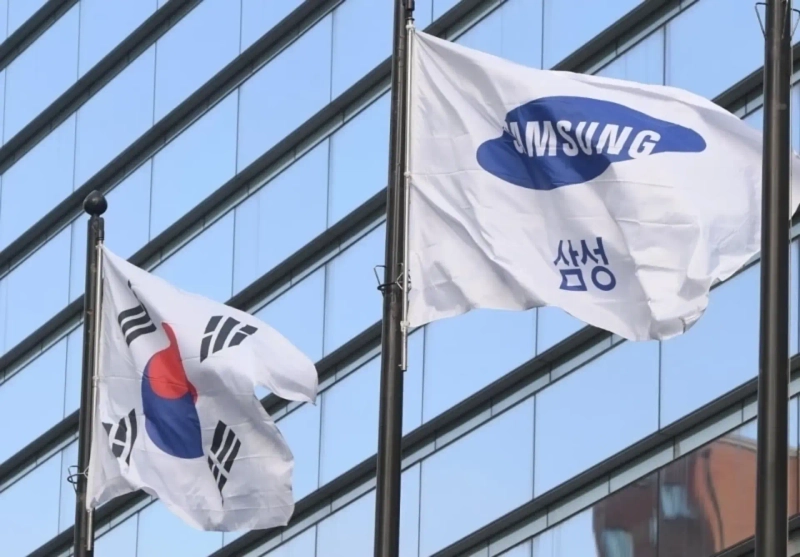
Korea Investment & Securities said on July 3 that it lowered its estimate for Samsung Electronics Co.'s second-quarter operating profit by 10% to 8.6 trillion won ($6.2 billion) to reflect compensation costs. The brokerage raised its target price by 4% to 590,000 won and kept its buy rating, citing an expected recovery in the company's competitiveness in high-bandwidth memory, or HBM.
Analyst Chae Min-sook projected second-quarter revenue of 17.87 trillion won ($12.9 billion) and operating profit of 8.6 trillion won ($6.2 billion), broadly in line with the market consensus of 8.5 trillion won ($6.1 billion). She said 1.8 trillion won ($1.3 billion) in additional employee compensation agreed in labor talks in May was deducted from second-quarter operating profit. For the full year, the company reflected a total 4.7 trillion won ($3.4 billion) deduction from operating profit.
Based on those changes, Chae cut her annual operating profit estimates for Samsung Electronics by 4% for 2026 and 5% for 2027, from 37.7 trillion won ($27.2 billion) and 57.3 trillion won ($41.4 billion), respectively.
She said the latest earnings revision stemmed from the early accounting recognition of stock compensation costs and was unrelated to the company's fundamentals or the outlook for the memory cycle.
Chae also projected a recovery in Samsung's HBM competitiveness and said the company should maintain an edge in memory pricing.
Samsung is strengthening its partnership with Google while using its ultrafast HBM4 products to pursue both a larger share at Nvidia and a premium in average selling prices, she wrote. That, she added, should help the company preserve a pricing advantage over rivals.
From next year, Samsung is projected to lead the industry in both revenue and operating profit for commodity DRAM as well as HBM, according to Chae. She also said the company would face a limited technological burden in migrating to new products because it plans to keep using sixth-generation 1c DRAM and a 4-nanometer base die in HBM4E, the seventh-generation product, following HBM4.
Noh Jung-dong, Hankyung.com reporter dong2@hankyung.com

Korea Economic Daily
hankyung@bloomingbit.ioThe Korea Economic Daily Global is a digital media where latest news on Korean companies, industries, and financial markets.