Kospi Swings Jolt Retail Investors as Fund Manager Lays Out July Strategy
Summary
- He said forced selling and portfolio rebalancing by foreign investors may gradually subside in July, raising the possibility of some renewed buying in Samsung Electronics and SK Hynix.
- He said expectations are rising for unprecedented shareholder returns and a stock rerating, driven by high dividends and large-scale share buybacks based on the two Korean chipmakers’ free cash flow (FCF).
- He said profits tied to core AI infrastructure such as memory, power equipment, cooling equipment and communications gear are poised to rise as AI infrastructure expands, while selective stock picking and cash allocation adjustments will be important after the sharp surge in the index.
Forecast Trend Report by Period


Kim Young-min, Chief Executive Officer of Taurus Asset Management
This article appeared on Korea Economic Daily’s paid investment platform, Hankyung Premium 9 (www.hankyung.com/premium9). Subscribers to Hankyung Premium 9 can access more expert investment columns.

Technology Stocks Enter a Correction
South Korea’s stock market unexpectedly doubled in the first half, leading a rerating of Asia’s technology hardware shares alongside Taiwan, where equities gained more than 50%. Japan also rallied, with the Nikkei 225 — where technology stocks account for 40% — climbing 40%.
By contrast, offshore Chinese equities and markets in India, Singapore and Indonesia remained in decline. At the same time, Apple announced a 20% increase in iPad and MacBook prices, citing a sharp rise in memory prices, while Microsoft said it would raise software fees by 15%. That added to concerns that surging memory prices could weaken demand.
US megacap technology stocks then fell sharply. As major buyers came under pressure, companies selling high-priced products also struggled to sustain gains amid expectations of softer demand. The result has been declines in Samsung Electronics, SK Hynix and Micron. The focus now is on how much further technology shares may fall, how long the downturn may last and how the next rebound could develop.
A Rebound in Neglected Stocks
The recent concentration in semiconductor shares reflects a simple divide. Earnings in other sectors have been sluggish, while profit estimates for chipmakers have continued to rise. The launch of single-stock leveraged products in late May intensified that concentration.
Semiconductors now account for nearly 55% of Kospi market capitalization. When foreign funds exceed their maximum permitted weighting in a single stock, they must cut positions automatically, and those sales can deepen declines. Starting in July, if South Korea’s National Pension Service turns holdings above 28.8% into sell orders as the index rises, that trend could persist a little longer.
The more attractive targets are neglected stocks with sound balance sheets and solid earnings outlooks that were sold simply because of the market’s concentration in semiconductors. Companies staging only technical rebounds after a long slide, however, have limited scope for earnings improvement, making a sustained uptrend harder to establish.
Why Foreign Investors Sold 180 Trillion Won
Foreign investors sold 60 trillion won of South Korean stocks in June, bringing cumulative net sales since the start of the year to 180 trillion won. Retail investors and exchange-traded funds run by financial institutions have absorbed that supply.
The paradox is that overseas investors kept selling even though Korean listed companies have outpaced peers in other markets on both earnings growth and earnings scale. The core driver is portfolio rebalancing. In effect, funds have been forced to trim holdings that exceed active-management limits.
European funds follow the 5/10/40 rule, while US funds often apply the 5/10/50 rule. A single-stock limit is typically 5%, though holdings can rise to 10% under special circumstances. If the combined weight of stocks held above 5% exceeds 40% or 50%, funds generally must reduce those positions by around quarter-end.
Asian funds managed in Europe and the US have had little choice but to cut exposure because Samsung Electronics, SK Hynix and TSMC have become too large within their portfolios. Samsung Electronics and SK Hynix, whose weightings have surged recently, have been the main selling targets.
With the third quarter beginning in July, that forced selling may gradually run its course, and benchmark rebalancing may also be close to completion. The recent pullback and higher earnings estimates could also draw some foreign buying. Even so, domestic retail investors and ETFs are still likely to remain the main buyers of the two companies.
Liquidity Conditions Around US Stocks
US equity funds posted outflows last week for the first time in a while. A key reason was the pullback in the Magnificent Seven, which had fallen more than 15% on average from their peaks as investors questioned near-term profitability amid heavy capital spending and stock and bond issuance.
Even with profits rising at US companies, money has been moving toward opportunities in Asian semiconductor firms and in European consumer and banking shares. Another source of pressure is coming from supply. Shares released from lockup at SpaceX, where only 4% of stock is currently in circulation, are due to reach the market at the end of July. If Anthropic follows with an initial public offering in the fourth quarter, that could add meaningful pressure on equities.
One offset is that OpenAI’s IPO has been delayed until next year, easing some of that supply burden. If inflation cools and the rate backdrop shifts from hikes to cuts, markets may stabilize around the US midterm elections. Before then, summer is more likely to carry a risk-off tone. Even so, the US government is unlikely to tolerate a sharp market decline ahead of the midterms.
Record Shareholder Returns From Samsung Electronics and SK Hynix
Over the next three years, shareholder returns at South Korea’s two leading memory-chip makers are projected to reach about 50% of free cash flow. Based on a scenario that assumes a 25% dividend payout ratio to reflect separate taxation benefits under commercial law, with the remainder used for buybacks, the scale of capital returns can be estimated.
Samsung Electronics is projected to generate about 300 trillion won in free cash flow in 2026. That implies roughly 75 trillion won in dividends and another 75 trillion won in share buybacks. There is another potential catalyst as well. If 10.5% of the expected 1,200 trillion won in operating profit over three years is paid as stock-based bonuses, the after-tax effect would amount to additional buybacks of about 80 trillion won. With management performance expected to improve further after 2027, the synergy between shareholder returns and performance pay could become even stronger.
SK Hynix could also be headed for a record shareholder-return cycle. Of its projected 220 trillion won in free cash flow in 2026, about 55 trillion won may go to dividends and another 55 trillion won to buybacks. On top of that, a further 45 trillion won in share purchases could follow a future US ADR listing, lifting the total buyback amount to nearly 100 trillion won.
With earnings estimates for both companies rising sharply, the combination of aggressive dividends and large-scale buybacks is encouraging. It recalls the period when Nvidia and Apple drove sharp share-price gains during explosive earnings growth by pursuing major buyback programs. That supports the case for a strong rerating in South Korea’s semiconductor shares.
How to Use Single-Stock Leveraged ETFs
Single-stock leveraged ETFs that track twice the returns of market leaders such as Samsung Electronics and SK Hynix are amplifying volatility in South Korea’s stock market. Sixteen such ETFs, listed on May 27, saw assets under management jump more than threefold within a month to 16 trillion won from 5 trillion won.
Over the same period, 243 trillion won, equal to 35% of total ETF trading value, was concentrated in these products. That has triggered mechanical trading and undermined market stability. With the two companies accounting for a combined 55% of market capitalization and daily price swings easily exceeding 5%, conditions resemble those seen during the 2009 financial crisis. Periods of outsized declines driven by mechanical selling and foreign rebalancing may instead offer a medium-term buying opportunity.
Rotation Into Semiconductor Equipment Stocks
Long-term shortages in HBM and advanced DRAM are pushing memory makers toward massive capital spending. Samsung Electronics has finalized a 1,000 trillion won investment plan for the next decade, while SK Hynix has begun full-scale spending of more than 800 trillion won.
Even so, lead times for key components are lengthening, creating severe bottlenecks across the materials, parts and equipment supply chain. A cycle led by equipment shortages has now taken hold, effectively forcing the supply shortage to last longer.
Historically, semiconductor upcycles unfold with time lags based on the sequence of investment and equipment installation. When large-scale spending begins, manufacturers first direct money into front-end processes, where circuits are etched onto wafers. Orders for core front-end tools such as lithography, deposition and etching come first as factories are built, and shares tied to wafer-fab equipment have led this year’s rally.
Once front-end investment accelerates and production lines are completed, attention inevitably shifts to back-end packaging and test equipment used to improve yields. High-performance memory such as HBM requires multi-layer stacking and precise process control, making the later stages of production especially valuable. Indicators already point to a rebound in global back-end and test-equipment markets.
The sequential spillover from front-end strength into back-end and test-equipment value chains has repeated across past cycles. With structural change now driving the market, investors need a strategy that gets ahead of the clear relay rotation from front-end to back-end equipment names.
Department Stores and a Tailored Rerating Strategy by Commercial District
South Korea’s department-store industry has moved beyond a temporary recovery and into a phase of structural relay growth, with sales rising 17.4% in the first quarter and more than 20% in the second quarter. That steep trajectory reflects long-term growth in luxury demand from inbound foreign visitors, including Chinese tourists, centered on key shopping districts such as Myeong-dong and Busan.
Amid global geopolitical tensions, foreign spending redirected toward South Korea has become a powerful force in revaluing traditional prime retail districts. Another growth driver is the spillover from the semiconductor industry, where job creation and rising incomes in the so-called semiconductor belt are lifting sales of fashion and miscellaneous goods at nearby stores by double digits.
That means the investment approach should extend beyond the initial rebound in districts driven by foreign visitors. It should also focus on the broader spillover effect, with rising incomes in advanced industrial clusters translating into stronger sales at regional anchor stores. A long-term strategy that keeps monitoring the benefits from inbound tourism and the advanced-industry belt remains valid.
July Stock Strategy: A Pause, but the Core Theme Remains
The advance in Samsung Electronics, SK Hynix and Micron alone has given rise to the term “memory tax,” following “Nvidia tax,” and has become a heavy burden on the global economy. Shares of memory makers, which had risen too far and too fast, appear to have hit a short-term wall.
The stock market is driven by earnings, but no rally lasts forever. The correction in AI bottleneck beneficiaries that began in late June may be a necessary pause before another advance. High-quality stocks that were overlooked despite solid earnings may return to fair value first. After that, as the contours of the AI revolution become clearer, the AI value chain could resume its climb.
After such a sharp surge in the index, supply-and-demand dynamics will determine whether gains continue and at what pace. Investors need to watch for further foreign selling and consider the National Pension Service’s position-reduction environment. Both groups appear highly likely to cut positions mechanically if the index rises above 9,000 points because South Korea’s market has climbed so far.
Investors may already be accustomed to an 8,000-point index, but they should not ignore that the Kospi has risen more than 3.5 times in the 15 months since April 2025. Selective stock-picking and timely adjustments to cash holdings may become the key investment themes for the summer.
Even so, the core theme has not changed. The AI infrastructure supply chain remains the market’s strongest pillar. On a path where global token demand increases 24-fold by 2030, memory shortages are set to deepen again in 2027 and could remain severe through 2028 and, in some cases, into 2029 and 2030. That keeps the broader narrative intact for rising profits across AI-related infrastructure, including memory, power equipment, cooling equipment, communications gear and networks.
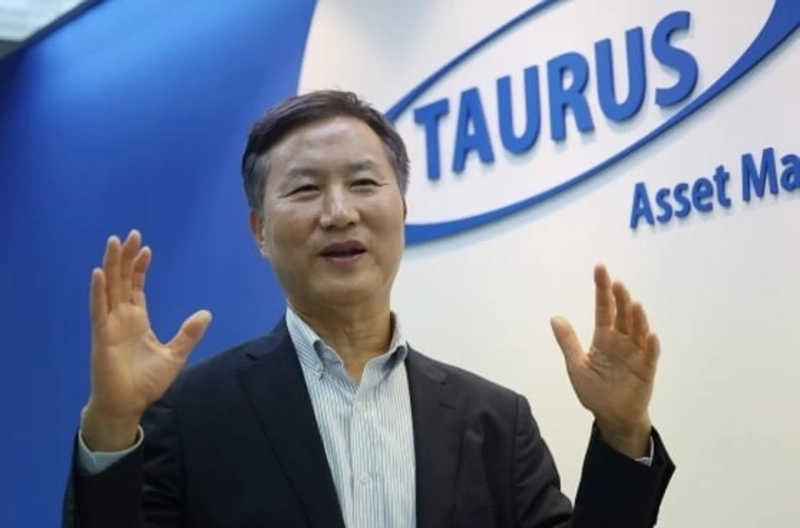
Kim Young-min, Chief Executive Officer of Taurus Asset Management

Korea Economic Daily
hankyung@bloomingbit.ioThe Korea Economic Daily Global is a digital media where latest news on Korean companies, industries, and financial markets.