South Korea’s Top Court Moves to Freeze Crypto Wallets Before Final Judgments
Summary
- The Supreme Court of Korea has issued advance notice of a partial revision to the Civil Execution Rules covering virtual assets, with full implementation planned for October.
- Under the revision, virtual assets including Bitcoin and rights to demand their transfer from exchanges and other custodians will be subject to compulsory execution, and any disposal will be barred once they are seized.
- Creditors will be able to freeze a debtor’s electronic wallet even before a final judgment through preservation measures, while illiquid assets may be exchanged into major virtual assets such as Bitcoin before being sold.
Forecast Trend Report by Period


Supreme Court Gives Advance Notice of Civil Enforcement Rule Revision
Full implementation planned for October
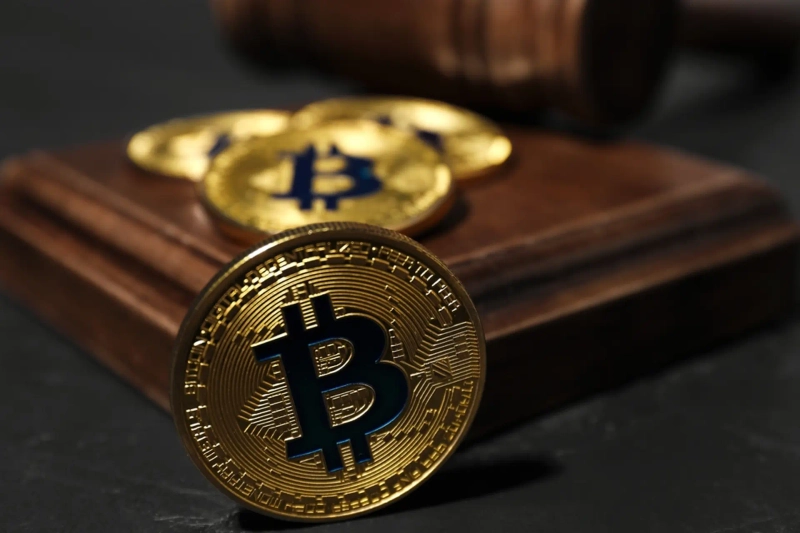
South Korea’s court enforcement framework for cryptocurrencies including Bitcoin is set to be codified under clearer rules that reflect how digital assets are traded and transferred.
The revision also introduces a supplementary process allowing assets that are difficult to convert directly into cash to be exchanged into heavily traded cryptocurrencies such as Bitcoin before being sold.
The Supreme Court of Korea gave advance notice on July 2 of a partial revision to the Civil Execution Rules that formalizes judicial enforcement procedures for virtual assets, according to the legal community on July 5.
The core of the proposal is to clarify that compulsory execution can apply not only to virtual assets held by a debtor, but also to the debtor’s right to demand their transfer from cryptocurrency exchanges and other custodians.
Under the revision, once a court orders the seizure of virtual assets, any disposal of those assets will be prohibited. Exchanges and other custodians must hand the assets over to an enforcement officer.
The legal effect of the seizure begins when the enforcement officer receives the virtual assets.
The proposal also details procedures for converting seized virtual assets into cash.
At a creditor’s request, a court may issue a transfer order handing the virtual assets directly to the creditor or order an enforcement officer to sell them.
The enforcement officer may open a dedicated account at an exchange, receive the assets there and sell them at market prices, or entrust the sale to the exchange.
If an asset has low trading volume and is difficult to liquidate, it may be exchanged into a major cryptocurrency such as Bitcoin and then sold.
The revision also establishes preservation measures, including provisional seizure and injunctions barring disposal, to prevent debtors from hiding or dispersing coins into other electronic wallets during litigation.
That gives creditors a legal basis to freeze a debtor’s electronic wallet even before a judgment becomes final.
The rules also set out follow-up procedures when an application for compulsory execution against virtual assets is withdrawn or when a decision canceling an enforcement process takes effect.
The Supreme Court said cases involving virtual assets in civil execution proceedings are increasing. The revision is intended to create procedures suited to the legal nature and trading structure of digital assets, unify enforcement practices across lower courts, and improve predictability and legal stability.
The National Court Administration plans to collect comments on the revision through Aug. 11 before putting it into full effect in October.
Park Sang-kyung, Hankyung.com reporter, highseoul@hankyung.com

Korea Economic Daily
hankyung@bloomingbit.ioThe Korea Economic Daily Global is a digital media where latest news on Korean companies, industries, and financial markets.