SpaceX Joins Nasdaq 100, Poised to Trigger Billions of Dollars in Buying
Summary
- SpaceX’s Nasdaq 100 inclusion is poised to bring billions of dollars in buying from index funds and ETFs.
- JPMorgan said SpaceX’s inclusion could draw $4.3 billion in passive inflows, while sales of other technology stocks to fund those purchases may increase Nasdaq 100 volatility.
- Goldman Sachs and Morgan Stanley assigned SpaceX top investment ratings and lofty price targets despite forecasts for steep losses and long-term negative free cash flow.
Forecast Trend Report by Period


Selling in other tech stocks to fund SpaceX purchases could add to Nasdaq volatility
Wall Street banks assign top ratings despite forecasts for steep losses
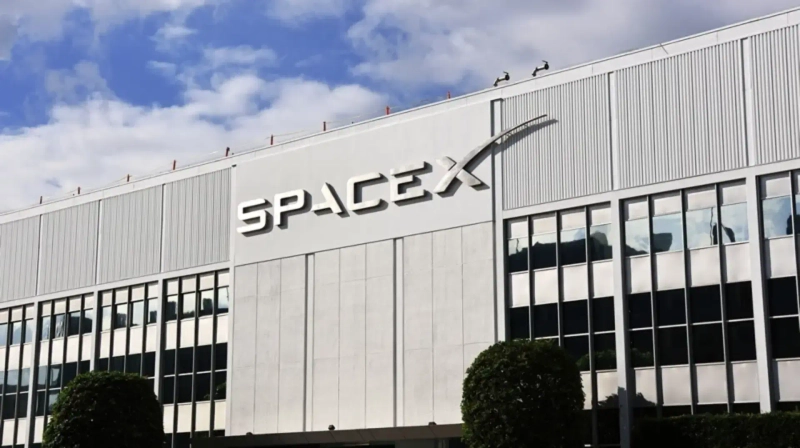
SpaceX’s addition to the Nasdaq 100 is poised to trigger billions of dollars of buying from index funds and exchange-traded funds that track the benchmark. Wall Street firms have also rushed to assign top ratings and bullish forecasts to the company, even as they project steep losses through at least 2031.
Despite that tailwind, SpaceX shares were trading at $158 in U.S. premarket trading on July 7, down 1.4% from the previous session. The stock fell 0.9% a day earlier.
Reuters and MarketWatch reported on July 7 that index funds and ETFs tied to the Nasdaq 100 would begin buying SpaceX shares that day to match the benchmark’s new composition. The move comes just 15 trading days after the company’s June 12 U.S. listing. It is the fastest such inclusion on record, enabled by a rule change Nasdaq pushed through ahead of the listing.
More than $587 billion is invested in funds that track the Nasdaq 100, including Invesco QQQ and QQQM.
JPMorgan estimated last month that SpaceX’s inclusion could draw $4.3 billion of passive inflows. That also means other Nasdaq 100 technology stocks may need to be sold to fund those purchases. Some analysts said that could make the Nasdaq 100 more volatile.
Goldman Sachs, Morgan Stanley, BofA Securities, Citigroup and JPMorgan, the banks that underwrote the IPO, began coverage of SpaceX on July 7 after the 25-day quiet period for underwriters expired. All assigned the stock their top ratings.
Goldman Sachs set a price target of $205. Morgan Stanley called the company “AI’s final frontier” and set a $300 target.
Goldman Sachs projects SpaceX will not turn free-cash-flow positive until 2031. The bank said revenue will double this year, while adjusted earnings before interest, taxes, depreciation and amortization will rise to $35.2 billion by the end of 2030 from $6.58 billion last year.
Morgan Stanley estimated adjusted EBITDA will reach $16.2 billion by 2029. It also projects free cash flow will remain negative until 2035.
Despite those long-term loss forecasts, both firms laid out valuation frameworks to support their price targets.
Morgan Stanley discounted cash flows from each business segment over 15 years and valued the company using what it described as a triangulation-and-support approach based on multiples. Goldman Sachs, by contrast, based its valuation on 2029 figures.
Morgan Stanley analyst Adam Jonas wrote that “space is hard.” He added that SpaceX’s outlook depends on several technologies that have yet to be commercially proven, including the fully reusable Starship rocket and orbital computing.
Goldman Sachs said SpaceX has built solutions once considered impossible. The bank also highlighted the company’s ability to provide a range of infrastructure-as-a-service products at low cost.
Banks outside the IPO syndicate, including RBC, Bernstein and Stifel, also assigned top ratings. They said Starship, SpaceX’s next-generation rocket, would drive the company’s broader ambitions.
Investors are betting SpaceX can quickly become a provider of ultra-fast AI infrastructure. They expect the company to invest cash generated from that business into developing the AI model Grok, allowing it to compete with OpenAI’s ChatGPT, Anthropic’s Claude and Google’s Gemini.
Investors also expect Starlink to expand its dominance in satellite communications, while viewing the company’s longer-term goals as dependent on the successful development of the next-generation Starship rocket.
Not all Wall Street analysts are bullish on SpaceX. Morningstar analysts said the company’s fair value is about $780 billion, less than half its current market capitalization. They cited uncertainty around its AI operations, including xAI, and the social media platform X.
SpaceX’s market capitalization stands at $2.1 trillion, making it the sixth-largest company in the US. Chief Executive Officer Elon Musk has become the world’s first quadrillionaire.
FTSE Russell added SpaceX to its US indexes last month. Funds including BlackRock’s iShares Russell 100 ETF use those benchmarks.
S&P Global has decided not to create a fast-track process like Nasdaq’s. SpaceX will therefore have to wait at least a year before it can be added to the S&P 500.
SpaceX shares have risen more than 6% since the listing, despite sharp volatility during their brief trading history.
Kim Jung-a, guest reporter

Korea Economic Daily
hankyung@bloomingbit.ioThe Korea Economic Daily Global is a digital media where latest news on Korean companies, industries, and financial markets.