US May Trade Deficit Widens to $77.6 Billion, Largest Since March 2025
Forecast Trend Report by Period


Oil exports rise, but imports of computer parts and data-center capital goods surge
Deficits with China, Mexico, Canada and Vietnam widen
Firms front-load imports amid war and uncertainty over Canada-Mexico trade arrangements
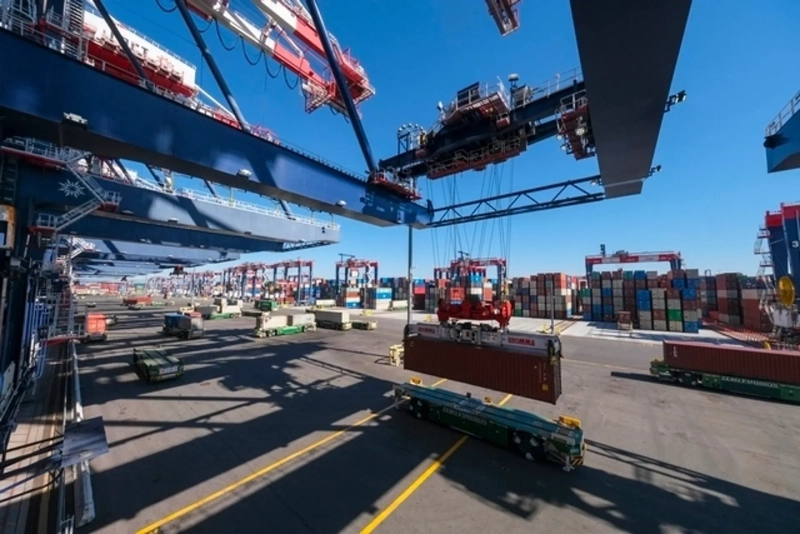
The U.S. trade deficit widened in May to its largest level since March 2025 as exports fell and imports rose. The increase partly reflected importers bringing shipments forward to build inventories amid the Iran war and uncertainty over trade arrangements with Canada and Mexico.
Data released by the U.S. Commerce Department on July 7 showed the goods and services trade gap rose 42.2% from a month earlier to $77.6 billion. Economists had expected a deficit of $78.4 billion in a Bloomberg survey and $78.5 billion in a Reuters poll. The shortfall was slightly smaller than forecast.
Exports fell 3.2% in May, led by a drop in volatile nonmonetary gold shipments. Imports rose 3.3%, supported by gains across a range of industries.
Oil exports continued to increase, and petroleum-product exports returned to prewar levels. Imports of semiconductors and computer parts tied to AI investment also rose again, while imports of computers and communications equipment declined.
Bloomberg, citing surveys of purchasing managers, said U.S. companies may have increased imports in May as they stockpiled goods ahead of possible war-related supply-chain disruptions and higher prices.
Higher exports of crude and petroleum products after the Iran war had helped offset a surge in imports of data-center-related capital goods such as semiconductors and AI servers, limiting the increase in the trade gap. In May, however, the deficit widened again.
The May trade data appear set to weigh on second-quarter gross domestic product. Before the release, the Atlanta Fed's GDPNow model showed net exports would subtract 1.62 percentage points from second-quarter GDP, larger than the 0.37 percentage-point drag in the first quarter.
While many of President Donald Trump's tariffs were ruled unconstitutional by the Supreme Court earlier this year, the administration is seeking other ways to impose duties on imports. The U.S. also recently decided not to renew its trade agreement with Canada and Mexico and instead shift to an annual review system, creating uncertainty for businesses.
In May, the U.S. goods trade deficits with Mexico and Canada both widened, as did its trade gap with China. The deficit with Vietnam, one of the main beneficiaries of supply-chain shifts away from China, also increased.
Adjusted for inflation, the real goods trade deficit widened to $100 billion in May, the largest since March 2025.
Kim Jung-a, guest reporter at Hankyung.com, kja@hankyung.com

Korea Economic Daily
hankyung@bloomingbit.ioThe Korea Economic Daily Global is a digital media where latest news on Korean companies, industries, and financial markets.