PiCK
Nasdaq Falls 1.3% as Samsung Slide Triggers Selloff in U.S. Chip Stocks
Forecast Trend Report by Period


Micron and Sandisk tumble 6%, 9%
Oil and Treasury yields rise after Iran attack on Qatari merchant ships
This article was published on Hankyung Global Market, South Korea’s largest platform for overseas investment information.
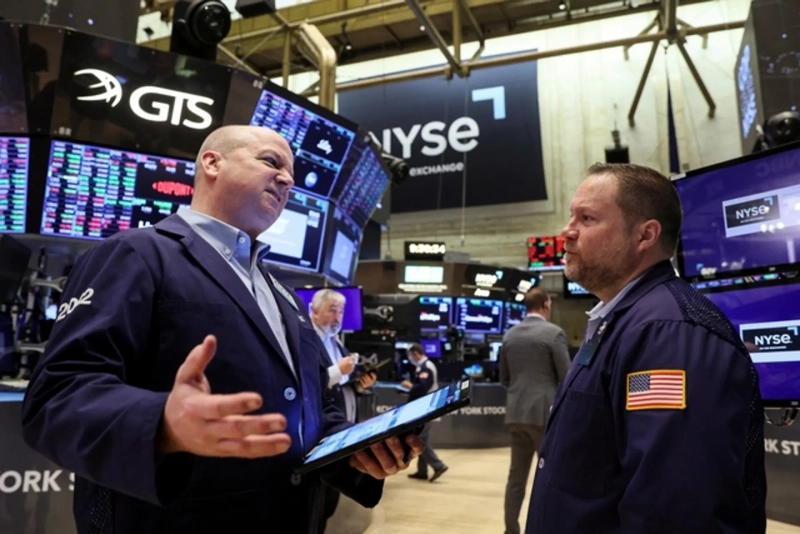
A slump in Samsung Electronics shares spread from Asia and Europe to Wall Street, dragging down semiconductor stocks after the South Korean company posted an 1,800% increase in net profit but still fell on concerns about capital spending and demand. Oil prices and U.S. Treasury yields also climbed after Iran launched a missile attack on Qatari merchant ships in the Strait of Hormuz.
The Dow Jones Industrial Average, which closed above 53,000 for the first time a day earlier, rose 0.2% shortly after the open and briefly hit another intraday record. By 10:15 a.m. in New York, it was down 0.1%. The S&P 500 fell 0.2% and the tech-heavy Nasdaq dropped 1.1%.
Micron and Sandisk fell 6% and 9%, respectively. Intel dropped 8.6% and Advanced Micro Devices lost 6.5%. The VanEck Semiconductor ETF fell more than 3%. Nvidia slipped 1.4% after news emerged that DeepSeek was developing its own AI chip.
Investors rotated into other parts of the U.S. stock market, including healthcare, financials and big tech. Eli Lilly rose more than 2%. JPMorgan Chase, Walmart and Microsoft, which had fallen more than 20% in the previous month, also advanced.
The pressure on artificial intelligence-linked shares started with Samsung Electronics. The company posted preliminary second-quarter operating profit of 89.4 trillion won, up 19-fold from a year earlier and more than 6% above consensus estimates. Even so, the stock fell 7% on concerns about capital spending and demand. The weakness spread to Japan’s Kioxia and to ASML, a European supplier to Samsung.
SpaceX fell 2% even after many Wall Street firms, including Morgan Stanley, assigned bullish ratings and price targets ahead of its inclusion in the Nasdaq 100.
Bloomberg said technology shares on the Nasdaq weakened as the selloff in semiconductor stocks tied to Samsung’s decline coincided with portfolio rebalancing by passive and active funds ahead of SpaceX joining the Nasdaq 100.
Six brokerages, including Morgan Stanley and Goldman Sachs, which underwrote the SpaceX listing, issued positive research views equivalent to buy ratings on the stock.
Separately, oil prices turned higher after reports that Iran had attacked commercial vessels in the Strait of Hormuz, highlighting the fragility of negotiations between the U.S. and Iran.
Benchmark Brent crude for September settlement rose nearly 1.9% to $73.37 a barrel. U.S. West Texas Intermediate crude futures climbed 1.7% to $69.95 a barrel after trading at $70.23.
Treasury yields also moved higher. The 10-year Treasury yield rose 3 basis points to 4.515%. The two-year yield added 2 basis points to 4.145%.
Kim Jung-a, contributing reporter

Korea Economic Daily
hankyung@bloomingbit.ioThe Korea Economic Daily Global is a digital media where latest news on Korean companies, industries, and financial markets.