Samsung Slides 9.75% After Record Profit as Foreigners Sell $2.4 Billion of Stocks
Summary
- Samsung Electronics posted record earnings, but its stock plunged 9.75% as foreign investors logged net selling of 3.3601 trillion won, in what the market viewed as profit-taking.
- Brokerages said that despite Samsung Electronics’ earnings surprise, concerns over a peak in semiconductors and a slowdown in the AI investment cycle combined to extend foreigners’ 13-session selling streak.
- Brokerages said earnings from U.S. megacap technology companies due later this month will be the key factor in determining whether AI investment continues and the turning point for memory-chip stocks.
Forecast Trend Report by Period


Foreign Investors Sell for a 13th Straight Session Despite Samsung’s Record Quarter
Samsung Electronics posts preliminary second-quarter operating profit of 89.4 trillion won
Stock drops 9.75% despite record earnings
Foreign investors sell more than 3 trillion won as Kospi triggers another circuit breaker
U.S. megacap earnings later this month may steer the Kospi’s next move
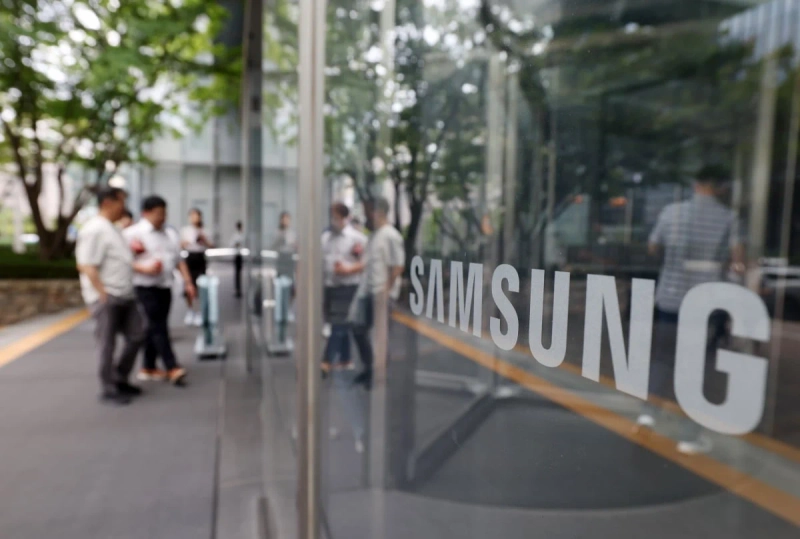
The Kospi tumbled after Samsung Electronics reported record quarterly earnings, triggering the market’s sixth circuit breaker of the year, a mechanism that halts trading for 20 minutes. Analysts attributed the volatility to heavy foreign profit-taking on concerns the semiconductor cycle may be nearing a peak, along with worries about a slowdown in the artificial intelligence investment cycle and flows tied to single-stock leveraged exchange-traded funds.
According to the Korea Exchange, the Kospi swung wildly on July 7 before closing at 7,656.31, down 4.91% from the previous session. A sell-side sidecar, which temporarily suspends program sell orders, was triggered at about 10:23 a.m. A circuit breaker followed at 1:51 p.m. after the index fell more than 8% intraday. It was the sixth circuit breaker this year and the 12th in the Kospi’s history.
Foreign investors drove the decline. They were net sellers of 3.3601 trillion won ($2.43 billion) of Kospi stocks, while institutions sold a net 220.3 billion won ($159 million). Retail investors bought a net 3.5053 trillion won ($2.54 billion), helping cushion the slide. Foreign investors have now been net sellers for 13 straight sessions since June 19, unloading a cumulative 49.2447 trillion won ($35.7 billion) over that period.
Brokerages viewed the selloff as a classic sell-the-news reaction to Samsung’s earnings release. Samsung said second-quarter revenue rose 129.31% from a year earlier to 171 trillion won ($123.9 billion), while operating profit jumped 1,810.26% to 89.4 trillion won ($64.8 billion), both records. That put the company ahead of Nvidia, which posted first-quarter operating profit of $53.5 billion, and Apple, at $35.8 billion, making Samsung the world’s most profitable company by that measure. Even so, the stock sank 9.75%. Investors appeared to lock in gains after the shares had already climbed sharply ahead of the results.
Kang Jin-hyuk, a senior researcher at Shinhan Securities, said Samsung’s preliminary second-quarter earnings came in well above market expectations. Record profit also fueled concerns among some investors that the cycle may be nearing a top, prompting early profit-taking. He added that the move resembled the recent pattern in Micron Technology, where shares also came under pressure after an earnings surprise. Kim Seok-hwan, an analyst at Mirae Asset Securities, likewise identified foreign investors’ profit-taking as the biggest reason for the pullback. Overseas investors have been taking profits for 13 straight sessions since June 19.
Overseas media reached a similar conclusion, framing the drop as a textbook case of the market adage, “buy the rumor, sell the news.” Bloomberg reported on July 8 that Samsung had delivered 16 quarterly earnings surprises since 2019, but its shares fell on the day of the announcement in 10 of those instances. The stock rose only six times.
Gary Tan, a portfolio manager at Allspring Global Investments, said that by the time earnings are released, most of the good news has already been reflected in the share price. Once the results arrive, they often do little more than confirm expectations, leading investors to take profits rather than push the stock higher.
Doubts about the AI investment cycle also added to the pressure. Rising concern over the cash-flow burden of increased AI spending by big tech companies, along with questions about the durability of the memory-chip upcycle, has weakened sentiment across the semiconductor sector.
Heavy foreign selling also helped cement the market’s downward direction, and single-stock leveraged ETFs, which have recently gained a larger share of trading, amplified the decline, according to market participants. Because leveraged ETFs rebalance before the close to track a multiple of the underlying index’s daily return, mechanical trading tends to reinforce market moves when volatility increases. In particular, inflows into Samsung-related leveraged ETFs appear to have magnified the feedback loop during the selloff.
Still, brokerages said it is too early to conclude that the AI investment cycle has ended. They view earnings from U.S. megacap technology companies later this month as the key turning point for whether AI spending will continue and where memory-chip shares head next. Samsung Securities said in an emergency market report on July 8 that concerns about overheated AI investment after a sharp rally were a natural development, but it does not believe the current AI investment cycle has passed its peak.
The firm added that earnings from U.S. megacap technology companies later this month will be an important inflection point for memory-chip stocks. If hyperscalers reaffirm the durability of their AI spending, the Korean stock market could regain its resilience.
Kang Kyung-ju, Hankyung.com reporter qurasoha@hankyung.com

Korea Economic Daily
hankyung@bloomingbit.ioThe Korea Economic Daily Global is a digital media where latest news on Korean companies, industries, and financial markets.