Ahn Says South Korea’s Windfall Tax Revenue May Reach $39.8 Billion This Year, Urges Fiscal Law Revision
Summary
- Ahn Do-geol said this year’s windfall tax revenue could reach as much as $39.8 billion, and next year’s could hit $72.4 billion, helped by a semiconductor boom and a stronger stock market.
- Ahn said he would push for a revision to the National Finance Act that would mandate revised revenue estimates and supplementary budgets to respond to large swings in tax revenue.
- Ahn said South Korea needs a “fiscal dam” built around a new Future Response Fund that would set aside part of windfall tax revenue for AI, semiconductors and balanced regional development.
Forecast Trend Report by Period


Windfall tax revenue may reach as much as $39.8 billion this year and $72.4 billion next year
Push to revise National Finance Act to mandate revenue revisions and supplementary budgets
"Excess tax revenue should seed AI, semiconductors and balanced regional development"
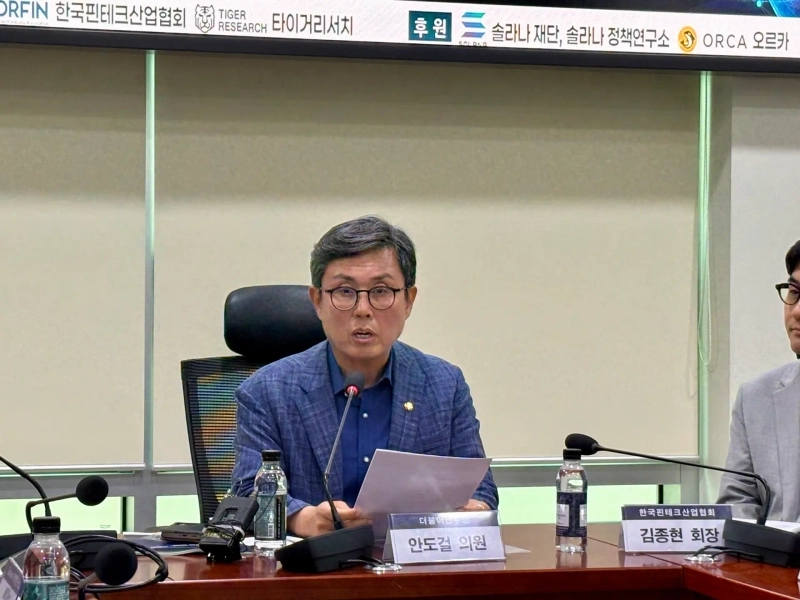
South Korea may collect as much as $39.8 billion in windfall tax revenue this year, driven by a semiconductor boom and a stronger stock market, according to an analysis presented by lawmaker Ahn Do-geol. Next year, additional tax revenue could reach as much as $72.4 billion above the government’s original national fiscal management plan. Ahn said he would push to revise the National Finance Act because the government lacks a clear mechanism to adjust revenue estimates midyear when tax collections rise or fall sharply.
Ahn, a lawmaker with the Democratic Party of Korea and a member of the National Assembly’s Strategy and Finance Committee, made the remarks at a press conference at the National Assembly on July 8. “We need to build a rational fiscal system suited to an era of large swings in tax revenue,” he said. Ahn also serves as deputy floor leader of the party and senior vice chair of its policy committee.
Ahn estimated this year’s excess tax revenue at 45 trillion won to 55 trillion won, or $32.6 billion to $39.8 billion, helped by the semiconductor upcycle and stronger capital markets. The figure includes 25.2 trillion won, or $18.2 billion, in revenue reflected in the supplementary budget compiled in April in response to the Middle East war. He also projected as much as 100 trillion won, or $72.4 billion, in additional tax revenue next year.
The current National Finance Act contains no explicit provision requiring the government to revise revenue projections when tax collections swing sharply, Ahn said. In the event of a revenue shortfall, the government has cut or withheld spending from a budget approved by the National Assembly based on its own judgment. When tax receipts exceed forecasts, the surplus is treated as a year-end balance and used first to settle transfers to local governments and repay government debt, leaving fewer resources for long-term strategic investment.
Ahn said his proposed amendment to the National Finance Act would require the government to draw up revised revenue estimates and a supplementary budget when tax revenue changes beyond a certain threshold. If revenue is projected to rise or fall sharply during a fiscal year, the government would revise the revenue budget to match conditions and submit a spending adjustment plan to the National Assembly.
He also proposed creating a “Future Response Fund” to set aside part of excess tax revenue for national strategic projects, including fostering future industries such as AI and semiconductors, easing polarization and supporting balanced regional development. South Korea needs a “fiscal dam” that stores resources in years of strong tax revenue and uses them when revenue weakens, he said, likening it to a dam that stores water during floods and releases it during droughts.
“It is time to change the paradigm of fiscal management,” Ahn said. He said he wants to build a system that can withstand both tax booms and tax slumps and turn excess tax revenue into a source of South Korea’s future competitiveness.
Ha Ji-eun, Hankyung.com reporter hazzys@hankyung.com

Korea Economic Daily
hankyung@bloomingbit.ioThe Korea Economic Daily Global is a digital media where latest news on Korean companies, industries, and financial markets.