Apple Tests CXMT DRAM as Pressure Mounts on Samsung Electronics, SK Hynix
Summary
- Samsung Electronics and SK Hynix shares tumbled as Apple reportedly began testing DRAM from China’s CXMT and seeking US Commerce Department approval for purchases.
- US consumers and small businesses have filed a class-action lawsuit alleging the three major memory makers colluded on DRAM prices, adding to pressure over the surge in Korean memory prices.
- Nikkei said the US administration could cite South Korea’s dominance in memory to press for production shifts to the US, additional investment, and the sharing of patents and core technologies.
Forecast Trend Report by Period


Apple Turns to Chinese Chips as Scrutiny of Korean Memory Grows
Apple Tests CXMT DRAM
Rising DRAM Prices Lift IT Product Costs
Apple Seeks US Commerce Department Approval
Fears Rise Over Trump Trade Retaliation Against South Korea
Industry Sees Broad Structural Warning Signs
The semiconductor supercycle driven by the artificial-intelligence boom is continuing, but global pushback against South Korea’s dominance in memory chips is intensifying. Morgan Stanley recently issued a report saying memory earnings have passed their peak, and Apple is now exploring the use of Chinese-made DRAM.
Industry officials say soaring prices for Korean memory have fueled “chipflation” in finished electronics, drawing pressure from global big tech companies and US authorities.
Apple Plays the China Card
Samsung Electronics shares fell 6.92% on July 7 and another 6.25% on July 8. SK Hynix also dropped 5.68% on July 8, slipping below 2.1 million won. The selloff followed reports that Apple, the world’s largest consumer electronics company, is pushing back against the dominance of Korean memory suppliers.
Apple recently began testing memory products from China’s ChangXin Memory Technologies, or CXMT, for possible use in iPhones and other devices sold in China, according to the Financial Times and other media outlets. The company is also in close contact with the US Commerce Department to secure approval to buy Chinese-made memory. It is simultaneously lobbying the Trump administration and allies in Congress, the reports said.
The move is widely viewed as an attempt to establish CXMT as a fourth sourcing option and regain leverage in price negotiations after steep increases in Korean memory costs.
Still, the legal barriers in the US remain formidable. Under the National Defense Authorization Act passed in 2022, the federal government is barred from procuring or using semiconductors made by companies including CXMT. The measure takes effect on Dec. 23, 2027, and overturning it would require Congress to amend the law.
The Trump administration would also face difficulty approving large-scale purchases of Chinese memory while making domestic semiconductor production a top priority. Allowing such imports would undermine President Donald Trump’s stance that American-made products should be used even if they cost more. It would also hand the opposition a potent political issue ahead of the midterm elections.
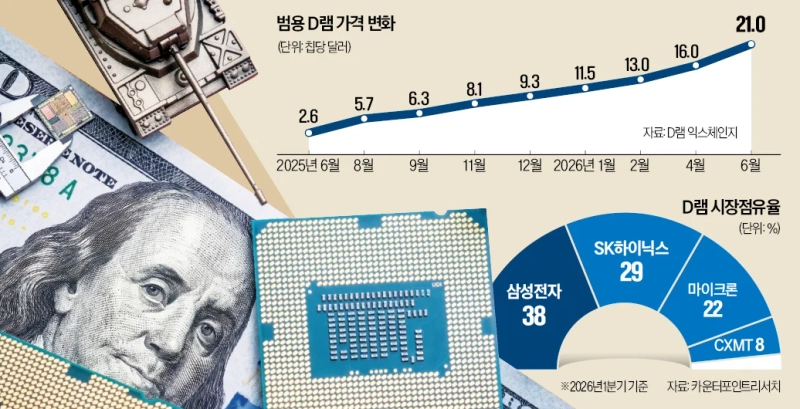
Concerns Grow Over Trump-Led Trade Retaliation
Even so, South Korea’s chip industry has little room to relax because legal and trade pressure from the US is already closing in. American consumers and small businesses have recently filed a class-action lawsuit against the three major memory makers, alleging collusion in DRAM pricing. The plaintiffs say the companies abused their oligopolistic position by artificially cutting supply of commodity DRAM and sending prices sharply higher.
The bigger macro uncertainty is trade risk out of Washington. With Samsung Electronics and SK Hynix together controlling more than 60% of the global memory market, the US administration could frame that dominance as monopolistic behavior that worsens trade imbalances and harms American companies. Nikkei reported on July 8 that the administration could use Korean memory makers’ market power as grounds to demand production shifts to the US, additional investment there, or the sharing of patents and core technologies. The situation echoes the 1980s, when the US used the US-Japan semiconductor agreement and currency pressure to undermine Japan after it came to dominate the global memory market.
South Korea’s semiconductor industry is treating this latest wave of pressure as a structural warning sign emerging at the peak of the cycle. “In the past, pressure to cut prices came during downturns, but the situation is different now,” an industry official said. “Global big tech companies and consumers, worn down by Korean memory dominance and surging prices, are now taking concrete action by filing lawsuits and seeking Chinese alternatives.”
Kim Chae-yeon / Washington correspondent Lee Sang-eun why29@hankyung.com

Korea Economic Daily
hankyung@bloomingbit.ioThe Korea Economic Daily Global is a digital media where latest news on Korean companies, industries, and financial markets.