Summary
- The Bank of Korea said an interest-rate hike is needed at an appropriate time, citing inflation, improving growth and financial-stability risks.
- Governor Shin Hyun-song said the risk of a sustained downtrend in domestic stocks is limited, helped by strong semiconductor exports, earnings upgrades for chipmakers and the government’s efforts to improve capital-market systems.
- Shin said safeguards are important if stablecoins are introduced, because they could be used to circumvent the foreign-exchange regulatory framework centered on foreign-exchange banks.
Forecast Trend Report by Period


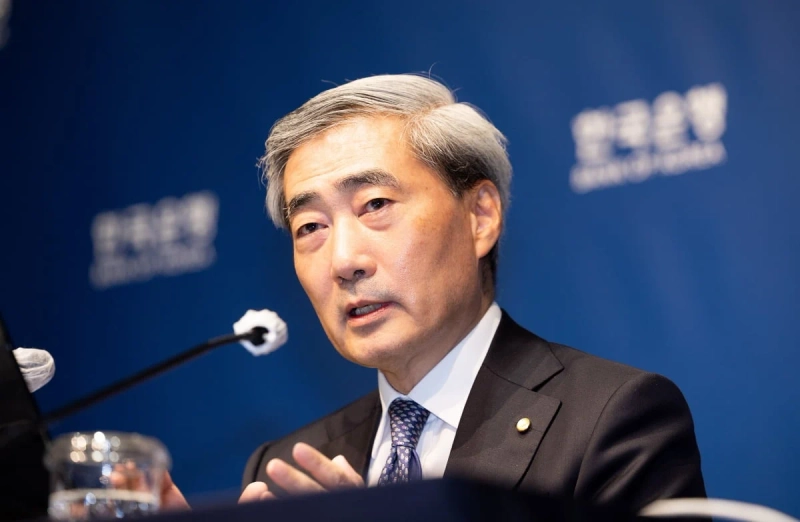
The Bank of Korea said it sees a need to raise its benchmark interest rate at an appropriate time, citing inflation above target, improving growth and mounting financial-stability risks. The central bank has kept the policy rate at 2.5% since July last year, but again signaled a possible shift toward tighter monetary policy.
Governor Shin Hyun-song made the remarks in opening comments for a July report to the National Assembly’s Strategy and Finance Committee. He said the BOK judges that a rate increase will be needed at the right time as inflation stays above target, growth improves and risks to financial stability rise.
Shin said South Korea’s economy has recently strengthened on robust semiconductor exports driven by the global spread of artificial intelligence. Higher chip prices have improved the terms of trade and sharply lifted nominal gross domestic product growth, he said. He added that solid growth is likely to continue as the semiconductor upcycle persists and tensions in the Middle East ease.
Shin said elevated inflation is likely to continue for a considerable period. Even though Middle East tensions have stabilized, accumulated cost increases are still passing through with a lag, while demand-side inflation pressures are also building.
He also pointed to volatility in financial and foreign-exchange markets as a major risk factor. The won-dollar exchange rate has been trading in the low- to mid-1,500 won range despite a large current-account surplus, reflecting net foreign selling of local stocks and broad dollar strength.
Shin said the risk of a sustained downtrend in domestic equities is limited. Volatility may remain high because of concerns over artificial intelligence and monetary-policy stances in major economies. Still, upward revisions to semiconductor companies’ earnings and the government’s efforts to improve capital-market systems should help prevent a broader slide in Korean stocks.
Shin also voiced concern about the risks of introducing stablecoins. He said authorities need to consider the possibility that stablecoins could be used to circumvent South Korea’s foreign-exchange regulatory framework centered on foreign-exchange banks. He added that any legislation should include safeguards such as prioritizing issuance by bank-led consortia and creating a statutory policy body for coordination among relevant agencies.
Shim Sung-mi, Hankyung.com reporter smshim@hankyung.com

Korea Economic Daily
hankyung@bloomingbit.ioThe Korea Economic Daily Global is a digital media where latest news on Korean companies, industries, and financial markets.