PiCK
Trump Threatens 20-Fold Retaliation Against Iran as Middle East Tensions Test Bitcoin Rebound
Summary
- Experts said the chances of a shift back to an uptrend may hinge on whether Bitcoin can hold above $65,000, $66,000 and $68,000.
- On-chain indicators suggest short-term buying power and investor sentiment remain constrained by spot ETF net outflows, shrinking stablecoin liquidity and downside risk priced into the options market.
- Coinbase Research and market analysts said downside pressure could increase sharply if Bitcoin breaks below support at $59,000 to $60,000 and $57,790, while a retest of $74,000 remains possible on the upside.
Forecast Trend Report by Period


Bitcoin’s recovery is being tested as Donald Trump’s hard-line remarks on Iran and fresh airstrikes reignite tensions in the Middle East. Rising oil prices and higher bond yields are adding pressure to risk assets. In the near term, traders are watching whether Bitcoin can break above $66,000. A drop below the $59,000 to $60,000 support zone could bring renewed downside pressure.
As of 5:05 p.m. on July 9, Bitcoin was trading at $63,010 on Binance’s Tether market, up about 0.25% from a day earlier. On Upbit, it was trading at about $68,100. The kimchi premium, which tracks the price gap between domestic and overseas exchanges, stood at negative 1.20%.
Trump Threatens 20-Fold Retaliation as Middle East Tensions Flare Again
Military conflict between the U.S. and Iran has intensified again, heightening caution across global financial markets. Tensions around the Strait of Hormuz have resurfaced, sending crude prices sharply higher. U.S. Treasury yields also climbed, pressuring sentiment toward risk assets including cryptocurrencies.
Trump told reporters aboard Air Force One on July 8 that “we just hit them very hard,” according to CNN. He added that “every time Iran attacks us, we will pay them back 20 times over.” Trump also said Iran wants negotiations, but questioned whether Tehran was worth negotiating with and whether it would honor any agreement.
Earlier, U.S. Central Command said it launched airstrikes on July 7 in response to Iranian attacks on three commercial vessels passing through the Strait of Hormuz. It later said follow-up operations struck about 90 military targets inside Iran, including air-defense systems.
Inflation concerns also remain in focus at the Federal Reserve. Minutes of the June Federal Open Market Committee meeting, released July 9, showed some officials raised the need to consider a rate increase at the June meeting. Policymakers judged downside risks to employment had eased somewhat, while upside risks to prices remained elevated. They also shared the view that further tightening could be needed if high oil prices persist and demand tied to artificial intelligence continues to expand.
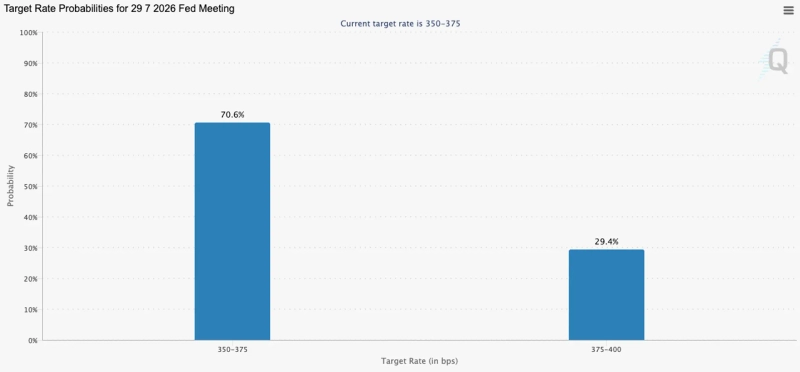
Markets are now focused on the June consumer price index due July 14. With oil prices surging again as Middle East tensions flare, a stronger-than-expected inflation reading could revive the case for higher rates. CME FedWatch data showed markets were pricing in a 70.6% chance the Fed holds rates steady in July and a 29.4% chance of a hike as of July 9. The implied probability of a September rate increase was about 67%.
Bitcoin Absorbs Strategy Sale, but ETF Volumes and Stablecoin Liquidity Remain a Drag
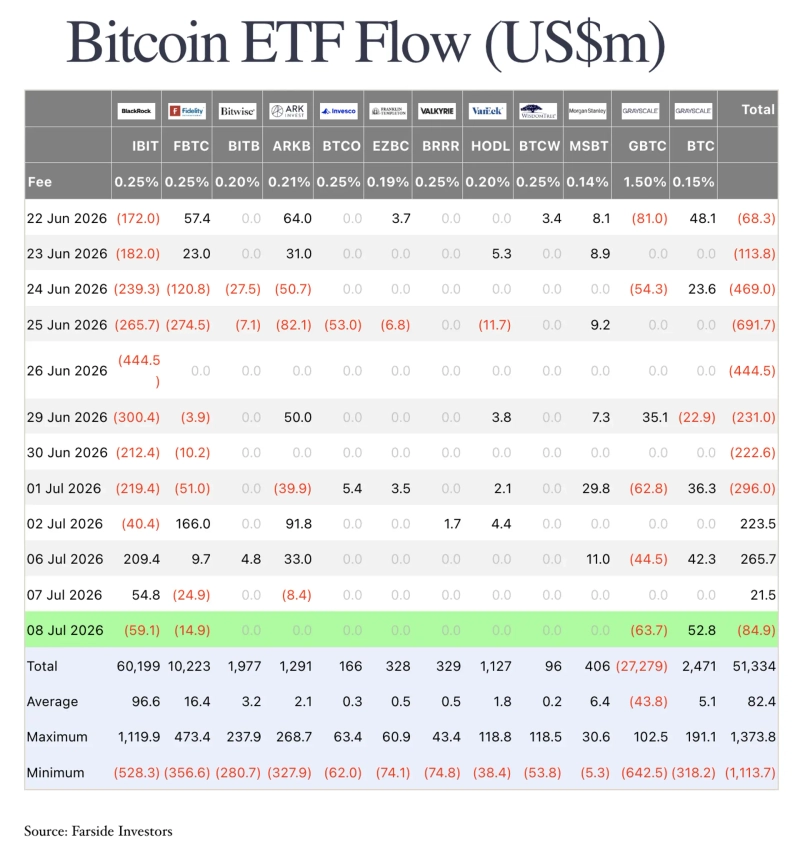
Spot Bitcoin exchange-traded funds recorded net outflows of $526.1 million last week, though they have since returned to modest net inflows. Strategy’s recent sale of 3,588 Bitcoin created short-term pressure, but the market absorbed the supply and extended its recovery. Sentiment in digital-asset markets has also improved after emerging from a 40-day stretch in the “extreme fear” zone.
Bitcoin may be in the late stage of a bear market, but it is still too early to call it a full recovery, according to market analysis. Glassnode said net outflows from spot Bitcoin ETFs have slowed from the previous month, but funds are still leaving the products. ETF trading volume also remains about 80% below the peak reached in October last year, making it hard to say institutional demand has stabilized. Conditions for a bottom are falling into place, but confirmation signals have yet to appear. The options market is also still pricing in downside risk.
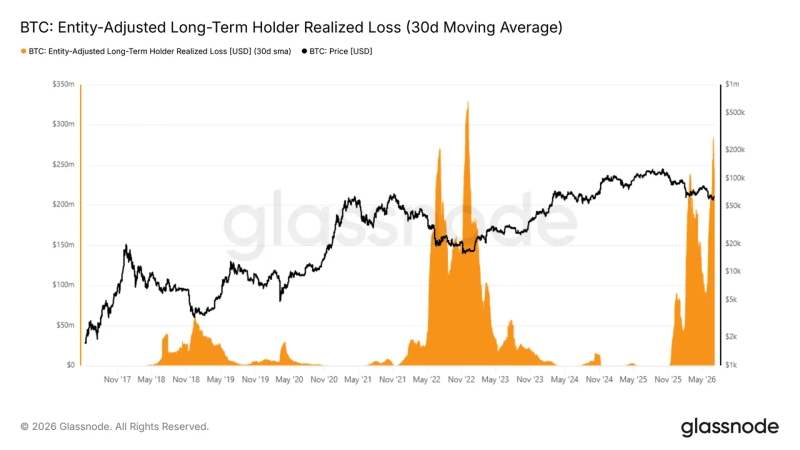
The market also appeared relatively calm despite news of Strategy’s Bitcoin sale. Bitfinex said the company’s first large-scale Bitcoin disposal did not trigger a broader exit and instead led to short-term buying. Aside from the downside volatility immediately after the announcement, Bitcoin held relatively steady and recovered to trade above its pre-announcement level. Bitfinex added that the market is now in a period of elevated stress for spot holders, which could point to a potential bottom forming over the next two to three months.
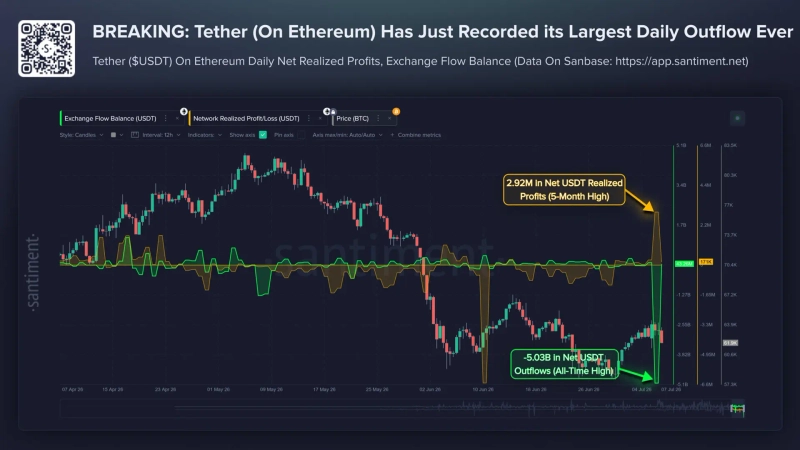
Shrinking stablecoin liquidity on major crypto exchanges may also weaken short-term buying power. Santiment said $5.03 billion of Tether left exchanges in a single day, marking the largest daily net outflow on record. With dollar liquidity that could be used for immediate buying leaving centralized exchanges, the market’s ability to buy Bitcoin and altcoins on dips may be weakening.
Bitcoin Needs Break Above $65,000; Hold Above $68,000 Could Signal Trend Shift
Experts are focused on whether Bitcoin can clear $65,000, which could determine its short-term direction. Holding in the $66,000 to $68,000 range could mark an early signal of a shift back to an uptrend. A break below the $59,000 to $60,000 zone, by contrast, could sharply increase downside pressure.
Bitcoin has been consolidating around $63,000 after absorbing supply from Strategy’s sale. Alex Kuptsikevich, chief analyst at FxPro, said traders should watch how Bitcoin behaves near $66,000 if the current rebound continues. A sustained move above that level could offer an early sign of a trend reversal. Still, selling pressure could strengthen again as it did in mid-June, making it important for Bitcoin to establish itself above $66,000.
In a bearish scenario, resistance near $65,000 and support at $59,000 to $60,000 stand out as key levels. Coinbase Research said that if the rally stalls near $65,000, Bitcoin could retreat toward $60,000. A break below the $59,000 to $60,000 band could significantly increase downside pressure. If Bitcoin holds above $68,000, however, the likelihood of a retest of $74,000 would rise. Coinbase Research also said $68,000 remains a strong resistance zone.
Some analysts also see a greater chance of sideways trading as price swings narrow and open interest declines. Julian Pineda, an analyst at Forex.com, said Bitcoin’s average daily move over the past three trading sessions was only slightly above 1%, while short-term charts also show a neutral pattern. With price action slowing and open interest falling, buying momentum may also be fading. He added that if the yield on the 10-year U.S. Treasury remains above 4.5%, the growing appeal of dollar assets could slow the recovery in Bitcoin demand.
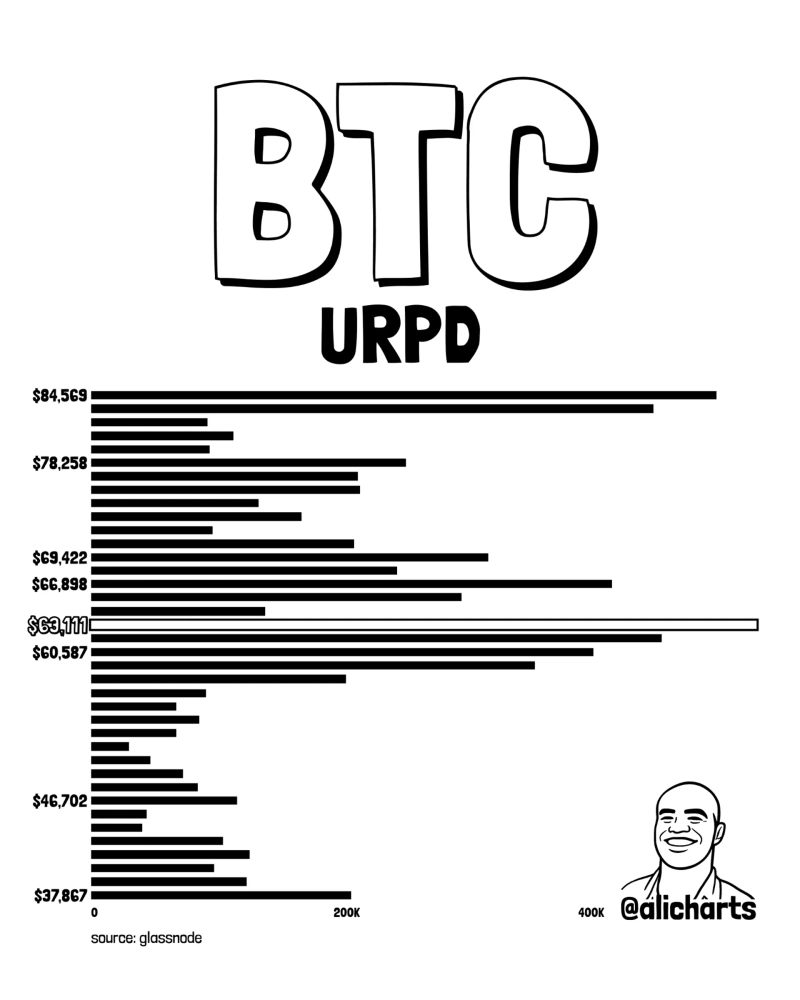
Pineda added that a move above $66,900 over the medium term could support buyer dominance in the coming weeks, while a break below the recent low of $57,790 could deepen the downtrend. According to TradingView, the 10-year U.S. Treasury yield stood at 4.567% on July 9.
Kang Min-seung, Bloomingbit reporter minriver@bloomingbit.io

Minseung Kang
minriver@bloomingbit.ioBlockchain journalist | Writer of Trade Now & Altcoin Now, must-read content for investors.