SK Hynix’s $26.5 Billion Nasdaq ADR Debut Stuns Foreign Media
Summary
- SK Hynix said it would raise about $26.5 billion through a Nasdaq ADR listing in the US, marking the largest-ever US listing by a foreign company.
- Foreign media said SK Hynix symbolizes investor enthusiasm for AI, HBM, and AI data center investment, but added that its low PER suggests any easing of the Korea discount may be limited.
- They said the US ADR listing could improve accessibility and visibility while confirming demand for AI infrastructure, though they also warned of overheating risks including oversupply and industry volatility.
Forecast Trend Report by Period


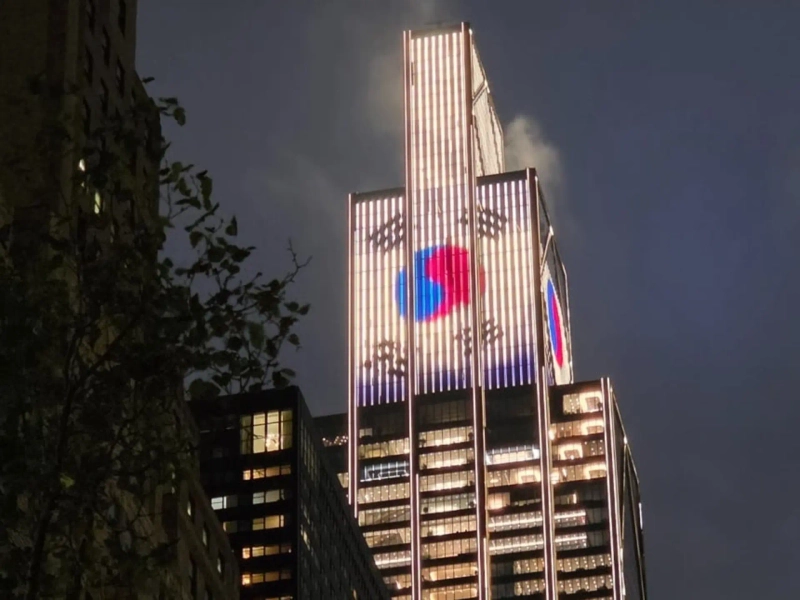
SK Hynix’s US listing has become one of Wall Street’s biggest talking points. Foreign media have cast the deal as both a symbol of the artificial-intelligence investment boom and a test of how much it can narrow the so-called Korea discount.
SK Hynix will begin trading American depositary receipts on Nasdaq on July 10, raising about $26.5 billion. That surpasses Alibaba’s $25 billion deal in 2014, making it the largest US listing ever by a foreign company.
CNN wrote that the deal shows how feverish investor demand has become this year. A company many people had not even heard of a year ago is now setting that record, the network said, underscoring the rally that has pushed technology stocks to all-time highs.
Demand for the high-bandwidth memory chips made by SK Hynix has surged as competition to build AI data centers intensifies. The company posted first-quarter revenue of 52.6 trillion won, roughly triple from a year earlier.
Another question drawing attention overseas is whether the US listing can materially reduce the Korea discount. LSEG data show SK Hynix trades at 4.8 times expected earnings over the next 12 months, below Micron Technology’s 6.6 times and the industry average of 29.84 times.
Javier Wong, a market analyst at eToro, said SK Hynix had long been undervalued despite its strong position in AI memory because US investors faced limited access. Share-price gains and a closing of the valuation gap are separate issues, he added.
Once ADR trading begins, US investors will be able to buy SK Hynix without opening a South Korean brokerage account. That has raised expectations that easier access and greater visibility could lift the company’s valuation.
Still, the Financial Times said the listing alone probably will not significantly narrow the valuation gap between South Korean and US chipmakers. The offering amounts to less than 3% of SK Hynix’s total market capitalization, while corporate-governance concerns and structural constraints in South Korea’s stock market remain.
Rolf Bulk, head of semiconductors and infrastructure at Fuchsberg Group, said the ADR listing could narrow the gap to some extent. He does not expect the Korea discount to disappear entirely.
The Financial Times also cited Taiwan Semiconductor Manufacturing Co. as an example of US-listed ADRs trading at a premium to home-market shares. Higher liquidity in US markets and index inclusion can create a separate premium, but that does not mean the broader undervaluation of domestic shares has been resolved.
The newspaper said SK Hynix’s new US shares may be less a direct way to invest in AI than a barometer of how hot AI enthusiasm has become.
More than 500 institutions participated in the offering, and the book was covered seven times. That was taken as a sign that global investors still have a strong appetite for AI infrastructure despite recent market volatility.
Foreign media also warned about the risk of overheating. If memory makers aggressively expand capacity to meet AI demand, oversupply and industry volatility could rise.
Bulk said the real competition is not market share but production capacity. The deciding factor will be which company can meet surging AI demand first.
Shin Hyun-bo, Hankyung.com reporter (greaterfool@hankyung.com)

Korea Economic Daily
hankyung@bloomingbit.ioThe Korea Economic Daily Global is a digital media where latest news on Korean companies, industries, and financial markets.