PiCK
Trump Says Iran Ceasefire Is Over; Tehran Vows No Surrender as Standoff Escalates
Forecast Trend Report by Period


U.S.-Iran war-ending MOU effectively nullified
Dispute centers on conflicting interpretations of Hormuz clause
U.S. sanctions financier tied to Iran’s supreme leader
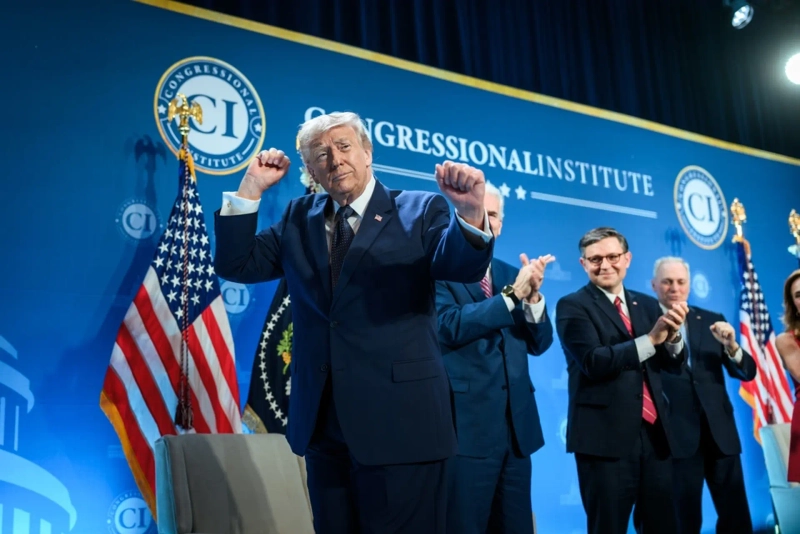
Tensions between the US and Iran are rising again after President Donald Trump declared the ceasefire with Tehran over, drawing a defiant response from Iran that it would not surrender.
Trump wrote on Truth Social on July 10 that “the Islamic Republic of Iran asked us to continue ‘talks.’” Washington agreed, he wrote, but “firmly informed” Iran that the ceasefire had ended.
Trump had already signaled that position on July 8 during a meeting with NATO Secretary-General Mark Rutte, saying the war-ending MOU with Iran “looks like it’s over.” The post effectively made his position on ending the ceasefire official.
The US has not ruled out further negotiations. But the previous framework, under which talks on ending the war continued while the ceasefire remained in place, has effectively broken down. Washington is keeping diplomacy alive while signaling it could resume military action if necessary.
Trump’s tougher message appears tied to continued Iranian attacks on commercial shipping in the Strait of Hormuz. The US regards those actions as a violation of the MOU. The declaration ending the ceasefire is also seen as an effort to pressure Iran while preserving the option of a military response.
Iran pushed back immediately. Mohammad Bagher Ghalibaf, the parliamentary speaker who has led Iran’s side in the war-ending talks, said on July 10 that ending the war remained the top priority, but “this conflict will never end with Iran’s surrender.”
Iran has never relaxed its defensive posture in case the US breaks the agreement, Ghalibaf said. If Washington provokes Iran again, Tehran will “restore its legitimate rights through a full-scale defensive war,” he added.
Iran also denied Trump’s claim that it had sought talks. Foreign Ministry spokesman Esmaeil Baghaei said Tehran had made no such request to the US, though it had accepted a visit by a Qatari mediation team.
Qatar played a mediating role last month in helping the US and Iran reach the MOU. Iran’s decision to receive the Qatari delegation suggests it is denying any direct request for talks while keeping diplomatic channels open.
Both sides are sending hard-line messages without fully closing the door to negotiations. But renewed clashes around the Strait of Hormuz have sharply worsened the environment for diplomacy.
Recent days have brought Iranian attacks on civilian merchant vessels in the strait and retaliatory US airstrikes. With both sides making clear they are prepared to use force, a prolonged standoff appears increasingly likely.
At the center of the latest rupture is a disagreement over how to interpret the war-ending MOU. The sharpest split concerns a clause dealing with the Strait of Hormuz.
Clause 5 says Iran will take the steps needed to reopen navigation through the Strait of Hormuz, which had been blocked by the war, ensure safe passage and work to remove military obstacles such as naval mines. It also says Iran will consult with nearby countries including Oman on future management of the waterway.
The US reads that clause as a commitment to guarantee free and safe navigation through the strait. Iran, by contrast, sees it as recognition of its control over the Strait of Hormuz.
Tehran says commercial vessels must use designated routes along Iran’s coastline. It has continued attacking ships using other routes.
The US considers that a clear breach of the MOU and has responded with retaliatory airstrikes and sanctions.
Washington restored sanctions on Iranian oil on July 7 and also announced sanctions on a financier tied to Mojtaba Khamenei. The move appears aimed at pushing Iran back to the negotiating table through combined military and economic pressure.
Even so, neither side appears to have fully abandoned the existing war-ending framework. Talks are continuing behind the scenes through mediating countries.
Axios reported, citing sources, that additional talks between the US and Iran are scheduled for next week in Switzerland. It also said Qatari officials are expected to visit Iran and meet with authorities after coordinating with the US.
A diplomat familiar with the back-channel discussions told Axios that “it is clear both sides want to return to the MOU.”
Still, recent military clashes have deepened distrust on both sides. For the MOU framework to function again, restarting talks alone will not be enough. Additional confidence-building measures will be needed.
The US will probably press for stable navigation through the Strait of Hormuz and a resumption of nuclear talks. Iran is expected to demand an end to further airstrikes and sanctions relief as key conditions.
The next question is whether both sides can return to a ceasefire framework. Even if Washington and Tehran keep dialogue alive, the conflict could flare up again at any time if they fail to resolve the Strait of Hormuz dispute.
Kim Hee-sun, Hankyung.com reporter, gimme_sun@hankyung.com

Korea Economic Daily
hankyung@bloomingbit.ioThe Korea Economic Daily Global is a digital media where latest news on Korean companies, industries, and financial markets.