US Senate Targets Next Week to Open Clarity Act Debate Ahead of August Recess
Summary
- The U.S. Senate is aiming to begin debate next week on the Clarity Act, a cryptocurrency market structure bill, and finish it before the August recess.
- Democrats are demanding ethics provisions to limit involvement in the crypto industry, and controversy over President Trump's crypto-related income has emerged as the biggest variable affecting the bill's passage.
- Concerns from law enforcement and banks over illicit-finance enforcement, the software developer exemption, and stablecoin reward structures could affect revisions to the bill and its chances of passage.
Forecast Trend Report by Period


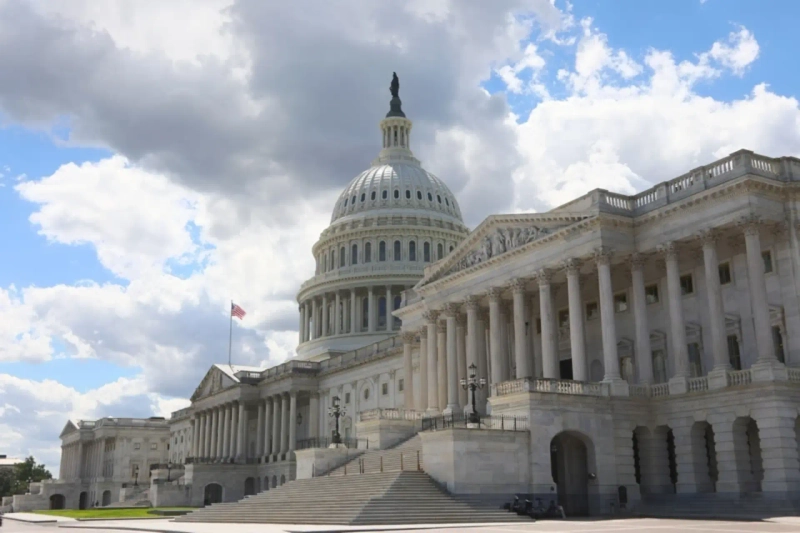
The U.S. Senate could begin considering the Clarity Act, a cryptocurrency market structure bill, as soon as after July 20.
The Hill reported on July 11 that Republican leaders are targeting next week to start debate on the measure. The Clarity Act would establish a regulatory framework for the broader digital-asset industry and has a wider reach than the stablecoin-focused GENIUS Act.
Congress must finish the bill before the August recess if it wants to pass crypto market structure legislation this year, Brian Gardner, chief Washington policy strategist at Stifel, told The Hill. While passage in a lame-duck session is theoretically possible, he said it is unlikely. "The calendar is the enemy. Time is short."
The measure needs support from at least seven Democratic senators to pass the full Senate. Democrats are demanding ethics provisions that would restrict elected officials, including the president, from participating in the crypto industry. Because President Donald Trump and his family's crypto businesses are at the center of the controversy, the provision has emerged as the biggest variable in the negotiations.
Senior Senate Democrats recently said Trump's financial disclosures heightened concerns that he is pressuring Congress to pass crypto legislation that would benefit the same industry from which he is profiting. The filings showed Trump earned about $1.2 billion in crypto-related income last year.
Ian Katz, managing partner at Capital Alpha, called the ethics issue the Clarity Act's "biggest substantive obstacle." He said he leans slightly toward the view that the issue is too complicated to resolve in the time remaining. Even so, he said the bill still has a reasonable chance of passage because of pressure from the crypto lobby.
Illicit-finance enforcement is also a point of contention. The bill includes a provision stating that software developers who do not control customer funds would not be treated as money transmitters. Law enforcement agencies worry the exemption is too broad and could make it harder to track illicit actors.
Banks are also seeking changes to the bill, arguing that stablecoin reward structures could spur deposit outflows. Rebecca Romero Rainey, president and chief executive officer of the Independent Community Bankers of America, said banks are asking why lawmakers are moving so quickly.
The Hill said that with the House scheduled to remain in session only through July 23, the effort to pass the bill before the August recess could become the last effective test for Clarity Act legislation before the midterm elections.

Minseung Kang
minriver@bloomingbit.ioBlockchain journalist | Writer of Trade Now & Altcoin Now, must-read content for investors.