PiCK
US-Iran Tensions Surge Near Hormuz as Blockade Resumes, Raising Risk of Renewed War
Forecast Trend Report by Period


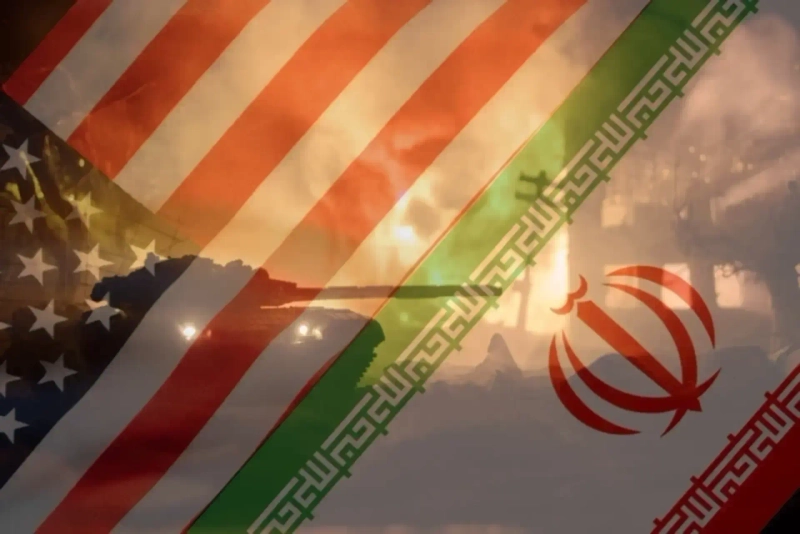
Military tensions between the US and Iran around the Strait of Hormuz are flaring again. The US has carried out airstrikes on Iranian territory for three straight days, while Iran has retaliated by targeting US bases in the Middle East, signaling a return to the standoff that preceded last month's memorandum of understanding on ending hostilities.
US Central Command, which oversees American military operations in the Middle East, said on July 13 it conducted a third consecutive night of airstrikes on Iran under President Donald Trump's orders. The strikes began at 4:45 p.m. US Eastern Time, or 12:15 a.m. in Iran on July 14, and lasted about five hours, ending at 10:15 p.m. the same day.
CENTCOM said it successfully struck military targets across Iran, including in Bushehr, Chabahar, Jask, Konarak, Abu Musa and Bandar Abbas.
The targets included coastal defense systems, missile and drone bases, and naval assets.
CENTCOM added that more than 50,000 US troops are currently deployed across the Middle East and remain on immediate response footing.
The US military also said it would resume a blockade of Iranian vessels in the Strait of Hormuz at 4 p.m. on July 14 Korea Standard Time. The blockade had been lifted on June 18 alongside the signing of the memorandum of understanding, but was reinstated about a month later.
With military strikes and a maritime blockade under way at the same time, the US has effectively returned to the confrontation that existed before the MOU. The moves have also raised concern that Washington may be taking steps toward a full resumption of war.
CBS and Reuters reported that Trump sent a letter to Congress on July 10 formally notifying lawmakers that military action against Iran had resumed on July 7. The War Powers Resolution, enacted in 1973, requires the president to notify Congress within 48 hours of initiating military action and allows operations to continue for up to 60 days without congressional approval.
Trump is scheduled to deliver a national address at 9 p.m. on July 16, prompting speculation that he may make a major announcement on Iran.
Iran is also intensifying its response. The semi-official Fars News Agency reported that the Islamic Revolutionary Guard Corps struck a US base in Jordan with ballistic missiles.
In a separate statement directed at the Jordanian public, the IRGC said the strike was not a hostile act toward Jordan but a legitimate response to US forces that killed Iranian citizens. It also urged Jordanians to join calls for the withdrawal of US military bases from the region. Iranian outlet Nour News reported that the IRGC also struck a US base in Bahrain, along with an arms depot and satellite communications facilities.
Attacks on civilian shipping in the Strait of Hormuz also continued. The United Arab Emirates Ministry of Defense said on July 14 that two tankers passing through the strait were attacked by Iran, killing one crew member and injuring eight others.
The UK Maritime Trade Operations said it received a report at about 1:04 a.m. Oman time on July 14 that a tanker had been hit by an unidentified projectile about 74 kilometers northeast of Kalhat, Oman. Because Kalhat is about 500 kilometers in a straight line from the Strait of Hormuz, the vessel may be separate from the tanker attack announced by the UAE.
Shin Yong-hyun, Hankyung.com reporter, yonghyun@hankyung.com

Korea Economic Daily
hankyung@bloomingbit.ioThe Korea Economic Daily Global is a digital media where latest news on Korean companies, industries, and financial markets.