Kospi Gives Up 7,000 Again, Kosdaq Falls Below 800 as Samsung Drops 8.8%, SK Hynix Slides 11.5%
Forecast Trend Report by Period


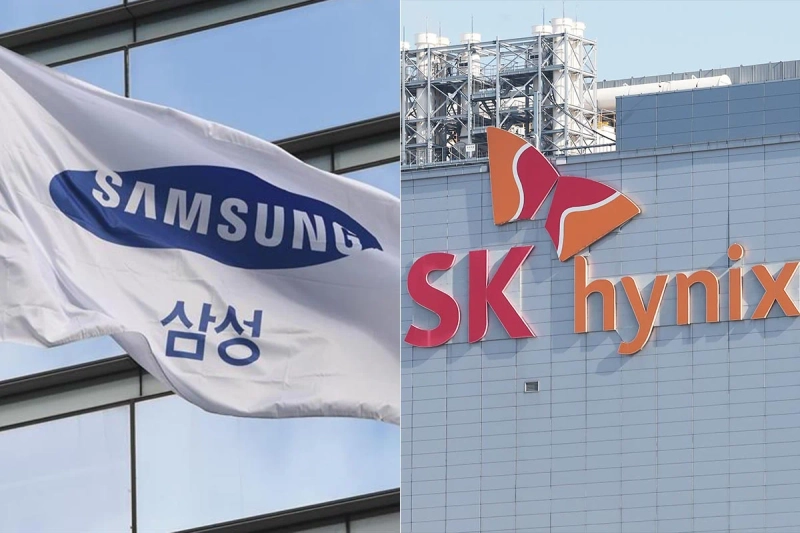
The Kospi surrendered the 7,000 mark again after just one day, closing down more than 6% as concerns over a slowdown in the artificial intelligence chip cycle hammered Samsung Electronics Co. and SK Hynix Inc. and pushed foreign investors back into net selling. The index fell as low as the 6,700 range during the session, and a sell-side sidecar was triggered for the 37th time this year, underscoring renewed market anxiety.
On July 16, the Kospi closed at 6,820.60, down 6.37% from the previous session. The benchmark opened at 6,960.50, off 4.45%, and extended losses to an intraday low of 6,730.87. That wiped out the recovery above 7,000 achieved a day earlier. Foreign investors, who were net buyers of 2.3 trillion won the previous day, turned net sellers of 1.4 trillion won.
A sell-side sidecar, which temporarily halts program sell orders, was triggered early in the session after Kospi 200 futures fell more than 5% from the previous day. It was the 37th sidecar activation this year on the main bourse. Of those, 19 were sell-side triggers and 18 were buy-side triggers, highlighting extreme volatility in both directions. This week alone, a sell-side sidecar was triggered on July 13, a buy-side sidecar on July 15 and another sell-side sidecar on July 16.
Large-cap semiconductor stocks have driven both the market's sharp declines and rebounds. SK Hynix, which had surged 8.83% a day earlier, plunged 11.53% to close at 1.842 million won. Samsung Electronics, which rose 6.27% in the previous session, sank 8.77% to 255,000 won. Both stocks not only gave back the prior day's gains but also returned to the 1.8 million won and 250,000 won levels, respectively.
The selloff reflected fresh negative developments surrounding the semiconductor sector that again chilled investor sentiment. News that AI cloud company CoreWeave was preparing for declines in memory and storage prices revived concerns over a slowdown in the memory chip cycle. Reports that Chinese memory maker ChangXin Memory Technologies, or CXMT, plans to raise substantial funds through a listing and expand production capacity also added to supply concerns.
Reports that data center construction in New York had been halted because of power supply and environmental issues also weighed on sentiment. Concerns that memory supply would rise even as data center investment slowed sharpened fears that memory prices may have already passed their peak. The fallout from steep declines in Micron Technology Inc., SanDisk Corp. and Western Digital Corp. in the U.S. market a day earlier spilled over into South Korean chip shares.
The Bank of Korea's benchmark rate increase was in line with market expectations and had a limited effect on equities. The central bank's Monetary Policy Board raised the policy rate by 25 basis points to 2.75% from 2.50%. While it left the door open to further increases in light of the economic recovery and inflation pressures, uncertainty over semiconductor supply and demand dictated the market's direction on July 16.
The possibility of easing tensions between the U.S. and Iran helped relieve some downside pressure. Iran released detained Americans, and U.S. President Donald Trump expressed his thanks, fueling expectations for improved ties between the two countries. Even so, concerns over the semiconductor outlook and selling by foreign and institutional investors had a greater effect than any easing in Middle East risks.
Lee Kyung-min, an analyst at Daishin Securities Co., said a string of negative developments tied to semiconductors in the U.S. market had highlighted the risks of expanding memory supply and slower data center investment. Growing concerns that memory prices had peaked and demand could soften also weighed on sentiment toward South Korean chip stocks.
He added that the Bank of Korea's rate increase matched expectations, limiting its impact on equities. Weakness was pronounced in semiconductor shares as both foreign and institutional investors sold.
Kang Kyung-ju, Hankyung.com reporter qurasoha@hankyung.com

Korea Economic Daily
hankyung@bloomingbit.ioThe Korea Economic Daily Global is a digital media where latest news on Korean companies, industries, and financial markets.