PiCK
US Crypto Market Structure Bill Faces Tougher Senate Math as GOP May Need 7 to 9 Democratic Votes
Forecast Trend Report by Period


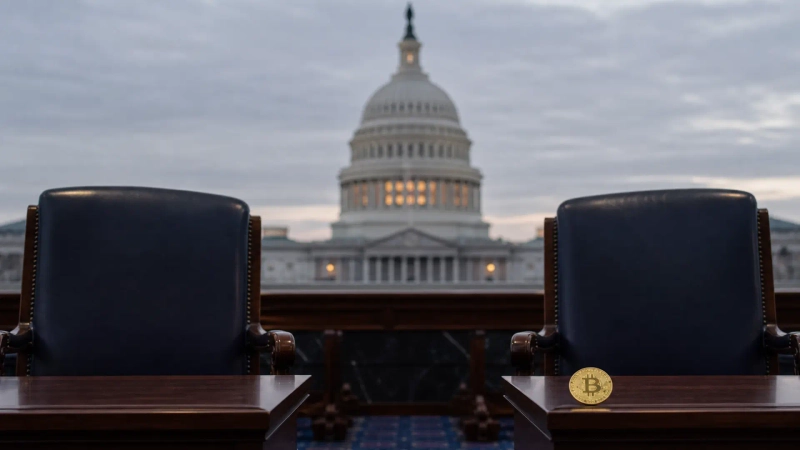
The Senate path for the CLARITY Act, a key bill for bringing the US crypto market into the regulatory mainstream, has grown more complicated. Republican Senator Lindsey Graham's sudden death and uncertainty over whether Republican Senator Mitch McConnell can return to vote have clouded the whip count. If Republicans fail to hold all of their own votes, the number of Democrats or Democratic-aligned senators they need rises from at least seven to as many as nine.
The CLARITY Act is a market structure bill that would distinguish digital assets treated as commodities from those treated as securities, while redrawing oversight lines between the Commodity Futures Trading Commission and the Securities and Exchange Commission. While last year's GENIUS Act on stablecoins focused on issuers and reserve assets, the CLARITY Act would establish a broader supervisory framework for crypto exchanges, brokers and token issuers.
The industry says the bill would reduce uncertainty over when a digital asset qualifies as a security and what standards exchanges must meet to register. If it fails, jurisdictional overlap between the SEC and CFTC could drag on, potentially delaying entry by US financial firms and institutional investors.
Republican sure votes could fall to 51
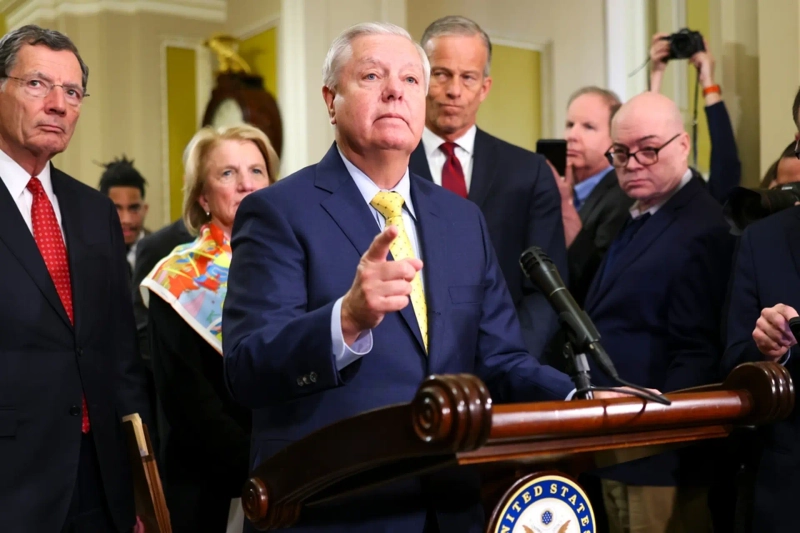
The first complication for Republicans is Graham's death. Graham died suddenly on July 11 at age 71. He was not a central architect of the CLARITY Act, but was widely viewed as likely to back it on the Senate floor as a senior pro-Trump lawmaker. President Donald Trump also described Graham as a strong supporter of the bill and urged the Senate to pass it in his honor.
Graham's vacant seat was filled by his younger sister, Senator Darlene Graham, allowing Republicans to retain their 53-seat majority. Darlene Graham has no legislative experience and has not publicly stated her views on crypto policy. That has raised doubts about whether she would cast the same vote.
McConnell's health has further complicated the count. He collapsed at his home in June and was taken by ambulance for treatment for pneumonia. He is recovering at a rehabilitation facility. The exact circumstances were not disclosed for nearly a month, but a recording of the June 14 emergency call later surfaced, saying there was "a patient who lost consciousness and was in cardiac arrest." It remains unclear when McConnell might return for a Senate vote.
The CLARITY Act needs 60 votes to invoke cloture and advance past a filibuster to a final Senate vote. Even if all 53 Republicans support the bill, they still need at least seven Democrats or Democratic-aligned senators. If Darlene Graham does not back the measure and McConnell is absent, Republicans would control only 51 votes. That would push the number of Democratic votes needed to as many as nine. Any additional Republican defections over the substance of the bill would increase that number further.
Democrats seek curbs on crypto profits while in office
The bigger obstacle for Republicans is solid Democratic resistance. Democratic senators, including Elizabeth Warren, the top Democrat on the Senate Banking Committee, are demanding conflict-of-interest language in the CLARITY Act. The provision would bar the president, vice president, senior executive branch officials, members of the House and Senate, and their families from profiting from crypto businesses while in office.
Democrats argue that as the Trump family expands its crypto ventures, safeguards are needed to prevent a sitting president from shaping market regulation for personal financial gain. They have also argued the bill could weaken state anti-fraud powers and does not contain sufficient protections against money laundering through decentralized finance.
Republicans counter that the legislation strengthens federal anti-fraud authority and anti-money-laundering rules while creating disclosure requirements aimed at investor protection. The two parties remain far apart not only on ethics language, but also on the scope of state regulatory authority and oversight of decentralized finance.
The Senate Banking Committee approved the CLARITY Act on May 14 by a 15-9 vote. Some Democrats supported it, but there is still no bipartisan agreement broad enough to deliver the Democratic votes needed for cloture on the Senate floor. For Republicans, preventing defections within their own ranks will not be enough. To win over seven to nine Democratic senators, they will need some form of compromise that accepts at least part of the proposed conflict-of-interest language.
Trump calls in senators to seek a breakthrough
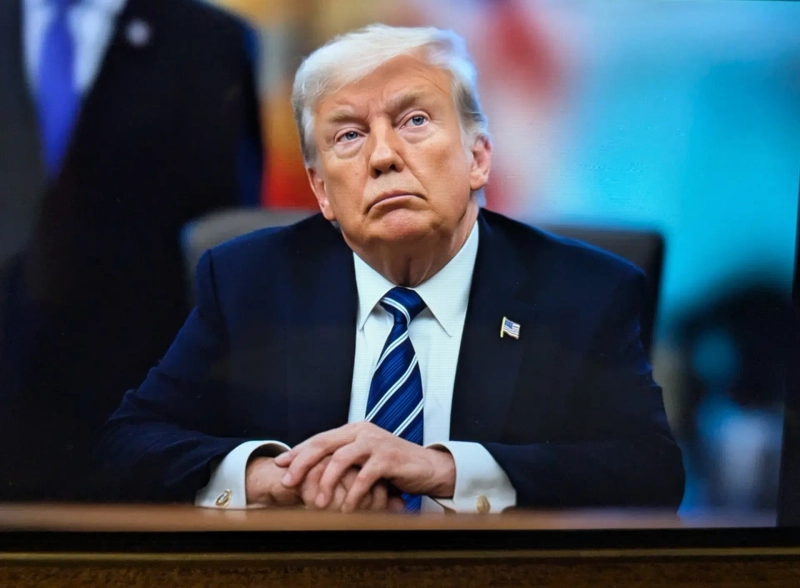
Trump has now stepped into the negotiations himself. Politico reported on July 15 that he will meet Republican senators at the White House on July 16 to discuss how to move the CLARITY Act forward.
The meeting is expected to include Bernie Moreno and Cynthia Lummis, who have led negotiations on crypto legislation. Moreno said he plans to brief Trump on the state of the talks and possible paths to passage.
The conflict-of-interest provision sought by Democrats is set to be a central issue. The key question is how far Trump is willing to accept ethics language that could restrict crypto businesses run by him and his family.
If the White House accepts part of the ethics provision, that could open room to persuade centrist Democrats. If Trump opposes language that includes himself and his family, the talks could slip back into deadlock.
Another variable is the planned leave of absence for Patrick Witt, executive director of the White House's Digital Assets Advisory Council, who has coordinated negotiations among Congress, the White House and the crypto industry. Witt is due to step away for several months starting July 27 to attend legal training with the National Guard. That raises pressure to put a framework in place before a key mediator leaves the talks.
Aug. 7 is effectively the deadline
Time is short. The CLARITY Act passed the House in July 2025 and cleared the Senate Banking Committee in May 2026. Lawmakers are now working to merge that bill with a measure from the Senate Agriculture Committee covering the CFTC portion of the legislation.
The Senate will begin a recess for constituency work on Aug. 10. That makes Aug. 7, when the chamber is next scheduled to hold a full Senate session, the effective deadline for action. Even if the Senate passes the bill, the legislative process would not be over. If the Senate compromise differs from the version already passed by the House, lawmakers would still need to reconcile the text and hold another House vote. Trump would then need to sign it for the measure to become law.
If lawmakers fail to make progress before the recess on both a floor vote and coordination with the House, the chances of passage this year could fall sharply as the November midterm election season gathers momentum. As the election approaches, the Trump family's crypto businesses and potential conflicts of interest could become a bigger political issue, making Democratic cooperation even harder.
An industry official said the bill's fate now depends on whether Republicans can resolve vote uncertainty caused by Graham's death and McConnell's illness while crafting a compromise that can win over seven to nine Democratic senators. The White House meeting between Trump and Republican senators will be the first major test of whether they can reverse a whip count that has turned against them.

Doohyun Hwang
cow5361@bloomingbit.ioKEEP CALM AND HODL🍀