China Goes All-In on AI as Xi Attends World AI Conference for First Time
Forecast Trend Report by Period


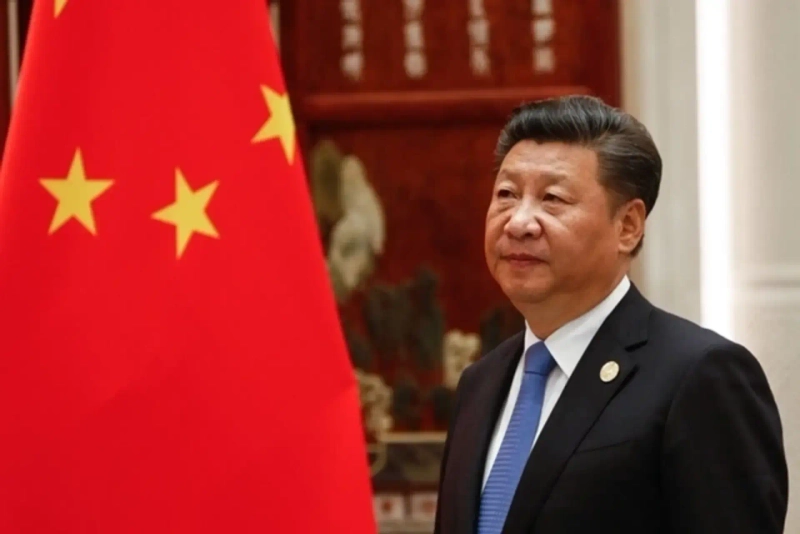
China is marshaling its artificial intelligence capabilities and computing infrastructure in a full-scale push for global AI leadership. At the 2026 World Artificial Intelligence Conference, or WAIC, the country unveiled Huawei Technologies Co.'s giant AI computing system and next-generation humanoid robots as Beijing accelerates efforts to build an AI ecosystem that can withstand US semiconductor curbs. Chinese President Xi Jinping also attended the event for the first time, taking aim at US efforts to contain China.
China opened the 2026 WAIC in Shanghai on July 17, showcasing advances in AI and humanoid robotics. Under the theme "AI Partner, Future in the Making," the country is holding the conference and a high-level meeting on global AI governance through July 20. More than 1,100 companies are exhibiting over 300 products at a venue spanning more than 100,000 square meters, and about 300 of those products are being shown for the first time in the world, according to the organizers.
As China emphasizes semiconductor self-reliance in response to US restrictions on advanced chips, Huawei displayed its Atlas 950 SuperPoD, an advanced AI computing supernode system. The product is designed to connect as many as 8,192 neural processing units, or NPUs, to train and run inference for large language models with trillions of parameters.
The system links thousands of Huawei's Ascend AI chips through a high-speed interconnect so they operate as a single massive AI computer. It is built for training and inference for large AI models. The setup underscores China's strategy of building its own AI infrastructure without Nvidia Corp.'s most advanced AI chips despite US export controls.
Chinese AI startup DeepSeek's latest V4 model has been optimized to run fully on a cluster based on Huawei's Ascend chips. Chinese AI chipmakers Biren and MetaX are also due to unveil new supernode AI computing systems.
The exhibition also features a wide range of robots, including humanoids. Unitree said it would display the world's first mass-produced transformable robot, the GD01, which can carry a person while moving. The robot is 2.7 meters tall and weighs 500 kilograms. It can switch between bipedal and quadrupedal movement.
The event also includes hands-on exhibits tied to China's so-called AI Plus strategy, which aims to apply AI across manufacturing, healthcare, education, elder care and entertainment. More than 140 forums will be held during the event, drawing about 1,400 participants, including Turing Award and Nobel Prize winners.
This year's WAIC is the ninth since the event began in 2018. Xi attended the opening ceremony for the first time and delivered a keynote speech outlining China's policy direction on AI development and global governance. "AI development should not be dominated by a single country," Xi said. He added that AI development should be not a solo run by one country but a symphony achieved through international cooperation, in remarks that were effectively directed at the US.
Attendees include United Nations Secretary-General Antonio Guterres, Kazakh President Kassym-Jomart Tokayev and Thai Prime Minister Anutin Charnvirakul. Turing Award and Nobel Prize winners, including deep learning pioneer Yoshua Bengio and Richard Sutton, are also participating, though attendance by major US Big Tech companies appears limited.
Kang Kyung-ju, Hankyung.com reporter qurasoha@hankyung.com

Korea Economic Daily
hankyung@bloomingbit.ioThe Korea Economic Daily Global is a digital media where latest news on Korean companies, industries, and financial markets.