Samsung, SK Hynix Become Global AI Barometers as Kospi-Nasdaq Correlation Triples
Summary
- The 60-day correlation of 0.46 between the Kospi and the Nasdaq 100 has risen to nearly three times the five-year average, underscoring the Korean benchmark’s emergence as a guide for global investment direction.
- Samsung Electronics and SK Hynix shares, along with their ADRs and Korea-linked ETFs, are serving as 24-hour trading indicators for global AI and semiconductor stocks as well as premarket signals for the U.S. session.
- Although the Kospi has fallen 25% since its June peak and Samsung Electronics and SK Hynix have each dropped at least 30%, South Korea’s market is expected to remain a hub for global AI investment because of the companies’ central role in memory-chip supply.
Forecast Trend Report by Period


Kospi-Nasdaq 100 correlation has nearly tripled
SK Hynix selloff drags down ADRs
Kospi has become part of the U.S. market ecosystem
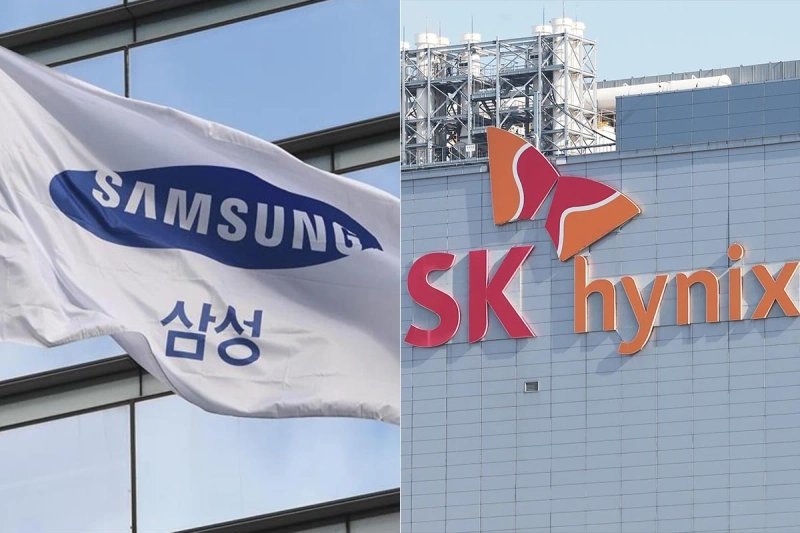
Samsung Electronics Co. and SK Hynix Inc. have emerged as key gauges for global artificial intelligence and semiconductor stocks. The 60-day correlation between the Kospi and the Nasdaq 100 has climbed to 0.46, close to a two-year high.
Bloomberg reported on July 19 that South Korea’s stock market is helping set the direction for global investors. Swings in Samsung Electronics and SK Hynix are increasingly influencing the global semiconductor market.
JPMorgan Asset Management’s chief strategist for Asian markets gave a presentation on South Korea to the firm’s global team for the first time in his 14 years at the company, Bloomberg reported. Japanese investors are also adding the Kospi to their watch lists.
Trading in global AI-related shares is now extending across 24 hours with South Korea at the center. After the Korean market closes, SK Hynix American depositary receipts traded in New York and exchange-traded funds tied to South Korea take over as the focus for investors.
In the past, overnight moves in U.S. stocks typically set the tone for the Kospi the next day. Recently, that relationship has started to reverse.
On July 13, the Kospi tumbled nearly 9% amid skepticism about future AI demand. SK Hynix ADRs dropped 9.3% on the same concerns. Other semiconductor shares also fell.
Bloomberg data show the 60-day correlation between the Kospi and the Nasdaq 100 has risen to 0.46. That is nearly three times the five-year average of 0.16.
Ivan Feinseth, chief investment officer at New York-based Tigress Financial Partners, said South Korea is now part of the same volatility ecosystem as the Nasdaq and the Philadelphia Semiconductor Index, or SOX.
Samsung Electronics, SK Hynix and the Kospi are acting as premarket signals for risk sentiment in U.S. AI and semiconductor stocks, he added. South Korea’s stock market is no longer a distant offshoot of an emerging market.
Bloomberg also said the Kospi’s recent slump could curb the Korean market’s influence to some extent. The Kospi has fallen 25% since its June peak, erasing $1 trillion in market value over that period.
Shares of Samsung Electronics and SK Hynix have each dropped at least 30%. That decline could weaken South Korea’s global influence.
Still, Samsung Electronics and SK Hynix continue to play central roles in memory-chip supply. Bloomberg said that should keep the Korean market at the center of global AI investment for some time.
Noh Jung-dong, Hankyung.com reporter, dong2@hankyung.com

Korea Economic Daily
hankyung@bloomingbit.ioThe Korea Economic Daily Global is a digital media where latest news on Korean companies, industries, and financial markets.