U.S.-Iran Ceasefire Near Collapse as Retaliatory Strikes Raise Full-Scale War Risk
Forecast Trend Report by Period


Retaliatory airstrikes widen after U.S. troop deaths
Iran expands attacks across the Middle East
Oil market jitters intensify as Hormuz closure threat grows
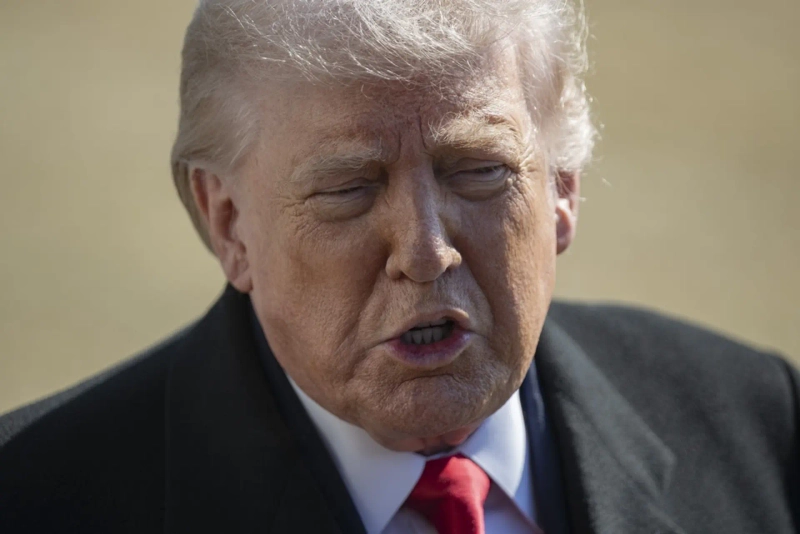
The U.S. and Iran are increasingly targeting civilian infrastructure, including bridges and desalination plants, alongside military facilities, heightening fears that full-scale conflict could resume. With retaliatory attacks continuing and U.S. troop deaths now reported, the ceasefire framework is being described as effectively broken.
The New York Times and CNN reported on July 19 that the U.S. and Iran have been exchanging attacks and reprisals around the Strait of Hormuz and elsewhere in the Middle East since late June.
The latest fighting resumed on June 25, when Iran used a drone to attack a commercial vessel transiting the Strait of Hormuz. The U.S. carried out airstrikes on Iran the next day. After Iran opened fire on commercial ships passing through the strait on July 7, U.S. Central Command launched additional strikes.
Talks to formally end the war reportedly collapsed at the last minute on July 12. Iran declared the Strait of Hormuz closed the same day. The U.S. then struck Iran for eight straight days, while Iran attacked U.S. bases across the Middle East.
On July 17, three U.S. service members were killed or went missing at a base in Jordan. It was the first U.S. military death since the ceasefire and the first reported case of American troops killed in a direct Iranian attack. The following day, another U.S. service member was killed in Iraq while defusing an unexploded Iranian drone munition. U.S. Central Command said the recent strikes were meant to swiftly retaliate against Iran's Islamic Revolutionary Guard Corps, or IRGC, for attacks on American personnel.
President Donald Trump told NewsNation the troops died while serving their country and called it "a very sad thing." Defense Secretary Pete Hegseth said their sacrifice would strengthen U.S. resolve.
CNN said the U.S.-Iran ceasefire had "effectively collapsed." The New York Times reported that the rest of the memorandum of understanding had also fallen apart. The Associated Press and The Washington Post said the two countries were moving closer to a renewed full-scale war.
A Trump administration official told The Washington Post that the U.S. was preparing for a broader conflict, including by increasing military aircraft deployments to the Middle East. The New York Times, citing unnamed officials, reported that British and German F-35 and F-16 fighter jets were being forward-deployed to Israel.
Targets are also expanding to civilian infrastructure. Foreign media reported that the U.S. struck Iranian bridges and desalination facilities. Iran said a nuclear power plant under construction in the country's southwest had come under U.S. attack. Trump said Iran must reach a deal this week or the U.S. would target not only bridges but also power plants.
Iran has widened its attacks from Qatar, the United Arab Emirates, Kuwait and Bahrain to Oman, Saudi Arabia, Jordan and Iraq. It has also targeted desalination facilities in Middle Eastern countries. Tehran warned it could no longer guarantee safe passage through the Strait of Hormuz for civilian commercial ships that do not comply with its controls. The possibility has also been raised that Iran could use the Iran-backed Houthi rebels to disrupt shipping lanes in the Red Sea.
Questions have also been raised about whether the U.S. could move to seize Kharg Island, a major Iranian oil export hub, or support Kurdish rebels. The Associated Press reported that any U.S. attempt to occupy islands near the Strait of Hormuz or Kharg Island would require tens of thousands of ground troops and additional naval forces.
The Wall Street Journal reported that both sides may also be using military action to pressure stalled negotiations to end the war. With 20% of global oil supply passing through the Strait of Hormuz, a prolonged closure would inevitably drain inventories and push up crude prices.
Hong Min-seong, Hankyung.com reporter mshong@hankyung.com

Korea Economic Daily
hankyung@bloomingbit.ioThe Korea Economic Daily Global is a digital media where latest news on Korean companies, industries, and financial markets.