Korean Tax Officials Call for Special Criminal Procedure Rules on Seizing Self-Custodied Crypto
Forecast Trend Report by Period


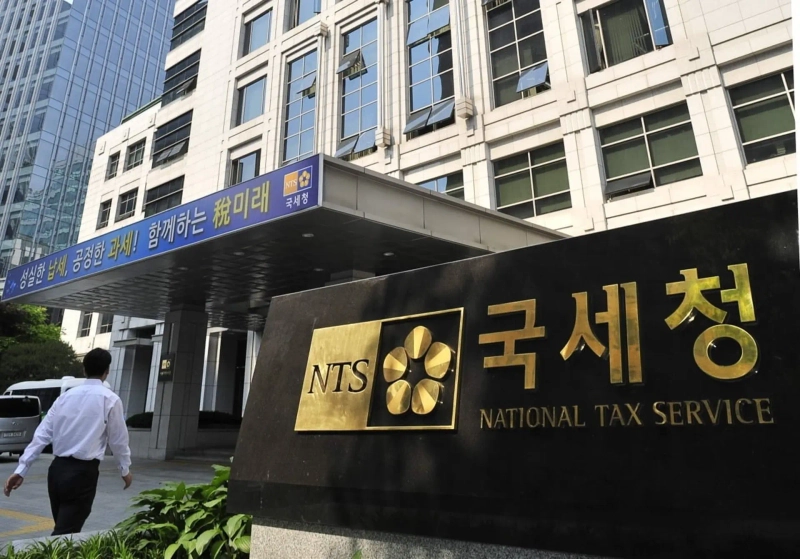
South Korea needs to amend its Criminal Procedure Act to allow lawful and effective seizure of self-custodied virtual assets, according to a legislative proposal by National Tax Service officials.
Digital Asset reported on July 20 that four authors, including Jang Hee-won, a team leader at the National Tax Service, published a paper last month in Criminal Policy Research, a journal of the Korean Institute of Criminology and Justice. The paper was titled “Limits of Executing Seizures of Self-Custodied Virtual Assets and a Legislative Review.”
Self-custodied virtual assets are holdings that are not entrusted to a third party such as an exchange or custodian. Instead, users directly hold and manage access credentials including private keys or mnemonic codes. Personal wallets, including hardware wallets, are a typical example.
The paper noted that the Supreme Court, in a 2025 decision, recognized that Bitcoin can be subject to seizure under the Criminal Procedure Act. But that alone does not solve the problem of enforcing seizure against self-custodied virtual assets, it said.
“Recognizing that an asset is subject to seizure does not in itself guarantee that the method of executing a seizure against self-custodied virtual assets is lawful or effective,” the paper said.
It added that in self-custody, securing a wallet device or access information alone does not eliminate a suspect’s ability to dispose of the assets. Preservation for confiscation is also inherently difficult in a structure with no third-party debtor or intermediary.
Traditional seizure methods for physical property work by securing possession of the object and blocking disposal. Self-custodied virtual assets are different because they cannot be physically possessed. Even if investigators secure a wallet device or private key, the person subject to seizure may still transfer the assets through another wallet if that person separately retains the same access credentials.
For that reason, the paper said effective seizure of self-custodied virtual assets requires moving the assets from the existing address to a new one. But such an address transfer is not merely an auxiliary enforcement step. It could amount to a coercive measure that changes the property-control structure of the person subject to seizure, making it difficult to justify under Article 120 of the current Criminal Procedure Act, which permits “necessary measures.”
“An address transfer is not a preparatory act to gain access to the property subject to seizure,” the paper said. “It is an act that changes where the authority to dispose of the virtual assets resides.”
The paper argued that existing legal theories on preservation for confiscation, or the practice of freezing bank accounts, do not provide a sufficient basis. Preservation for confiscation only bars disposal of property and does not give investigators the authority to directly transfer virtual assets. Bank account freezes also assume a structure involving a third-party debtor such as a financial institution.
The authors therefore proposed adding special rules to the Criminal Procedure Act for executing seizures of virtual assets. Under those rules, a warrant should specify the type and amount of virtual assets to be seized, the identified virtual asset address, the destination address, the transfer method and the post-transfer custody method.
The paper also said transferred virtual assets should not be stored at an address controlled solely by an investigative agency. A single-controller structure could create risks including private-key leaks, operational mistakes, external theft and unilateral disposal by investigators.
“The key is to clearly define the requirements for address transfers, the items to be stated in warrants, the destination virtual asset address, the transfer method and the custody method,” the paper said.
It added that transferred virtual assets should be held not at an address controlled solely by an investigative agency, but in a three-party joint management structure involving the court, the person subject to seizure or another rights holder, and the investigative agency.
The paper also proposed a procedure for urgent cases in which assets are first moved to a temporary virtual asset address designated or managed in advance by the court, then reported to the court without delay and later transferred to a jointly managed address.

Minseung Kang
minriver@bloomingbit.ioBlockchain journalist | Writer of Trade Now & Altcoin Now, must-read content for investors.