Israel Says Iran Hid Thousands of Uranium Centrifuges in Mountain Tunnels, Shared Intelligence With Trump
Summary
- Israel’s intelligence agencies said they had determined that Iran moved thousands of uranium-enrichment centrifuges into deep underground tunnels inside a mountain last fall.
- President Donald Trump said he was prepared to attack Pickaxe Mountain, calling it a potential target for “a big, powerful hit.”
- US and Israeli officials and experts have long been concerned that the underground tunnels at Pickaxe Mountain could be used to store and manufacture nuclear equipment and to build a small enrichment facility for nuclear material production.
Forecast Trend Report by Period


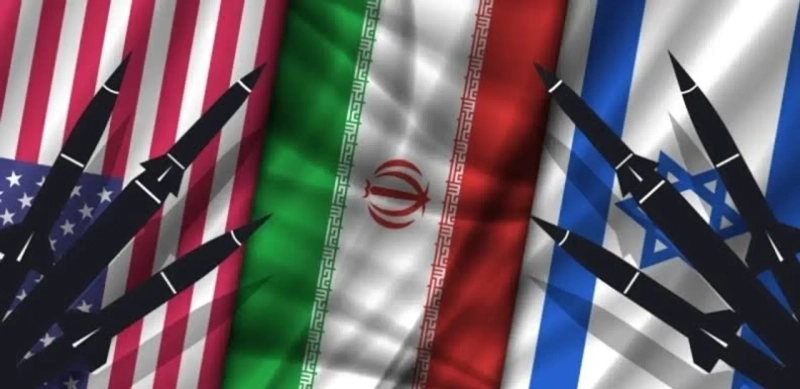
Israel’s intelligence agencies have concluded that Iran moved thousands of uranium-enrichment centrifuges into deep underground mountain tunnels last fall. Israel shared that assessment with the US, and President Donald Trump is believed to have been briefed on the intelligence, drawing attention to what Washington may do next.
The Wall Street Journal reported on July 20 that Israel believes the centrifuges were moved to the Pickaxe Mountain facility several months after the 12-day war in June last year, when US and Israeli airstrikes heavily damaged Iran’s three main nuclear sites.
Trump recently said he was prepared to strike Pickaxe Mountain. In an interview published on July 13, he called the mountain “a potential target for a big, powerful hit.” It was the first time he had referred to Pickaxe Mountain by name.
Pickaxe Mountain in central Iran was not considered a main bombing target during the war in June last year. It also was not targeted in the war that began on Feb. 28 this year.
US and Israeli officials, along with outside experts, have long worried that Iran could use tunnels in the mountain to store or manufacture nuclear equipment and build a small enrichment facility to produce nuclear material. Pickaxe Mountain, known in Iran as Kolang Mountain, has been under US and Israeli surveillance for years for that reason.
Located near Iran’s main nuclear facilities, Pickaxe Mountain has been viewed as a possible underground fortress to replace Iran’s centrifuge assembly facility, which was severely damaged in an explosion in 2020. The Institute for Science and International Security, a US think tank, said activity at the site over the past 15 months has included truck movements, tunnel reinforcement and the establishment of security zones.
Work has also been detected around an older tunnel network that was created in 2007 and later sealed off by Iran. “There is a strong possibility that Iran moved centrifuges into the tunnels inside Pickaxe Mountain,” David Albright, the institute’s president, said.
Experts estimate the underground complex lies about 90 to 140 meters beneath solid bedrock. They believe it has enough space to house multiple nuclear-related facilities.
Nate Swaimson, who served as the White House National Security Council’s Iran director during the Biden administration, said activity inside a hardened underground site was a serious concern given Iran’s history of covert nuclear work. “The worst-case scenario is that Iran secretly completes the development of a nuclear weapon,” he said. “We do not know Iran’s intentions, but the fact that this facility cannot be verified in itself shows how serious the current situation is.”
He said the International Atomic Energy Agency must be allowed to enter and inspect the site. Iran, however, has not allowed the IAEA any access to the facility.
A centrifuge is a machine that spins uranium gas at high speed to separate and enrich isotopes used in civilian nuclear power generation or weapons production. Iran says it has never pursued nuclear weapons development. Even so, it is known to have produced about 450 kilograms of uranium enriched to 60%, close to weapons grade.
Even if centrifuges were deployed at Pickaxe Mountain, that would not necessarily mean Iran is building an enrichment facility there, the Journal said. Iran may simply have moved its remaining centrifuges there after the war in June last year to reduce the risk of their destruction.
It is also unclear where the centrifuges cited in the intelligence Israel shared with the US were originally located. The Journal said they may have been spare machines stored at Iran’s main nuclear facilities.
Park Su-bin, Hankyung.com reporter, waterbean@hankyung.com

Korea Economic Daily
hankyung@bloomingbit.ioThe Korea Economic Daily Global is a digital media where latest news on Korean companies, industries, and financial markets.