PiCK
IoTrust Unveils Card-Style Cold Wallet, Steps Up Institutional Push
Summary
- IoTrust said it launched the card-style cold wallet D’CENT S to target demand for long-term asset storage and access to on-chain services.
- The company said D’CENT S is optimized for users who frequently use on-chain finance, with stronger convenience and security through NFC, a recovery card, and an AI-based transaction risk scan feature.
- IoTrust said it will launch cold wallet service D’CENT Enterprise for institutions in September, targeting the institutional asset-management market with multi-approval, whitelist, and compliance features.
Forecast Trend Report by Period


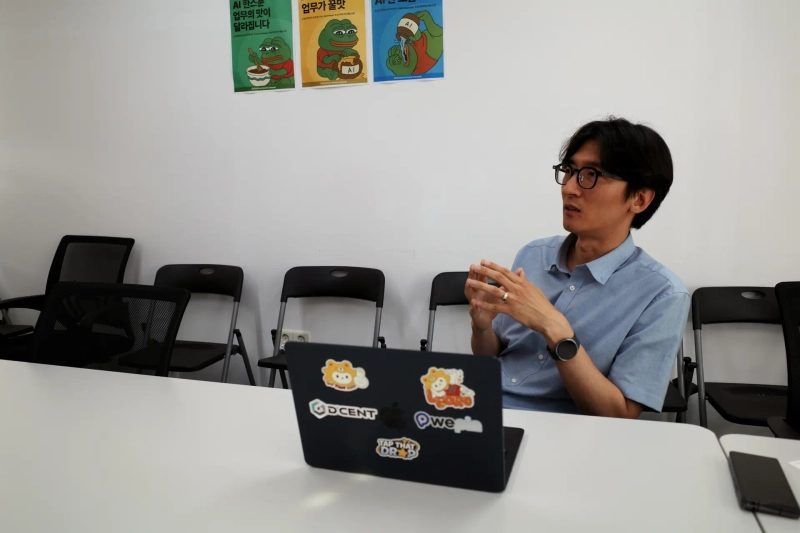
“Exchanges are fundamentally places to buy and sell crypto. There’s no need to keep long-term holdings there, too.”
Minho Yoo, co-founder and chief strategy officer of IoTrust, made the remarks in an interview with Bloomingbit on July 22.
IoTrust is the only cold-wallet maker in South Korea. The company launched its card-style wallet, D’CENT S, on July 21, about eight years after introducing its fingerprint-authentication wallet D’CENT in 2018.
Yoo framed the need for cold wallets around two uses: storing assets and accessing on-chain services. He described a cold wallet as a personal digital safe. Investors who are uneasy about keeping all their assets on an exchange may leave some there for trading, but should separate out long-term holdings, he said.
The cold-wallet market remains concentrated overseas, especially in the US and the European Union. Yoo said the 2022 collapse of FTX helped shape the view in markets such as the US that relying entirely on third parties to hold assets can be risky. That helps explain why demand for hardware wallets is stronger in the US than in South Korea, where trust in the traditional financial system and large exchanges remains relatively high. About 60% of IoTrust’s revenue comes from the US.
He stressed that cold wallets do more than function as safes. Users need a separate wallet to use decentralized finance, or DeFi, services, including borrowing against crypto collateral or earning rewards through staking.
Yoo also said it becomes increasingly burdensome to keep all crypto holdings in software wallets that are constantly connected to the internet as assets grow. “Crypto isn’t only about investing,” he said. “A hardware wallet is a tool for keeping assets secure while freely using on-chain services.”
“Cold wallets will become more important”
Cold wallets are likely to become more important over time, Yoo said. “Regardless of the price of individual tokens, the scope of blockchain technology has steadily expanded,” he said. “As not only finance but also identity information moves on-chain, the importance of security and the value of cold wallets will rise as well.”
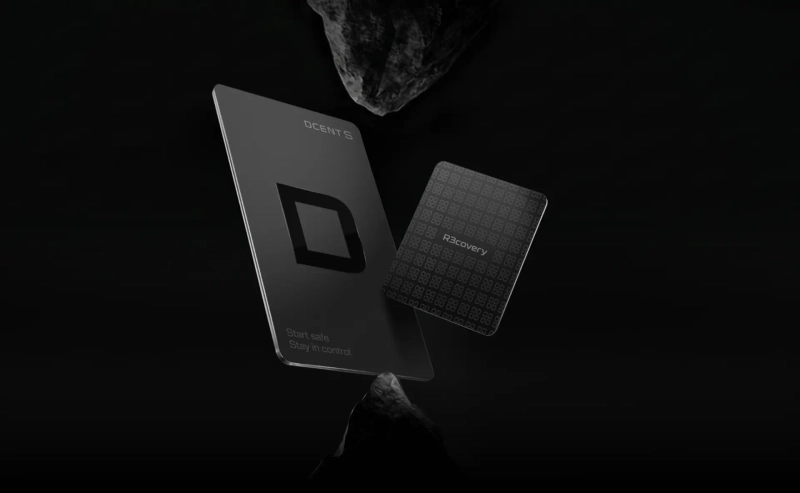
Asked why IoTrust developed a card-style wallet, Yoo said existing cold wallets with screens let users verify transaction details on the device itself, but come with drawbacks in price and portability. He added that conventional cold wallets also face an adoption hurdle because the initial setup process can be difficult. With on-chain finance beginning to enter daily life, now is the right time to introduce a more mainstream form factor, he said.
D’CENT S was designed with portability and ease of use in mind. It uses near-field communication, or NFC, allowing users to complete a signature by tapping the wallet against a smartphone much like a transit card. It has the same form factor as a credit card, making it easy to carry in a wallet, while reducing both the price burden and the difficulty of initial setup. If a traditional cold wallet is the main safe kept at home, the card-style wallet is closer to a secondary wallet carried at all times, Yoo said. It is optimized for users who frequently use on-chain services.
Institutional service to launch in September
IoTrust also sought to differentiate its asset-recovery method. D’CENT S comes with an R3covery card that stores an encrypted seed phrase separately from the main wallet. If the main card is lost or damaged, users can restore their assets within minutes through the D’CENT app as long as they still have the recovery card.
The company also incorporated artificial intelligence to offset the limitations of a card-style wallet with no screen. Before a user gives final approval, AI scans the transaction for risk. The feature acts as a safeguard by screening for suspicious elements in advance, Yoo said.
IoTrust plans to launch D’CENT Enterprise, a cold-wallet service for institutions, in September. The service centers on combining a hardware wallet equipped with a security chip with an institution’s asset-management policies. In practice, transactions must pass through a multi-approval process involving pre-registered personnel, while transferable addresses are limited to a whitelist.
IoTrust also plans to offer a dashboard that lets institutions monitor transaction requesters, approvers and transaction histories, along with recovery services for damaged devices and other issues. D’CENT Enterprise’s strengths also include compliance support tailored to South Korean regulations and after-sales service, Yoo said.

JOON HYOUNG LEE
gilson@bloomingbit.ioCrypto Journalist based in Seoul