Circle CSO Says South Korea Should Use ‘Second-Mover’ Edge in Crypto Rules
Summary
- Circle said it signed MOUs on stablecoin technology cooperation with Kakao, Kakao Pay, KakaoBank, Toss, and Toss Bank.
- Circle CSO Dante Disparte said South Korea, as a second mover, should craft crypto regulation that combines the strengths of the U.S. GENIUS Act and Europe's Markets in Crypto-Assets (MiCA) framework.
- Disparte said South Korea should move quickly to build technology infrastructure for an agentic economy based on agentic artificial intelligence (AI) and stablecoins, and that the traditional financial system can also grow alongside it.
Forecast Trend Report by Period


Circle Signs Stablecoin MOUs With Kakao, Toss
"Fintech-Stablecoin Interaction Is Essential...
Technology Infrastructure Must Not Lag Even if Regulation Does"
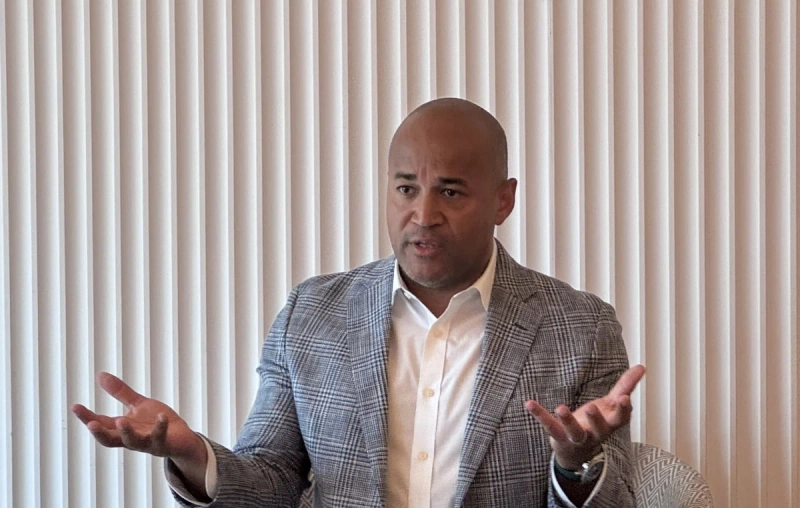
"South Korea can gain a major advantage in regulation and policy as a second mover."
Dante Disparte, chief strategy officer at Circle, made the remarks to reporters on July 23 at Josun Palace in Seoul's Yeoksam-dong. He said South Korea can study systems adopted elsewhere and write better rules. Disparte oversees Circle's regulatory strategy and testified at hearings on the GENIUS Act, the U.S. stablecoin bill, to present the industry's views.
Circle, the issuer of USDC, the world's second-largest dollar-backed stablecoin, is expanding its ties with South Korean fintech companies. On July 23, it signed memorandums of understanding on stablecoin technology cooperation with Kakao Group — Kakao, Kakao Pay and KakaoBank — as well as Toss and Toss Bank.
Circle views fintech platforms and stablecoins as complementary in building an ecosystem. The interaction between them creates network effects that generate demand on both sides. "You can't put a new train on old tracks," Disparte said. He added that innovation in crypto comes from its interaction with the infrastructure that moves money. Circle plans to actively test what kinds of services can be built.
Disparte said South Korea can turn delays in crypto legislation into an advantage, citing the U.K., which established a crypto regulatory framework this year. The U.S. passed the GENIUS Act last year, while Europe introduced the Markets in Crypto-Assets, or MiCA, framework in 2023. South Korea's Digital Asset Act, legislation intended to govern virtual assets, has been delayed, but the country can still combine the strengths of the U.S. and European approaches, he said.
"Europe's MiCA was designed relatively defensively to limit the entry of big tech, but it has recently become much more market-friendly," Disparte said. He said South Korea should combine the strengths of U.S. and European regulation while writing rules that make use of the technological capabilities of companies such as Toss and Kakao. He added that a partnership between South Korea and the U.S. on crypto payments and broader economic cooperation is also possible.
He cautioned, however, that technology infrastructure must not fall behind. Agentic artificial intelligence that pays directly with stablecoins is approaching quickly, bringing what he described as an "agentic economy." "Passage of regulatory bills may be delayed, but the technology itself must not lag," Disparte said. If South Korea adopts rules aligned with international standards such as the GENIUS Act, it could become a model case, he added.
Disparte also said crypto regulation could become an opportunity to develop the financial industry, with traditional finance also standing to benefit. "In the past, governments and banks worried that stablecoin adoption would pull deposits out of banks, but in reality, banks around the world that partnered with Circle grew alongside Circle," he said.
Park Si-on, Hankyung.com reporter ushire908@hankyung.com

Korea Economic Daily
hankyung@bloomingbit.ioThe Korea Economic Daily Global is a digital media where latest news on Korean companies, industries, and financial markets.