NPS Chief Says Pension Fund Isn’t Meant to Support Stocks or Defend Share Prices
Summary
- Kim Sung-joo said the National Pension Service’s investment is not aimed at supporting the stock market or defending share prices.
- He said the National Pension Service pursues sustainable returns through long-term diversified investment in domestic and overseas assets under principles including profitability, stability and public responsibility.
- He said this year’s Kospi volatility exceeded Bitcoin’s, with concentration in large semiconductor stocks and retail investor flows combining to drive the swings.
Forecast Trend Report by Period


NPS Chief Says Fund Won’t Overreact to Sharp Market Swings
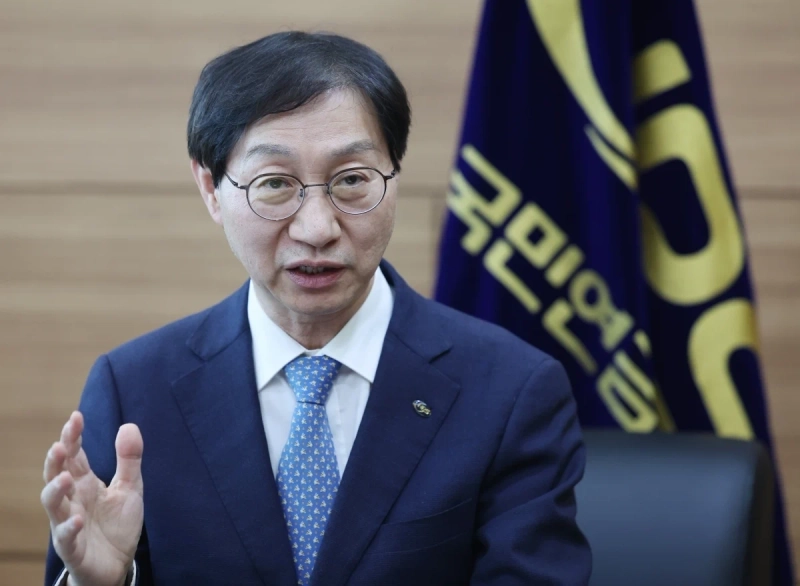
As calls mounted from investors for South Korea’s National Pension Service to play a bigger role during the recent market turbulence, Chairman Kim Sung-joo drew a clear line. The pension fund’s investments are not meant to support the stock market or defend share prices, he wrote. They are also not intended to act as either a market backstop or an amplifier.
On July 23, Kim posted the remarks on social media under the title, “Everything Ends With the NPS?”
The National Pension Service manages retirement funds under six principles, including profitability, stability and public responsibility, Kim wrote. The essence of fund management, he said, is to generate sustainable returns through long-term, diversified investment across domestic and overseas assets and return those gains to the public in the form of retirement pensions.
The post appeared to be Kim’s direct response to a series of arguments casting the pension fund as either a cause of recent market volatility or a solution to it. The comments came after a grace period for the NPS’s domestic equity rebalancing expired on June 30. Ahead of that deadline, the National Pension Fund Investment Committee raised this year’s target allocation for domestic stocks to 20.8% from 14.9% and widened the upper limit for strategic asset allocation to 26.8% from 19.9%.
Kim made clear that the fund’s role is not to prop up the stock market, but to generate long-term returns for the public’s retirement.
He said the NPS is sticking to its investment principles with a long horizon and long-term perspective, without reacting to every swing in today’s highly volatile market. The fund does not invest based on short-term market moves, he added. It is a public pension fund that pursues long-term returns for citizens’ retirement.
The Kospi’s volatility this year has even exceeded that of Bitcoin, which is notorious for sharp price swings. Bloomberg reported a day earlier that year-to-date volatility in Kospi returns stood at 61%, compared with 50% for Bitcoin. That was nearly double the volatility of Japan’s Nikkei 225.
Return volatility measures how far daily returns in a given period deviate from the average daily return. The Korea Exchange has triggered 40 sidecars this year — temporary suspensions of program buy or sell orders — and seven circuit breakers, which halt trading for 20 minutes.
Heavy concentration in Samsung Electronics and SK Hynix has also been cited as a key driver of the turbulence. The two companies delivered surging earnings as suppliers of memory chips for next-generation artificial intelligence systems, sending their shares sharply higher. Listings by affiliated companies added to the concentration, leaving the two companies and related affiliates accounting for more than half of the Kospi’s market capitalization.
Bloomberg said that has effectively turned funds tracking the Kospi into AI bets. When the index reached a record high at the end of June, more than 650 of its 831 constituents were actually down, Bloomberg reported.
Bloomberg also said South Koreans have long shown strong interest in the stock market, and that the AI frenzy centered on Samsung Electronics and SK Hynix has further fueled that enthusiasm. Retail investors in the country have a strong appetite for returns and a high tolerance for risk, producing herd-like trading patterns, it said.
Still, securities firms in Seoul’s Yeouido financial district largely see the recent correction in Korean equities as the result of valuation pressure after the Kospi’s sharp rise since last year, combined with the global headwind of rising sovereign bond yields.
A financial investment industry official said the Kospi’s recent volatility reflects a combination of AI-driven concentration in large semiconductor stocks and retail investor flows. The moves are difficult to explain through the trading of any single investor group alone, the person said.
Kang Kyung-joo, Hankyung.com reporter qurasoha@hankyung.com

Korea Economic Daily
hankyung@bloomingbit.ioThe Korea Economic Daily Global is a digital media where latest news on Korean companies, industries, and financial markets.