Will the BOK Raise Rates Again in August After July Hike?
Summary
- Stronger-than-expected second-quarter GDP and real GDI growth has focused attention on whether the Bank of Korea will raise its benchmark interest rate in August.
- Shinhan Securities and iM Securities, among others, raised the possibility of a back-to-back hike and projected an August benchmark interest rate increase.
- Some brokerages, however, said an October rate hike is more likely, citing lower international oil prices, slowing gains in semiconductor prices and consumer inflation.
Forecast Trend Report by Period


Shin Hyun-song Says He Will Watch GDP and Inflation
Brokerages See Chance of Back-to-Back Hike
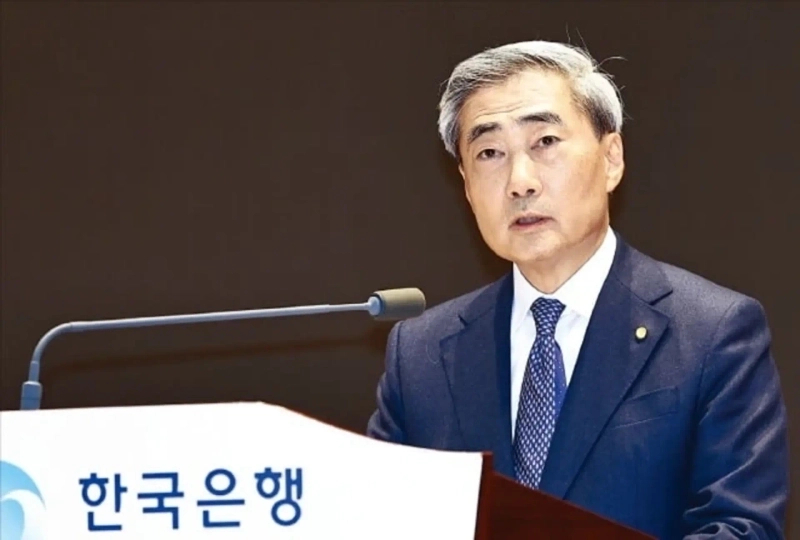
Stronger-than-expected second-quarter gross domestic product growth has sharpened market focus on whether the Bank of Korea will follow its July move with another benchmark interest-rate increase in August. Still, some brokerages see the next hike coming in October instead, citing a recent decline in the won-dollar exchange rate and the prospect of a relatively stable July inflation reading.
Shinhan Securities and iM Securities said on July 23 that they expect the BOK to deliver a back-to-back hike next month, raising the benchmark rate for a second straight month. Citigroup, JPMorgan and Korea Investment & Securities have also recently projected consecutive rate increases by the central bank.
BOK Governor Shin Hyun-song said on July 16, when asked about the possibility of an August hike, that the bank would keep all options open in setting policy. He added that the decision would depend on second-quarter national income data and July inflation. Shin said he would pay close attention to whether the first quarter's unprecedented GDP and gross domestic income, or GDI, figures are revised down or remain intact.
Second-quarter real GDI rose 15.6%, the fastest pace since the first quarter of 1988 and the highest in 38 years and three months. The gap between real GDI and GDP widened to 11.9 percentage points in the second quarter from 9.4 percentage points in the first quarter. The BOK is wary that a sharp rise in GDI, a measure of real purchasing power, could fuel demand-side inflation pressure.
Kim Myung-sil, an analyst at iM Securities, said the odds of an August hike are not low because higher profits at semiconductor companies, gains in stock prices, bigger performance bonuses, capital investment and increased tax revenue could have meaningful spillover effects on income and demand across the economy.
Others expect the BOK to skip August and move in October. July consumer inflation, which Shin also said he would examine alongside GDP, could ease from June because of lower international oil prices. Some analysts also say the gap between GDP and GDI may have peaked in the second quarter, especially as gains in semiconductor prices have recently slowed.
Lim Jae-kyun, an analyst at KB Securities, said it is difficult to argue that demand-side inflation pressure has intensified because private consumption was boosted by Samsung Electronics' large promotional events and disaster relief payments. He said consecutive hikes are unlikely. Lee Seung-hoon, an analyst at Meritz Securities, said the BOK's back-to-back increases in 2021 and 2022 came when home prices were surging sharply or when stabilizing inflation had become urgent. While the economy is performing well, conditions do not call for consecutive rate increases to safeguard prices and financial stability, he said.
Shim Seong-mi, Korea Economic Daily reporter smshim@hankyung.com

Korea Economic Daily
hankyung@bloomingbit.ioThe Korea Economic Daily Global is a digital media where latest news on Korean companies, industries, and financial markets.