Semiconductor Peak? Analyst Says a Second Major Rally Is Taking Shape
Summary
- Park Moon-hwan said the recent negatives affecting semiconductor stocks were merely short-term sentiment-driven factors, and that expanding AI infrastructure investment and long-term agreements (LTAs) could open a new phase for the industry.
- He said demand from AI agents, data centers, and memory semiconductors will continue to rise, making the current scale of investment insufficient to meet future demand and leaving the chip industry with ample room for growth.
- He also said long-term supply agreements could ease the semiconductor sector’s sharp boom-bust cycle and increase the chances of stable growth, while naming TSE, HBM, and test sockets as part of the semiconductor testing segment likely to benefit from AI chips.
Forecast Trend Report by Period


Focus should be on expanding AI infrastructure investment rather than short-term headwinds; memory demand continues to grow
Long-term supply agreements are spreading, potentially reshaping the chip industry’s boom-bust cycle
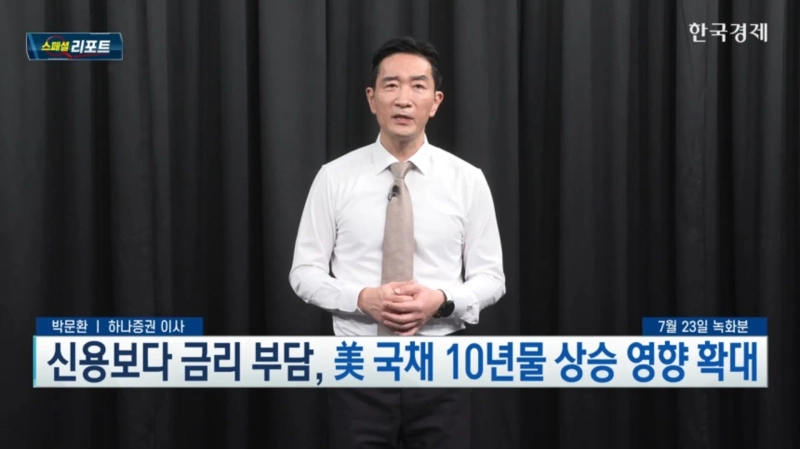
Park Moon-hwan, a director at Hana Securities and a WowNet partner, said the recent volatility in semiconductor stocks was driven largely by short-term sentiment. By contrast, shifts in AI investment and the expansion of long-term agreements, or LTAs, could usher in a new phase for the chip market.
Park cited the release of Chinese startup Moonshot AI’s open-weight model Kimi K3 and the controversy surrounding AI model distillation. While some investors have raised concerns about weaker semiconductor demand, he said demand for computing power and memory will keep rising as the industry moves toward the age of AI agents. In his view, the market has been overreacting to a psychological shock rather than a fundamental technology shift.
He also pointed to a recent wave of large corporate bond issuance by big technology companies. As funding for AI infrastructure shifts from internal reserves to external borrowing, interest rates are emerging as a key variable for the semiconductor cycle, Park said. The recent correction in chip stocks also reflects concerns over rising rates and higher financing costs.
Park maintained a positive long-term outlook. Demand for data centers and memory chips will continue to grow as AI and humanoid robots spread more widely. He added that the current level of investment will not be enough to meet future demand, leaving the semiconductor industry with substantial room for further growth.
He identified the expansion of long-term supply contracts as a particularly important change for the sector. Such agreements may lower earnings estimates in the short term, but over time they can provide more stable supply and pricing and alter the industry’s structure. That raises the chances of breaking away from the old cycle of repeated slumps caused by oversupply and moving into a more stable growth phase.
Among areas expected to benefit from AI semiconductors, Park highlighted test consumables company TSE. Demand for key consumables such as probe cards and test sockets will likely rise along with growth in HBM and other high-performance memory, he said. As the AI era accelerates, growth in the semiconductor testing segment could become even more pronounced.
Park Moon-hwan’s "Focus on the Market" airs at midnight on the second and fourth Fridays of each month on Korea Economic TV and the WowNet YouTube channel.
Park Kwon-min, Korea Economic TV reporter reice@hankyungtv.com

Korea Economic Daily
hankyung@bloomingbit.ioThe Korea Economic Daily Global is a digital media where latest news on Korean companies, industries, and financial markets.