Naver, Nvidia, Brookfield Forge $10 Billion Alliance to Build Asia’s Largest AI Hub
Summary
- Naver said it had unveiled an AI infrastructure investment and financing support plan worth up to $10 billion with Nvidia and Brookfield.
- Naver said it plans to build a 200MW AI factory at its Sejong data center capable of housing about 100,000 GPUs, then expand it over the longer term to 1GW to provide computing resources and cloud services to domestic and overseas governments, companies and AI startups.
- Industry participants said the partnership could help Naver target the sovereign AI market and expand from an 'AI-enabled platform company' into one that builds and operates factories producing AI.
Forecast Trend Report by Period


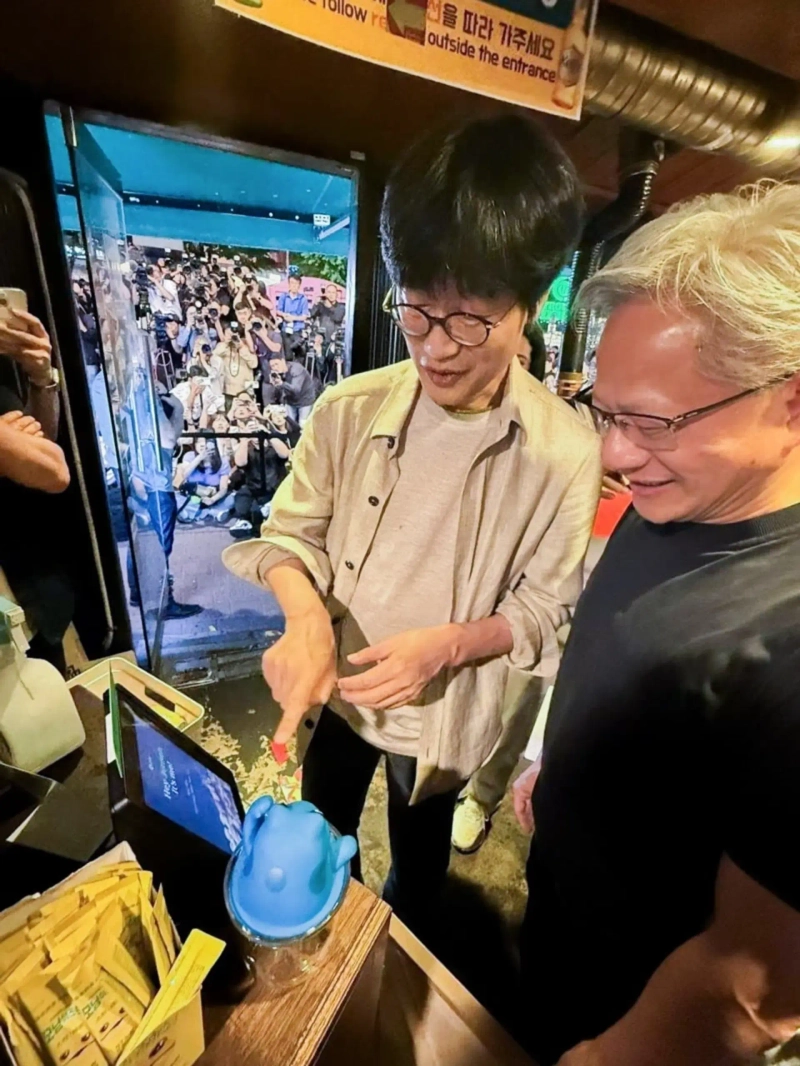
Naver Corp. has lined up as much as $10 billion in investment and financing from Nvidia Corp. and Brookfield Corp. to build a 200-megawatt AI factory at its Sejong data center, a project the South Korean internet company plans to expand to 1 gigawatt over time. The facility is designed to house about 100,000 graphics processing units, in what could become an early push to capture the sovereign AI market.
Naver, Nvidia and Brookfield unveiled the AI infrastructure investment and financing plan on July 24 at an AI summit in San Francisco. Nvidia plans a $1 billion strategic investment in Naver, while Brookfield signed a non-binding letter of intent to provide up to $9 billion. Naver said it will supply the rest of the capital required for the project.
Nvidia's investment is contingent on Naver separately securing at least $9 billion in committed financing. Brookfield's support also remains at the non-binding agreement stage rather than under a final contract.
“Naver's challenge has been how to scale the knowledge and operating know-how it has built up over the past 30 years,” Naver Chairman Lee Hae-jin said. He added that the two companies' capital, global brands and networks would create a major opportunity to scale up Naver's expertise.
At the core of the project is Naver's plan to turn the data-center and AI capabilities it built for its own services into a standalone business for external customers. The company has designed its own data centers and managed large fleets of servers and GPUs to keep its search, commerce and content services running reliably. It now plans to use that experience to offer computing resources, cloud services and AI model development environments to governments, companies and AI startups.
The partnership also aligns the three companies' interests. Naver needs capital and a global sales network to take its in-house data-center design and operating technology, HyperCLOVA X and Naver Cloud into overseas markets. Nvidia is pushing to spread its AI factory standard globally by bundling chips, servers, software and data centers rather than simply selling GPUs. Brookfield views AI infrastructure, including power and data centers, as a new core investment asset and is seeking large-scale projects.
Under the arrangement, Naver will oversee operations, Nvidia will provide computing technology, and Brookfield will contribute long-term capital and experience in power and infrastructure investing. Brookfield manages about $100 billion of assets tied to AI infrastructure, including data centers, computing, semiconductor manufacturing and dedicated power-generation facilities. In South Korea, it has invested in infrastructure, real estate and energy since 2014 and manages about $12 billion in assets there.
The initial build-out has grown to more than three times the original plan. In June, Naver and Nvidia said they would build a 55-megawatt AI factory based on Nvidia's DSX platform at GAK Sejong, Naver's hyperscale data center in Sejong. Under the new partnership, the project will be expanded to 200 megawatts by 2028. Nvidia said the site would be large enough to run about 100,000 GPUs. It is slated to operate as a multi-tenant AI cloud using next-generation platforms including Vera Rubin and Blackwell.
Over the longer term, Naver plans to expand the AI infrastructure to 1 gigawatt and supply computing resources not only to South Korean companies and government agencies but also to global AI companies, including those in the US. The company wants to move beyond facilities used to develop its own AI models and build a large production base supporting AI model training, inference, and the operation of agentic and physical AI services.
Naver is targeting the sovereign AI market, where governments and companies want to keep data and AI systems under domestic control. Demand is rising for AI tailored to local languages, regulations and industry data, rather than relying entirely on the models and cloud services of global technology companies. That is increasing the value of providers that can offer everything from data-center operations to models and cloud services. Naver is already pursuing sovereign AI projects in Europe and the Middle East.
“The internet world Naver envisions is not one where the internet and AI are dominated and controlled by one or two groups,” Lee said. “To preserve the world's diversity, there must be many AIs that can emerge and operate for each country, group and individual.” He added that Naver would work with global companies that share that vision to build a world where diverse AIs coexist.
Industry participants view the partnership as a potential turning point for Naver as it broadens its business from an AI-using platform company into one that builds and operates factories producing AI. “Large-scale AI infrastructure requires not only technology, but also massive capital, power procurement and the ability to win global customers,” one AI industry official said. “If Naver can turn this alliance into actual orders and utilization, the business model of South Korea's internet companies could fundamentally change.”
Ahn Jeong-hoon, Hankyung.com reporter ajh6321@hankyung.com

Korea Economic Daily
hankyung@bloomingbit.ioThe Korea Economic Daily Global is a digital media where latest news on Korean companies, industries, and financial markets.