Kim Eun-hye Denies Report She Is Weighing State Compensation Over Losses in Samsung, SK Hynix Leveraged ETFs
Summary
- Kim Eun-hye said reports that she is reviewing the possibility of a state compensation claim over losses in Samsung and SK Hynix leveraged ETFs are "not true."
- A plunge in Samsung Electronics and SK Hynix shares pushed single-stock leveraged ETFs to mid-to-high 20% one-day losses, leaving them far below their listing price.
- Even as more than 7 trillion won flowed on a net basis into single-stock leveraged and inverse ETFs, politicians and financial authorities are discussing tighter rules, including delisting reviews, a halt to new listings and a marketing ban.
Forecast Trend Report by Period


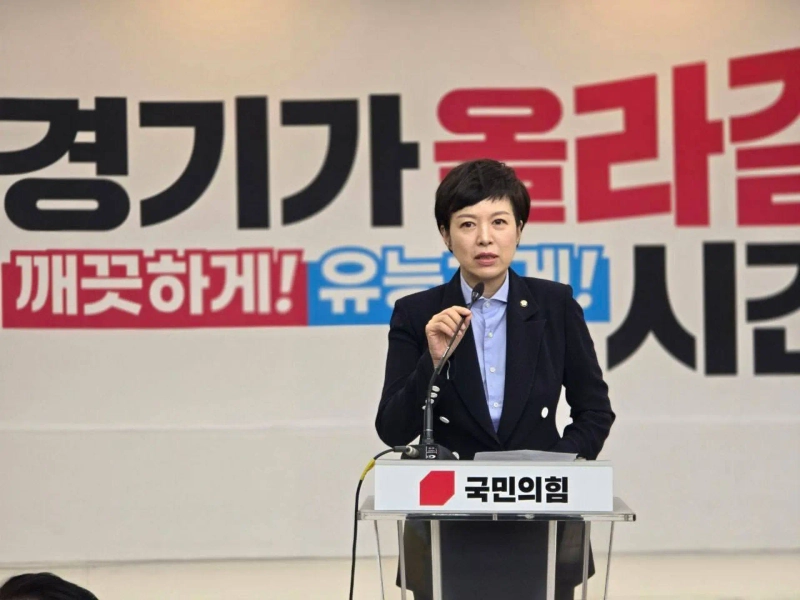
People Power Party lawmaker Kim Eun-hye denied a report that she is considering whether investors in single-stock leveraged exchange-traded funds tied to Samsung Electronics Co. and SK Hynix Inc. could seek state compensation for their losses.
In a Facebook post on July 28, Kim said the government’s overreach should be criticized and corrected. She said she had only expressed a general and basic position that the investment environment so far should be reviewed and investors’ opinions heard.
Kim said she had never mentioned state compensation and expressed regret that the outlet framed the matter as if it were her own remarks. She reiterated that her actual position is to gather the views of affected investors and assess the situation, while discussing a parliamentary fact-finding probe into how people’s assets were driven into highly volatile speculative products.
Her clarification came as losses in the Samsung and SK Hynix leveraged products widened further on July 28.
The Kospi at one point fell more than 10% intraday, slipping to the low 6,000 level as a selloff in US semiconductor shares and geopolitical tensions stemming from the Middle East rattled markets. Sell-side sidecars were triggered in both the Kospi and Kosdaq markets, followed by circuit breakers. As of 12:10 p.m., Samsung Electronics was down 12.20% at 223,000 won, while SK Hynix had fallen 13.00% to 1.58 million won.
Because single-stock leveraged ETFs are designed to track twice the daily move of their underlying shares, the day’s losses were mathematically estimated to have widened into the mid-to-high 20% range for Samsung-related products and the high 20% range for SK Hynix-related products. Major funds had traded in a range of 11,000 won to 12,600 won as of the July 24 close, meaning many could fall below 10,000 won if the plunge is fully reflected.
The Samsung and SK Hynix leveraged ETFs were listed in late May as the first such products in South Korean stock market history. They debuted at 20,000 won. Semiconductor optimism initially drove cumulative returns to nearly 90% at one point, before a sharp reversal as the two shares lurched between steep declines and rebounds.
Leveraged products track twice the daily return, not returns over a holding period. When prices repeatedly rise and fall, cumulative returns can become distorted and principal can be eroded through the so-called negative compounding effect. From June 16 to July 16, Samsung Electronics and SK Hynix shares fell 24.33% and 19.49%, respectively. Over the same period, KODEX Samsung Electronics Single Stock Leverage and KODEX SK Hynix Single Stock Leverage dropped 48.44% and 45.60%, producing losses that were more than twice the decline in the underlying stocks.
Even so, retail investors increased net buying on expectations of buying the dip. From June 16 to July 15, a net 7.3364 trillion won flowed into 16 single-stock leveraged and inverse products. Of that total, retail investors bought 4.2386 trillion won of SK Hynix-related products and 1.6119 trillion won of Samsung Electronics-related products.
As losses snowball, political pressure is mounting over who should be held responsible. People Power Party lawmaker Ahn Cheol-soo wrote on Facebook earlier in July that the Samsung and SK Hynix leveraged products were a main cause of increased Kospi volatility and called for a review of delisting them. Jang Dong-hyuk, the party’s leader, also identified single-stock leveraged ETFs as the biggest cause of the Kospi rout.
President Lee Jae-myung had earlier instructed financial authorities to quickly prepare supplementary measures. The Financial Services Commission immediately suspended new listings and banned marketing, but key regulations, including larger trading units, are set to take effect later. That has drawn criticism that protective measures will arrive only after investor accounts have already been damaged.
Lee Mi-na, Hankyung.com reporter helper@hankyung.com

Korea Economic Daily
hankyung@bloomingbit.ioThe Korea Economic Daily Global is a digital media where latest news on Korean companies, industries, and financial markets.