Kakao Open-Sources Four Small Language Models for Phones, PCs
Summary
- Kakao said it has open-sourced four small language models (SLMs) that can run on smartphones and personal computers.
- The company said the models feature more than a 30% improvement in Korean-language processing efficiency and as much as a 72.7% reduction in memory use during long conversations.
- Kakao said it applied the Kanana Open License, which allows commercial use, so developers and companies can build new AI services with the models.
Forecast Trend Report by Period


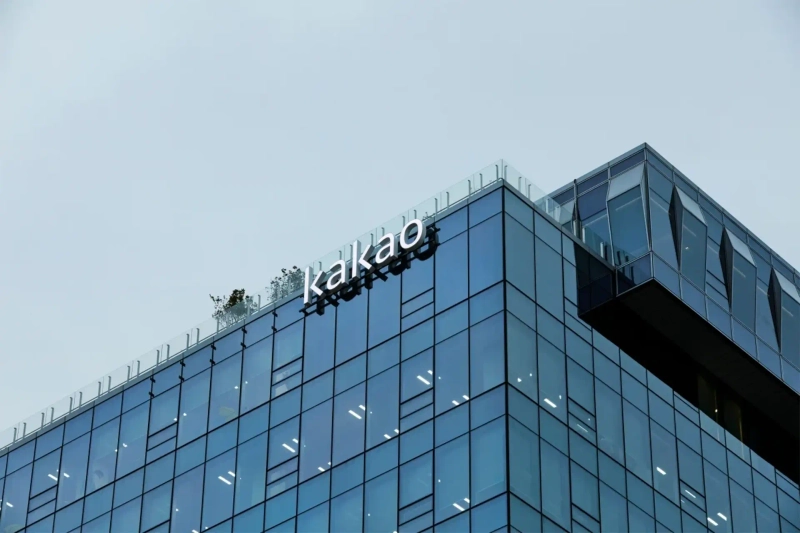
Kakao has open-sourced four small language models designed to run on smartphones and personal computers. The company said the models improve Korean-language processing efficiency by more than 30% and reduce memory use by as much as 72.7% in long conversations. Developers and companies can also use them in commercial services.
Kakao said on July 28 that it released four in-house Kanana-2 small language models on the AI development platform Hugging Face.
The lineup consists of Kanana-2-1.3B-Base, Kanana-2-1.3B-Instruct, Kanana-2-3B-Base and Kanana-2-3B-Instruct. The models are split into base and instruction-tuned versions according to model size and training method.
Small language models require less memory and computing power than large language models. That makes them well suited to on-device environments, where AI functions run on smartphones or personal computers without passing through cloud servers.
Kakao said the new models delivered competitive results in major evaluations covering Korean, English, knowledge, math and coding compared with recent open-source models of similar size. A 0.9B model developed alongside Kanana-2-1.3B-Instruct also showed performance comparable to global models such as Qwen and Gemma in conversation, knowledge, coding, math, instruction following and tool calling.
The company also applied its own tokenizer optimized for Korean-language processing. A tokenizer breaks text into smaller units so AI models can process sentences. Processing the same sentence in fewer units can increase computing speed and lower costs. Kakao said the tokenizer it developed last year improved Korean-language processing efficiency by more than 30% versus earlier versions.
Kakao also adopted a sliding-window attention structure to curb rising memory use in long conversations. The models were designed to maintain performance while reducing memory use by as much as 72.7% in conversations of up to 32,000 tokens, or about 24,000 words.
Kakao applied its Kanana Open License to the released models, allowing commercial use. The move is intended to let developers, startups, research institutions and companies build new AI services with the models.
Kakao's lightweight models are already being used in Kanana in KakaoTalk, KakaoTalk chat and call summaries, and AI National Secretary.
Noh Byung-seok, performance leader at Kakao's Unified Foundation Model organization, said the company is feeling the importance of both large-scale cloud AI and lightweight on-device AI as it prepares for the era of agentic AI. He added that Kakao is strengthening its technological competitiveness in both areas and hopes the open-source models will help more developers and companies build new AI services and invigorate South Korea's AI ecosystem.
Kim Dae-young, Hankyung.com reporter kdy@hankyung.com

Korea Economic Daily
hankyung@bloomingbit.ioThe Korea Economic Daily Global is a digital media where latest news on Korean companies, industries, and financial markets.