PiCK
Asian Chip Stocks Suffer Worst Day as AI Financing Fears, China Shock Hit Sector
Summary
- Asian semiconductor stocks plunged on worries over AI financing and intensifying competition with China.
- China’s CXMT listing and news of DUV lithography development helped deepen losses in global chip and equipment stocks including ASML.
- Rising odds of a Fed rate hike, a stronger dollar, and a weaker yen added to market volatility.
Forecast Trend Report by Period


Samsung Electronics, SK Hynix slump 13% to 15%; Japan’s Kioxia drops 18%, Tokyo Electron 11%
ASML extends losses for a second day after report on China’s DUV lithography development
Micron, Intel and other U.S. chip stocks also fall for a second straight day
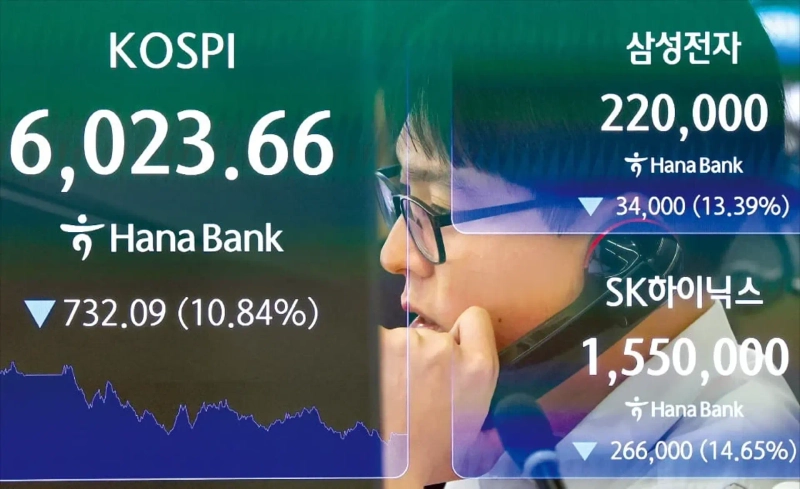
Semiconductor and chip-equipment shares across Asia tumbled on July 28 as investors grappled with intensifying competition from China and mounting concern over AI financing. Unease over the possibility of a U.S. interest-rate increase as early as this week added to the selloff, despite lower oil prices.
South Korea’s Kospi index, seen as a gauge of sentiment toward AI-related technology stocks, fell more than 10% on July 28 to its lowest level in three months. The benchmark had more than tripled over the past 12 months, but has now dropped more than 30% from its peak. SK Hynix plunged 14.65%, while Samsung Electronics sank 13.39%.
Japanese stocks were also swept up in the selloff.
Kioxia tumbled 18.33% in Tokyo trading. Chip-equipment makers Tokyo Electron and Advantest dropped 10.96% and 10.11%, respectively. Canon, which makes more mature semiconductor equipment, slid as much as 6.3%, while Nikon, which produces immersion DUV systems similar to those reportedly being developed by a Chinese company, fell 9.2%. Both companies posted their biggest declines in more than two months. Japan’s Nikkei 225 fell about 4% to its lowest level in two years.
In Taiwan, TSMC fell 3% and MediaTek dropped 9.9%, while the Taiex lost 4.65%.
The Information reported on July 27 that a Chinese equipment maker had begun domestic development and production of immersion deep ultraviolet, or DUV, lithography tools, a market long dominated by ASML Holding NV of the Netherlands. ASML shares fell 5.8% on July 27 and were down nearly 4% again in U.S. premarket trading on July 28. U.S. chip-equipment companies including Lam Research also declined.
In trading before the U.S. open on July 28, American semiconductor and memory shares came under pressure again. Intel, Micron, SanDisk and Seagate each fell more than 4%. Nasdaq futures dropped 0.8%, while S&P 500 futures slipped 0.1%.
Chris Weston, head of research at Melbourne-based brokerage Pepperstone, said no single risk signal was driving the market. Instead, concern over AI financing and China’s emergence as a competitor across the semiconductor supply chain combined to hurt sentiment.
China’s CXMT, the world’s fourth-largest memory maker, raised $8.6 billion in a July 27 listing, becoming China’s most valuable company. That added to selling pressure on South Korean memory-chip stocks.
Shares of CXMT, which helped trigger the rout in Asian semiconductor stocks, fell 3% on July 28.
The Wall Street Journal reported on July 27 that Nvidia would provide about $250 billion in financial guarantees for OpenAI’s contracts for data-center computing use, along with $350 billion for hardware purchases including GPUs. Nvidia shares fell 5% on the news.
David Chiu, a strategist at Citigroup, said losses on existing long positions in Nasdaq 100 futures and South Korea’s Kospi index had become severe.
As tensions between the U.S. and Iran eased, Brent crude extended the sharp decline recorded on July 27, falling to $87.19 a barrel. The move followed the U.S. decision over the weekend to abruptly halt airstrikes. President Donald Trump said on July 27 that the U.S. was having "good talks" with Iran and that a deal was possible.
The pause in fighting pushed the yield on the 10-year U.S. Treasury down about 4 basis points to 4.64% on July 27. Short-term Treasury yields were little changed.
Markets are pricing in about a 38% chance that the Federal Reserve will raise rates by 25 basis points on July 29, up sharply from about 16% two weeks earlier.
Expectations for a rate increase later this month or by September supported the dollar. The dollar index rose 0.08% from the previous day to 101.621. The yen traded at 163.78 per dollar, hovering just above its weakest level in 40 years.
Markets are bracing for the Bank of Japan to leave rates unchanged this week, a backdrop that could put further pressure on the yen.
Kim Jeong-a, contributing reporter, Hankyung.com, kja@hankyung.com

Korea Economic Daily
hankyung@bloomingbit.ioThe Korea Economic Daily Global is a digital media where latest news on Korean companies, industries, and financial markets.