Kospi Plunges 29% in Worst Month Since 1990; Hana Securities Sees Four Paths to a Rebound
Forecast Trend Report by Period


Short Selling, Foreign Buying, Market-Stabilization Fund, Single-Stock ETF Curbs
Hana Securities Says Fear Is Excessively Priced Into the Kospi
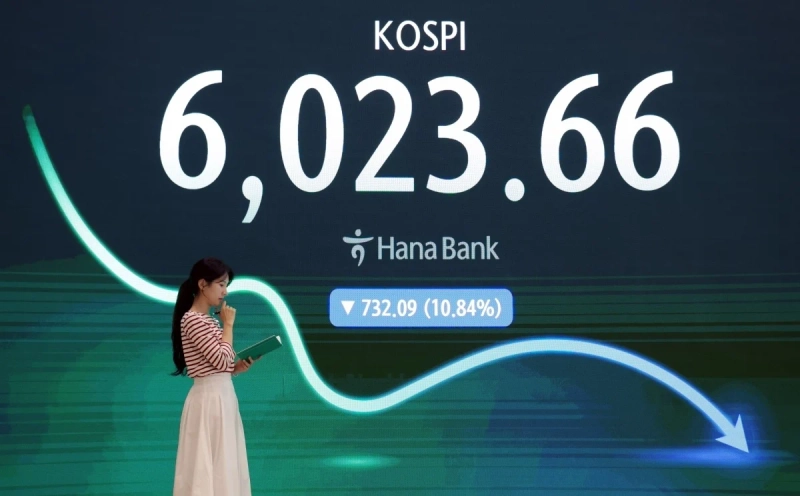
The Kospi posted its steepest monthly drop since 1990 in July, leaving investor sentiment deeply shaken. Hana Securities said the market’s excessive fear could fade quickly if even one of four conditions is met: foreign inflows, short-selling curbs, a reduction in single-stock leveraged exchange-traded funds, or activation of a stock-market stabilization fund.
Lee Kyung-soo, an analyst at Hana Securities, wrote on July 29 that the Kospi fell 28.9% in July, the biggest monthly decline since 1990. The benchmark is down 33.5% from its June 19 peak.
That is close to the 34.7% slide during the market correction that followed the pandemic, from June 2021 to September 2022.
Lee said four factors are needed for a meaningful rebound from current levels. The most urgent is a shift by foreign investors back to net buying.
Foreign buying is effectively essential to an index rebound after a sharp selloff, he wrote. South Korea’s weighting in the MSCI Emerging Markets Index has dropped sharply at current levels, making passive rebalancing flows a key indicator to watch.
The next question is whether passive funds tracking global indexes will buy Korean stocks again to restore those weightings. If such money returns, it could help drive a rebound in the domestic market.
A second factor is whether assets in single-stock leveraged ETFs, which have been blamed for amplifying volatility in the local market, begin to shrink. About 20 trillion won is invested in those products, still well above the government’s target of less than 5 trillion won.
This investment structure exists only in Korea and could leave the market more vulnerable, Lee wrote.
A third option is a temporary ban on short selling. Restricting short selling until balances in single-stock leveraged ETFs fall to the target level would be a practical step to curb sharp intraday swings and prevent further declines, according to Lee.
He added that past government bans on short selling often coincided with markets finding a floor and rebounding.
The final measure would be for the government to activate a market-stabilization fund or formally signal that it stands ready to deploy one if needed. During the market rout caused by Covid-19 in March 2020, the government created the roughly 10.8 trillion-won Dahamkke Korea Fund but never actually used it.
Even so, the government’s message that it was prepared to support the market helped stabilize investor sentiment at the time, Lee wrote.
Hana Securities said the market’s excessive anxiety could ease quickly if just one of the four conditions is met. The firm said the Kospi is now reflecting investor fear more than actual economic conditions or corporate earnings.
At this stage, investors should watch for stocks that stand to benefit as the sharply fallen index recovers to more normal levels, Lee wrote. After major market declines, shares that dropped first and hardest have often rebounded before earnings or fundamentals improved and gone on to post stronger returns.
Kang Kyung-ju, Hankyung.com reporter qurasoha@hankyung.com

Korea Economic Daily
hankyung@bloomingbit.ioThe Korea Economic Daily Global is a digital media where latest news on Korean companies, industries, and financial markets.