BOK Governor Shin Says Timing of Further Rate Hikes Will Hinge on Inflation, Growth
Summary
- Shin said the benchmark interest rate was raised to 2.75% from 2.5% in July and that the Bank of Korea still needs to maintain its tightening stance.
- Shin said the semiconductor boom tied to the global spread of AI is driving gains in exports, capital investment and consumption, supporting continued growth momentum.
- Shin said he would keep watch on financial imbalances and market volatility as key risks, with inflation expected to stay above target and the won-dollar exchange rate and rising Seoul metropolitan home prices also in focus.
Forecast Trend Report by Period


Growth broadens on semiconductor strength; consumption remains solid
Inflation to stay above target for a considerable period
"Will continue to monitor financial imbalances and exchange-rate volatility"
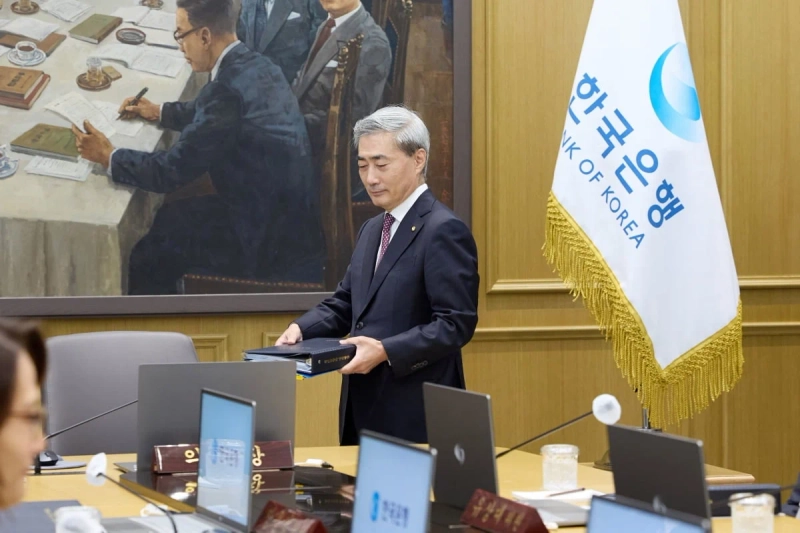
Shin Hyun-song, governor of the Bank of Korea, said in a July 29 policy report to the National Assembly's Strategy and Finance Committee that the central bank raised its benchmark interest rate to 2.75% from 2.5% at its July Monetary Policy Board meeting. He said the Bank of Korea still judges that it needs to continue its tightening stance.
The timing and pace of any additional rate increases will be determined after a comprehensive assessment of inflation pressures, the path of economic improvement and financial stability conditions, Shin said.
Shin said South Korea's economy has been expanding its growth momentum, supported by a semiconductor upcycle driven by the global spread of artificial intelligence. Exports and capital investment led by chips have continued to post strong gains, while consumption has remained solid. He added that steady growth should continue if the semiconductor boom persists and its effects spread to other industries.
On inflation, Shin struck a cautious note. He said prices are likely to remain above the central bank's target for a considerable period as oil prices may still fluctuate with developments in the Middle East, earlier cost increases and exchange-rate effects continue to feed through, and improving incomes add demand-side pressure.
Financial and foreign-exchange markets also remain highly volatile because of external uncertainty, he said. The won-dollar exchange rate rose sharply on Middle East uncertainty and dollar strength, then retreated to the mid- to upper-1,400 won range after foreign-exchange supply and demand conditions improved in July.
Shin said South Korea's financial system remains broadly stable, supported by real-economy growth and the resilience of financial institutions. Still, he said, high volatility in financial and foreign-exchange markets and the risk of mounting financial imbalances stemming from rising home prices in the Seoul metropolitan area remain key risk factors.
Earlier in the day, before the policy report, Shin apologized over controversy during his confirmation hearing about his children's nationality status. In response to a request from People Power Party lawmaker Lim I-ja for a formal apology over allegations tied to his eldest daughter's failure to report the loss of her South Korean nationality, Shin said he was sorry for causing public concern during the confirmation process. He added that the nationality issues involving his children have now been resolved.
Sung-mi Shim, Hankyung.com reporter smshim@hankyung.com

Korea Economic Daily
hankyung@bloomingbit.ioThe Korea Economic Daily Global is a digital media where latest news on Korean companies, industries, and financial markets.