PiCK
Min Byung-deok Says Digital Asset Framework Act Must Pass This Year, With ‘No Plan B’
Summary
- Rep. Min Byung-deok said he is confident the Digital Asset Framework Act will pass the National Assembly this year and that there is no “Plan B.”
- He said the framework act would be handled quickly, with won-denominated stablecoins, rules on major shareholder stakes in virtual-asset exchanges, and protection of user assets among the key issues.
- Min said virtual-asset taxation should move forward only after the framework act addresses tax fairness and ways to secure transaction data from overseas platforms.
Forecast Trend Report by Period


Interview with Rep. Min Byung-deok of the Democratic Party
“Settle key disputes by September and speed up the framework act”
“No de facto monopoly for any one sector in digital assets”
“Crypto taxation needs fixes on fairness and data collection”
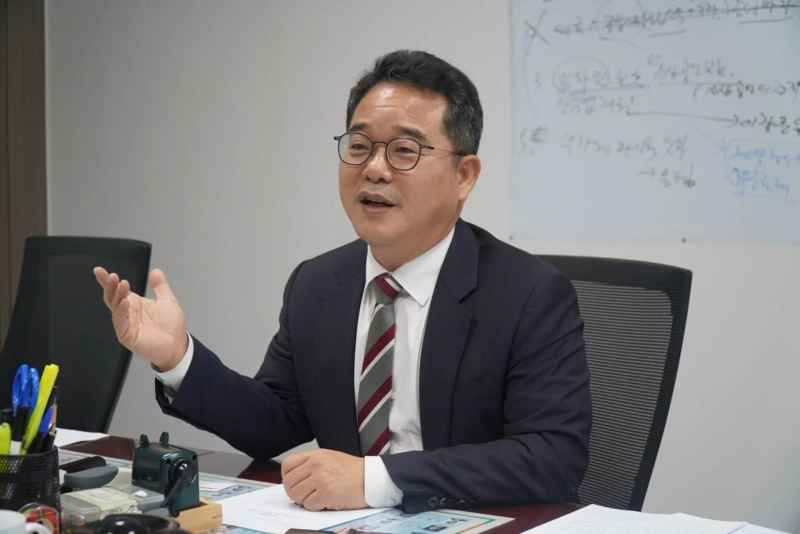
“There is no Plan B if the Digital Asset Framework Act is not enacted this year. I am confident the National Assembly will pass the basic law within the year.”
Rep. Min Byung-deok of the Democratic Party, who sits on the National Assembly’s Political Affairs Committee, said in an interview with Bloomingbit on July 29 that he is committed to passing the Digital Asset Framework Act this year. He said he is confident of year-end passage because the Assembly has already held extensive discussions in the first half and the government is also aiming to enact the law this year.
He said talks were delayed because it took time to reconcile differences over the details of the institutional design. Min first introduced the bill in the National Assembly in June 2025, but legislative discussions then stalled for more than a year.
The government’s draft of the framework act, prepared by financial authorities, will also be submitted to the Assembly soon, he said. Once it is filed, lawmakers plan to quickly sort out common ground and differences based on the discussions accumulated so far and the bills already proposed.
“Ruling party and authorities to narrow differences; review to accelerate in September”
Min said differences between the ruling party and financial authorities should be resolved by the September plenary session. Key sticking points include who should be allowed to issue won-denominated stablecoins and whether to regulate major shareholder stakes in domestic virtual-asset exchanges.
He said the broad outline of the framework act and its main issues are already clear. Review should move much faster if the Political Affairs Committee’s bill subcommittee examines the legislation based on the Democratic Party’s digital-asset task force discussions and consultations among lawmakers.
One point, he said, is non-negotiable: limiting participation in the digital-asset industry to a specific sector. Granting any one industry an effective monopoly would be unacceptable.
What matters is not whether an issuer is a bank or a non-bank, but whether it has sufficient reserve assets, repayment capacity and internal controls. Protecting user assets is also a principle that cannot be compromised.
There is also speculation that the Democratic Party’s digital-asset task force could resume operations in September. Min said there have been no concrete discussions on relaunching the group, but noted that six of its nine former members have been assigned to the Political Affairs Committee in the second half of the Assembly term.
Most members of the committee already have a strong understanding of the framework bills proposed by lawmakers and the coming government draft, he said. They have also heard extensive views from industry participants and experts through the task force, which should help make passage of the framework act the top priority.
“Korea is falling behind and must secure global leadership”
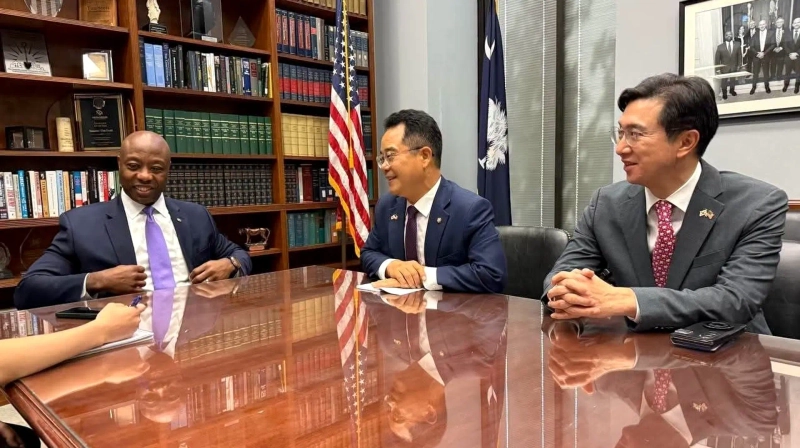
Min also referred to his recent trip to the US. Last month, he discussed digital-asset legislative trends with Congress, the White House, the Securities and Exchange Commission and Coinbase.
What he found in the US, he said, is that digital assets are being treated not just as financial products but as a national strategy. Korea may be ahead in technology and market development, but it is behind in institutions and regulation.
Domestic companies are more concerned about regulatory uncertainty than business expansion or technology development, he said. If Korea builds a legal framework that serves as a foundation, its companies can secure leadership in the global financial order.
He also stressed the need to institutionalize won-denominated stablecoins, one of the core pillars of the framework act. Won stablecoins are not simply about creating a new payment tool, he said. They are about how far the won’s sphere of use should expand and how Korea should protect its monetary sovereignty and industrial strategy.
Stablecoins can reduce payment fees and settlement burdens for small merchants and the self-employed while offering the public faster and more convenient financial services, he said. Won stablecoins are an innovation for the digital and artificial intelligence era and a technology with direct benefits for everyday life, he added.
“Tax fairness and other issues must be addressed”
On virtual-asset taxation, which is scheduled to take effect in 2027, Min cautioned against treating the issue as a binary choice between repeal and enforcement. He said the principle that income should be taxed cannot be denied, but a fair system that taxpayers can accept and a reliable framework for identifying income must come first.
He said policymakers should be cautious both about scrapping the tax outright and about pressing ahead on schedule without sufficient preparation. The priority should be to use the framework act to clarify issuance and distribution structures and service-provider responsibilities, then address tax fairness and ways to secure transaction data from overseas exchanges.
Min also voiced expectations for EastPoint: Seoul 2026, a global private Web3 conference scheduled for Sept. 28. What impressed him most at last year’s EastPoint was that theory, policy and the industry came together in one place, he said.
Policymakers, companies and financial institutions gathered to hold concrete discussions on linking digital assets to real industry and formal institutions, he said. He added that he hopes this year’s EastPoint will go beyond identifying industry trends and become a venue for finding practical answers on how Korea can lead a new financial order.

JOON HYOUNG LEE
gilson@bloomingbit.ioCrypto Journalist based in Seoul