Bank of England Reviews Prime Brokers for Fallout Risk From Samsung, SK Hynix Rout
Summary
- The Prudential Regulation Authority, the Bank of England’s supervisory arm, is reviewing London investment banks’ prime brokerage businesses and the risks tied to investments in Asian AI semiconductor stocks.
- Wall Street banks are asking hedge funds with portfolios concentrated in specific industries such as AI semiconductors to post additional collateral to maintain leverage.
- Goldman Sachs said 16% of its prime brokerage business is directly exposed to AI memory-related stocks, while the top 10 companies in the S&P 500 account for 40% of the index.
Forecast Trend Report by Period


Hedge Funds Boost AI Chip Bets
Regulators Probe Risk of Knock-On Losses at Investment Banks
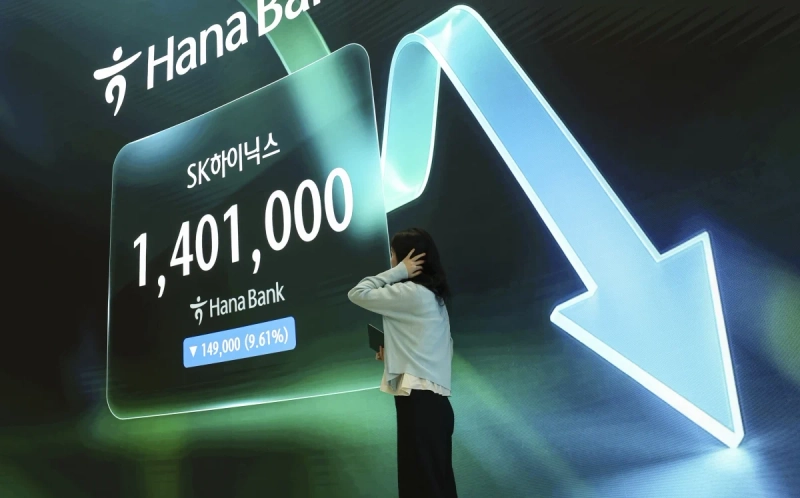
A steep slide in Samsung Electronics Co. and SK Hynix Inc. has raised concerns that losses could ripple into global financial stability. The Bank of England has started reviewing the risks tied to Asian stock investments at London-based investment banks. Wall Street banks have also asked hedge funds invested in Asian semiconductor shares to post additional collateral.
The Financial Times reported on July 29 that the Prudential Regulation Authority, the Bank of England’s supervisory arm, is examining the prime brokerage businesses of London investment banks. Prime brokerage refers to services in which investment banks lend money to hedge funds and other institutional investors and execute trades on their behalf.
The Bank of England believes hedge fund trading in artificial intelligence semiconductor-related stocks surged during the recent investment boom. It also judges that investment banks’ exposure to those trades has increased.
Major global investment banks support hedge funds and other institutional investors investing in Asia through their London entities. What was once a niche business has grown rapidly as valuations of AI-related companies soared. As share prices climbed and the value of client holdings rose, investors were able to borrow more and expand leveraged bets, the report said.
That has increased the risks as well. Sharp losses over a short period can push leveraged clients into default, leaving the large investment banks that financed them exposed to losses.
Similar warning signs have emerged on Wall Street. Banks have told hedge funds with portfolios concentrated in specific industries to provide additional collateral if they want to maintain current leverage levels. The move came after some hedge funds suffered heavy losses as a selloff in AI-related shares spread quickly over the past two weeks.
Recent sharp declines in South Korean semiconductor stocks are also thought to have inflicted sizable losses on hedge funds. Goldman Sachs said in a first-half report that 16% of its prime brokerage business was directly exposed to AI memory-related stocks. The exposure is becoming increasingly concentrated in a small number of names.
Capital Group, the US asset manager, said the top 10 companies in the S&P 500 account for 40% of the index’s market value. That is higher than during the dot-com bubble in the early 2000s.
Kim Ju-wan, Korea Economic Daily reporter, kjwan@hankyung.com

Korea Economic Daily
hankyung@bloomingbit.ioThe Korea Economic Daily Global is a digital media where latest news on Korean companies, industries, and financial markets.