PiCK
South Korea to Cap Retail Investment in Single-Stock Leveraged ETFs at 20%
Summary
- Financial authorities said they will set an individual investment limit for single-stock leveraged ETFs at no more than 20% of total invested funds.
- The government said it will also impose sanctions on some forms of market disruption, including charges for excessive order quotations, and establish a legal basis for market stabilization measures by referring to Hong Kong’s variable leverage rules.
- Participants said the recent stock-market decline was driven by intensifying Chinese competition in memory semiconductors, concerns over funding conditions for U.S. big tech companies, weaker investor sentiment during the correction after a sharp stock rally, and supply-demand instability.
Forecast Trend Report by Period


South Korea’s financial authorities will set individual investment limits on single-stock leveraged exchange-traded funds.
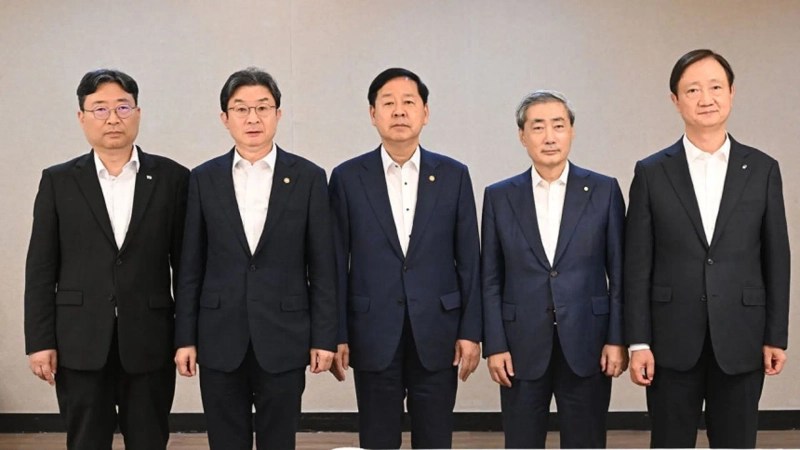
Vice Prime Minister and Finance Minister Koo Yun-cheol announced the plan at an emergency market review meeting on July 29 at the Government Complex Seoul. Attendees included Bank of Korea Governor Shin Hyun-song, Financial Services Commission Chairman Lee Eok-won, Financial Supervisory Service Governor Lee Chan-jin, and Ha Joon-kyung, the presidential senior secretary for economic growth. Koo said authorities shared concerns that concentration in single-stock leveraged products was amplifying stock-market volatility.
The meeting was held as South Korean equities extended a sharp selloff, with the Kospi posting steep losses for a second straight session. Authorities stepped in after circuit breakers were triggered on two consecutive days, an unprecedented event.
The government will limit each investor’s holdings in single-stock leveraged ETFs to no more than 20% of total invested funds. It will also impose sanctions on some forms of market disruption, including charges for excessive order quotations.
Officials also plan to create a legal basis for market-stabilization measures, drawing on Hong Kong’s variable leverage rules, which allow regulators to lower leverage ratios flexibly depending on market conditions.
The government will operate a 24-hour monitoring system for the domestic stock market. Officials judged that volatility in local equities has recently widened sharply compared with other markets and with past periods.
Participants in the meeting said the recent decline in South Korean stocks reflected intensifying competition from China in memory semiconductors and concerns over funding conditions for U.S. big tech companies. They also cited weaker investor sentiment and supply-demand instability during the correction that followed a recent stock surge as factors that deepened the losses.

JOON HYOUNG LEE
gilson@bloomingbit.ioCrypto Journalist based in Seoul