Fed’s Fifth Straight Hold Triggers Treasury Selloff; Samsung Earnings Seen Steering Korea Stocks
Forecast Trend Report by Period


"Oil prices will matter more than interest rates from here"
The Federal Reserve’s decision to hold interest rates steady for a fifth straight meeting is drawing attention for its potential impact on South Korean stocks. Local brokerages said the latest Federal Open Market Committee decision is likely to have only a limited effect on financial markets, with earnings rather than rates set to remain the main driver of trading.
Na Jung-hwan, an analyst at NH Investment & Securities, said on July 30 that the Fed’s latest decision has pushed monetary policy down the list of factors shaping the direction of the domestic stock market, since immediate concerns about another rate hike are limited. Semiconductor earnings are now the key variable, with Samsung Electronics and capital-spending outlooks from US big tech companies likely to determine the market’s short-term direction.
Earlier on July 30, the Fed left its benchmark rate unchanged at 3.50% to 3.75% at its regular July FOMC meeting. The central bank has now held rates steady five meetings in a row, after doing so in January, March, April and June. It was also the second consecutive hold since Kevin Warsh became Fed chair.
Still, this month’s FOMC meeting differed from June’s in that three officials favored a rate increase. The June meeting produced a unanimous decision to hold rates steady, but this time nine of the 12 members voted to keep rates unchanged while three dissented.
Those officials appear to have backed a preemptive rate increase as the US-Iran war shows signs of becoming prolonged, driving another surge in global oil prices and pushing up US inflation.
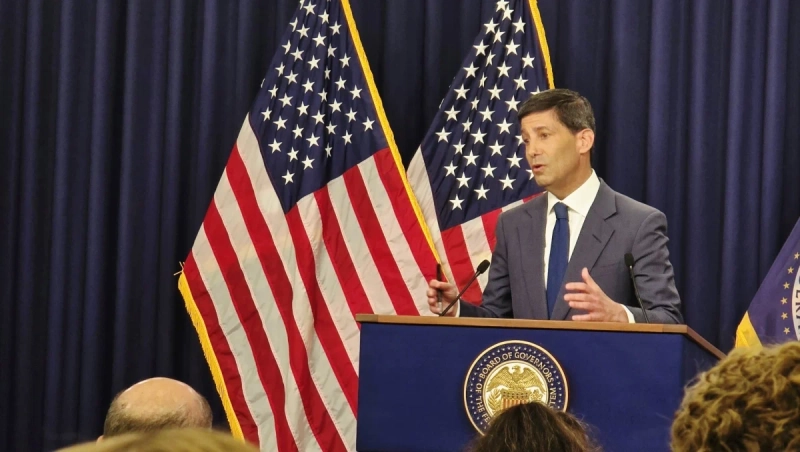
At a press conference, Warsh said there is no "soft" inflation target and only one goal: 2%. He thereby reaffirmed his determination to achieve the Fed’s 2% inflation target.
Warsh also said markets had moved together in a way that kept policymakers on edge and tightened financial conditions between the June and July FOMC meetings. That offered some reassurance that the Fed has the ability and capacity to meet its goal, he said.
Markets interpreted those broad remarks as adding to uncertainty over the path of monetary policy.
The bond market responded by intensifying selling in long-dated Treasuries after Warsh’s press conference. The 30-year Treasury yield rose 0.11 percentage point to 5.21% after the New York stock market closed on July 29, the highest level since July 2007, before the global financial crisis. It climbed more than 0.12 percentage point during the session and briefly moved above 5.22%.
Park Sang-hyun, an analyst at iM Securities, said it remains unclear whether the Fed will raise rates this year, given Warsh’s ambiguous stance, even though a minority at this meeting called for an increase. The result is that uncertainty surrounding rate policy has only grown, he said.
He added that, unlike under former Chair Jerome Powell, Warsh’s influence on financial markets is likely to remain relatively limited. Investors are now expected to pay closer attention to oil prices than to Warsh himself.
Noh Jung-dong, Hankyung.com reporter dong2@hankyung.com

Korea Economic Daily
hankyung@bloomingbit.ioThe Korea Economic Daily Global is a digital media where latest news on Korean companies, industries, and financial markets.