Samsung Electronics Targets More AI Chip Gains, Rules Out US ADR Listing for Now
Summary
- Samsung Electronics said it posted record quarterly results with 171.5 trillion won ($123.9 billion) in consolidated revenue and 89.5 trillion won ($64.7 billion) in operating profit for the second quarter.
- Samsung Electronics said it is pursuing an AI chip-focused growth strategy through long-term supply agreements covering 60% to 70% of memory capacity, an expansion in HBM4 revenue, foundry capacity additions at 2 nanometers and 1.4 nanometers, and the start of construction on Taylor Fab 2 in the US.
- Samsung Electronics said it will defend profitability in smartphones, TVs and home appliances through AI and premium products and services, advertising and OS licensing, and a stronger push in ADAS and premium audio, and that it is not currently considering an ADR issuance.
Forecast Trend Report by Period


Samsung Electronics posts record quarterly results
Pushes to expand long-term memory contracts
Plans to break ground on Taylor Fab 2 by year-end
Seeks new growth in smartphones, TVs and AI
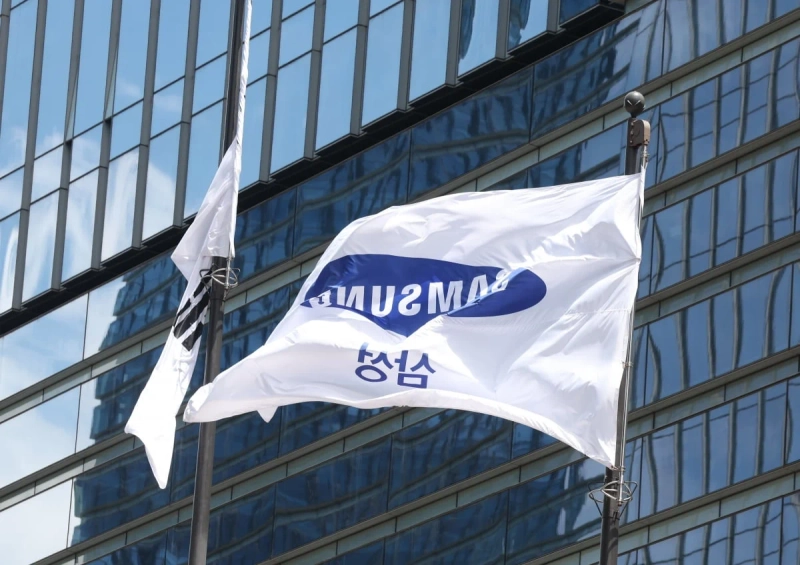
Samsung Electronics is seeking to lock in as much as 70% of its memory production capacity under long-term supply agreements as it moves to meet surging demand for artificial intelligence semiconductors. The company is also preparing to begin construction on its second Taylor fab in the US by the end of this year.
Samsung plans to expand supply of high-bandwidth memory, or HBM, and server DRAM while moving ahead of demand to increase foundry capacity for nodes below 2 nanometers.
In its finished-goods businesses, including smartphones, TVs and home appliances, Samsung said pressure from component costs will persist. It plans to defend profitability with AI features, premium products and services. The company also drew a line under the prospect of a US American depositary receipt, or ADR, listing, saying it is not considering one for now.
Long-Term Memory Contracts Expand as Samsung Sees Supply Shortage Through 2028
On its second-quarter earnings conference call on July 30, Samsung said demand is rising not only for AI servers but also for conventional computing servers as the spread of agentic AI accelerates and token consumption surges. The company said a major increase in supply before 2028 will be difficult because it takes more than three and a half years from construction of a new fab to wafer production. As a result, next year's supply shortage will be worse than this year's, it said.
Asked about memory supply and demand, Samsung said it is planning long-term supply agreements covering 60% to 70% of total memory capacity. It has completed contracts with five major global data-center customers and is in the final stages of negotiations with another five large customers tied to AI demand. Samsung said those firm orders will support more flexible investment and help build a more stable and predictable business structure than in the past.
The company also plans to sharply expand HBM4 supply. Third-quarter HBM4 revenue will be more than triple the prior quarter, Samsung said. In the second half, HBM4 is set to account for well over 60% of its total HBM revenue. Samsung is aiming for HBM market share in the second half to match roughly its overall share of the DRAM market.
In System LSI, Samsung said it will seek stable sales of next-generation flagship system-on-chip products while pursuing new opportunities in custom SoCs. It also plans to strengthen the competitiveness of its image sensors, broaden their applications and expand its business in high-spec display driver ICs and power-management chips.
In foundry, Samsung said it has secured 2-nanometer projects from major cloud service providers and customers in AI and high-performance computing. The number of 2-nanometer orders this year will be more than double last year's level, the company said.
On capacity expansion, Samsung said growth in leading-edge capacity is not keeping pace with demand. It is preparing to start construction on Taylor Fab 2 by the end of this year, targeting mass production in 2030. Taylor Fab 1 remains on track for operational readiness this year, after which Samsung plans to expand 2-nanometer output in stages. It is also reviewing additional fab capacity as customer inquiries for 1.4-nanometer production increase.
Second-quarter capital spending totaled 16.8 trillion won ($12.1 billion), up 5.5 trillion won from the prior quarter. Samsung spent 15.4 trillion won ($11.1 billion) in its Device Solutions, or DS, division, which includes the chip business, and 700 billion won ($507 million) on display operations. In memory, it increased investment in new infrastructure at Pyeongtaek. In foundry, the company stepped up spending to ensure the Taylor fab begins operations on schedule. Samsung Display said it began operating a new 8.6-generation IT OLED line in July to support broader OLED adoption in the IT market and boost revenue.
Smartphones and TVs Turn to AI and Services for Growth
Samsung's Mobile eXperience, or MX, division said premium demand should remain solid this year even if smartphone shipments decline, helped by broader adoption of AI features and innovation in form factors. It expects both revenue and average selling prices to rise. The company plans to increase sales of flagship devices including the Galaxy Z Fold and Flip 8 series and the Galaxy S26 series, while extending key AI experiences to the Galaxy A lineup.
Samsung also plans to launch intelligent eyewear later this year, adding a new AI form factor to its product lineup. Its network business will focus on winning new orders and improving cost competitiveness.
In visual display, Samsung said the TV set market is stagnating while the connected-TV advertising market continues to grow. It plans to strengthen Vision AI-based experiences and expand content on Samsung TV Plus. The company also aims to reduce dependence on hardware by growing its advertising business and operating-system licensing.
In home appliances, Samsung said it will expand AI products and higher-margin sales channels. Harman recently completed two acquisitions to strengthen its advanced driver-assistance systems, or ADAS, and premium audio businesses. Samsung plans to use synergies with Harman to introduce in-vehicle IT and AI experiences and expand further into autonomous driving.
Asked about the possibility of an ADR listing, Samsung said its diversified business portfolio already provides stable cash generation, reducing the need to raise fresh funds through an ADR. It is not reviewing an ADR issuance at this time, though it left open the possibility as one of several options to enhance shareholder value over the medium to long term.
Samsung said consolidated second-quarter revenue reached 171.5 trillion won ($123.9 billion), while operating profit totaled 89.5 trillion won ($64.7 billion), both quarterly records. The DS division posted revenue of 127.5 trillion won ($92.1 billion) and operating profit of 89.2 trillion won ($64.5 billion). The DX division reported revenue of 48 trillion won ($34.7 billion) and an operating loss of 800 billion won ($578 million).
Kim Dae-young, Hankyung.com reporter kdy@hankyung.com

Korea Economic Daily
hankyung@bloomingbit.ioThe Korea Economic Daily Global is a digital media where latest news on Korean companies, industries, and financial markets.