Fed Holds Rates Despite Inflation Angst; 30-Year Treasury Yield Hits 19-Year High
Summary
- The US central bank kept its benchmark interest rate unchanged at 3.50% to 3.75%, extending its run of five straight holds this year.
- Concern over the Fed’s passive response to inflation sent the 30-year US Treasury yield soaring to 5.23%, its highest level in 19 years since July 2007.
- The perceived probability of a rate hike in September fell to 65.2% from 76% before Chair Warsh’s press conference.
Forecast Trend Report by Period


No clear plan despite emphasis on the 2% inflation target
Markets question Fed’s resolve on inflation
Odds of a September rate hike fall to 65.2%
The Federal Reserve left its benchmark interest rate unchanged on July 29. Some investors initially read the decision as a hawkish pause after three officials dissented in favor of another increase. Markets ultimately took a different view. Concern spread that the Fed was taking a passive approach to curbing inflation, sending long-term Treasury yields sharply higher and pushing the three main US stock indexes lower. Traders are also becoming less convinced that a September rate hike is a sure thing.
The Fed kept its policy rate at 3.50% to 3.75% at its July 28-29 Federal Open Market Committee meeting. That marked the fifth straight hold this year.
Three officials dissented from the decision. Cleveland Fed President Beth Hammack, Minneapolis Fed President Neel Kashkari and Dallas Fed President Lorie Logan backed a quarter-point increase. Market sentiment shifted after Fed Chair Kevin Warsh spoke at a press conference. Warsh said there was “only one goal” in the fight against inflation and that goal was 2%. Markets judged that he failed to present a concrete plan. Asked why the Fed did not raise rates now if it would not tolerate inflation, he replied that the central bank did not have some magical ability to bring inflation down quickly.
Warsh’s suggestion that tighter financial conditions were being delivered by the market itself also fueled disappointment. He said nominal and real yields had risen significantly across the US Treasury curve in the 42 days since the last meeting. That had offered the Fed some reassurance even without a policy-rate increase.
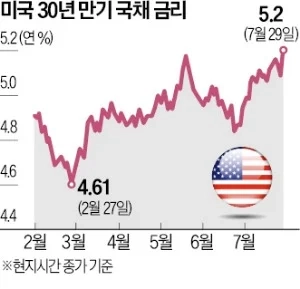
Investors responded by questioning the central bank’s commitment to the inflation fight. The yield on the 30-year Treasury rose 0.14 percentage point during the session to 5.23%, the highest since July 2007. The move reflected concern that a cautious Fed response could allow inflation to persist, forcing rates to stay higher for longer and increasing the eventual cost of restoring price stability.
Jeffrey Gundlach, chief executive officer of DoubleLine Capital and widely known as the “new Bond King,” said the Fed should have raised rates if it wanted to bring inflation back to 2%. The surge in bond yields was the market’s message to Warsh. The jump in rates also deepened losses across the three major New York stock indexes. Higher long-term borrowing costs could tighten financing conditions for US households and businesses, weighing on the economy.
The case for a September rate increase has also weakened since the FOMC meeting. The probability of a September hike fell to 65.2% from 76% before Warsh’s press conference.
Hwang Jung-soo in New York and Lee Sang-eun in Washington, Hankyung correspondents hjs@hankyung.com

Korea Economic Daily
hankyung@bloomingbit.ioThe Korea Economic Daily Global is a digital media where latest news on Korean companies, industries, and financial markets.