PiCK
Bitcoin Battles Around $64,000 as Institutional Demand Seen Key to Rebound
Summary
- Bitcoin is trading in a range around $64,000, and analysts say it needs to reclaim $67,000 for a short-term rebound to gain strength.
- Uncertainty over US monetary policy, Middle East risks, and rising long-term yields has hurt appetite for risk assets, weakening spot ETF inflows and CME futures open interest as institutional capital participation softens.
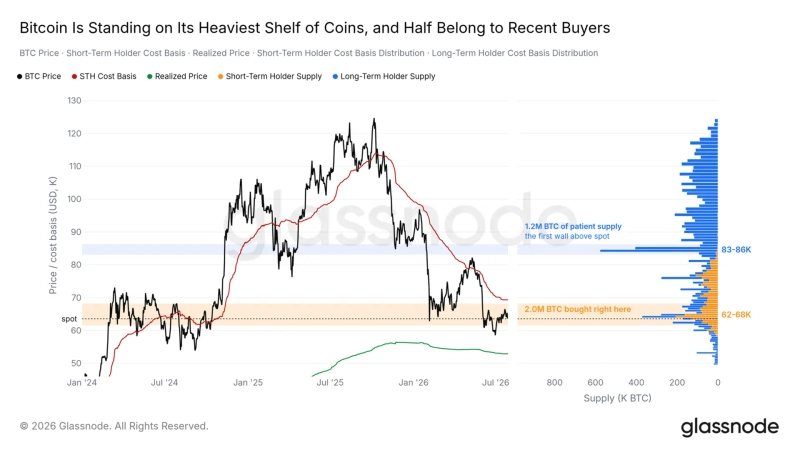
- On-chain data show a defensive risk-off phase persisting in the $62,000 to $68,000 range, while long-term holder supply has climbed to a record of about 15 million BTC, signaling that long-term investor conviction remains intact.
Forecast Trend Report by Period



Bitcoin is struggling to find direction around $64,000 as uncertainty over US monetary policy and geopolitical risks in the Middle East weigh on sentiment. Dip buying has emerged, but analysts are placing greater weight on the view that the token will remain range-bound until it reclaims $67,000.
As of 12:01 p.m. on July 31, Bitcoin was trading at $64,255 on Binance's USDT market, up about 0.14% from a day earlier. On Upbit, it was quoted at about $66,400. The kimchi premium was minus 0.97%.
Core PCE Matches Forecasts, but Hawkish FOMC Keeps Markets on Edge
Fears of a renewed inflation surge eased somewhat after the US core personal consumption expenditures price index for June matched estimates. Still, uncertainty over the interest-rate path remains after the July Federal Open Market Committee delivered what markets viewed as a hawkish hold.
Data released on July 30 showed the US core PCE price index rose 3.3% from a year earlier, in line with expectations. Core PCE excludes volatile food and energy prices and is one of the Federal Reserve's key inflation gauges for monetary policy decisions. Markets are still wary that Middle East tensions, tariffs and expanding AI investment could lift inflation pressure again.
The Fed kept its benchmark rate unchanged at 3.50% to 3.75% at the July 29 FOMC meeting, extending this year's streak of holds to five. Still, three of the 12 voting members supported a rate increase, prompting markets to view the outcome as more hawkish than expected.
Chair Kevin Warsh emphasized the Fed's commitment to price stability at a press conference after the meeting. He gave no specific signal on the future rate path. Following the FOMC decision, the 30-year Treasury yield climbed above 5.2% intraday, the highest since 2007. Higher long-term yields are typically viewed as a drag on appetite for risk assets such as stocks and cryptocurrencies.
Middle East risks remain another variable. US Central Command said on July 29 that it had resumed airstrikes against Iran after a six-day pause. The move came in response to an attempted Iranian ballistic missile attack targeting a US military base in Jordan. Renewed tensions in the region are adding to concern that safe-haven demand could strengthen, weighing on risk assets more broadly.
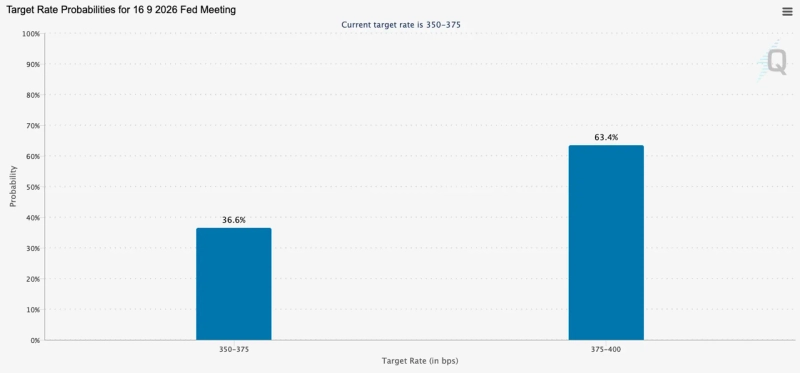
Markets are also reflecting the possibility that the Fed could maintain its tightening stance longer than expected. CME FedWatch showed the probability of a September rate increase at 63.4%, versus 36.6% for no change.
Institutional Money Stays on the Sidelines as ETF Inflows Slow
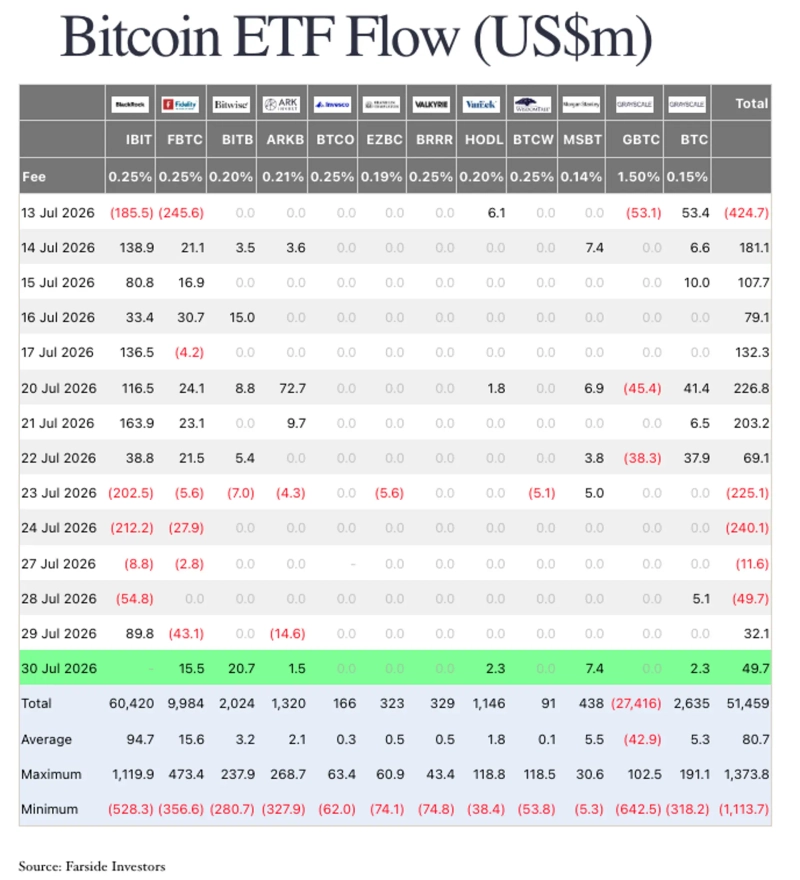
Inflows into spot Bitcoin exchange-traded funds are also losing momentum. Net inflows totaled just $33.9 million last week, and this week has seen alternating sessions of inflows and outflows. In the market's view, institutional inflows have also cooled as Middle East risks and monetary-policy uncertainty combine with fading expectations for progress on the Clarity Act.
Incentives for institutional participation have weakened as well. Glassnode, an on-chain analytics firm, said returns from spot-futures arbitrage that had supported institutional participation in digital-asset markets have remained below the yield on the two-year US Treasury since February. That has reduced the incentive for institutional investors to provide liquidity and trading volume to the crypto market.
Bitcoin remains in the $62,000 to $68,000 band where on-chain purchase prices are most densely concentrated, Glassnode said. The firm described the market as being in a defensive, risk-off phase.
Analysts also say a demand vacuum is persisting as both spot and derivatives trading weaken at the same time. Bitfinex, the global digital-asset exchange, said Bitcoin's average daily spot trading volume this month was $4.5 billion, the lowest since November 2023. Open interest in CME Bitcoin futures is also hovering near the lowest level in years.
Bitfinex added that Strategy has not bought Bitcoin for five straight weeks and has instead been building cash. Other corporate Bitcoin treasury holders have also not made notable purchases since mid-July.
Open interest refers to the number of futures and options contracts that have not yet been closed out. Rising open interest is generally interpreted as a sign that new money and fresh positions are entering the market. Because CME is a venue used mainly by institutional investors, a decline in CME open interest can be read as a sign of weaker institutional participation.
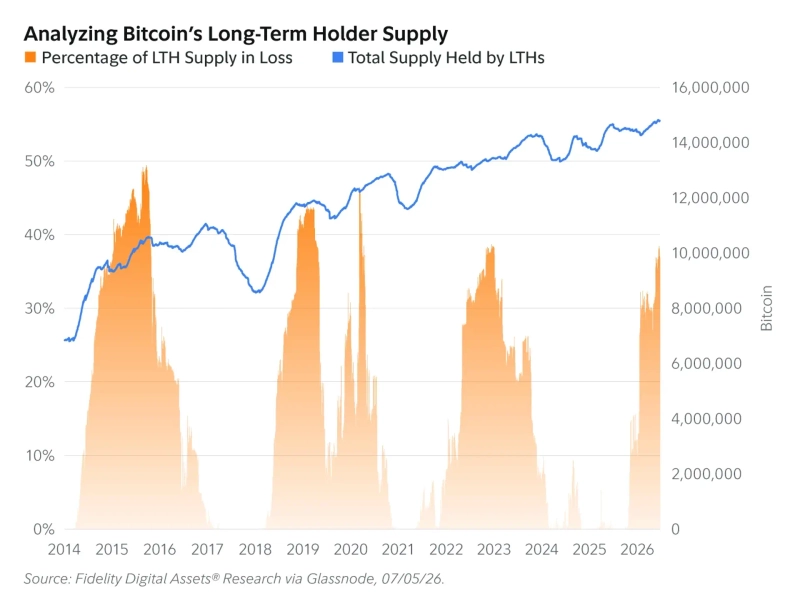
Long-term holders, however, are sitting on a record amount of Bitcoin. Fidelity Digital Assets said the amount of Bitcoin that has not moved for at least 155 days has recently reached about 15 million BTC, an all-time high. About 40% of that supply is currently at an unrealized loss, yet holders have continued to keep those positions, which Fidelity said signals that long-term conviction remains intact.
Fidelity added that several on-chain indicators are approaching levels seen near past market bottoms. It also said it is still too early to tell whether that will lead to an actual market turn.
Bitcoin Holds $64,000, but $67,000 Seen as Threshold for Trend Change
Bitcoin has held around $64,000, but analysts say the market still looks range-bound rather than in a clear trend reversal.
Alex Kuptsikevich, an analyst at FxPro, said Bitcoin was trading near $64,000 and drawing dip buyers whenever it slipped into the $63,000 range. Even so, he said the token still lacks the momentum needed to resume its uptrend. If risk aversion deepens, Bitcoin could come under pressure alongside overheated global equity markets.
Markets are watching $66,700 as the next key dividing line for price action. Julian Pineda, a market analyst at StoneX, said Bitcoin is trading between resistance at $66,700 and support at $57,700. A break above $66,700 could strengthen a short-term rebound, while a drop below $57,700 could restart the downtrend.
Longer-term indicators, however, are also beginning to signal the possibility of a bottoming process. Katie Stockton, founder of Fairlead Strategies, said Bitcoin's cyclical downtrend is entering a mature phase. The long-term oversold condition suggests the market may be in the early stages of forming a bottom, she said. Stockton added that technical signals alone are not enough to confirm a reversal and that a recovery in actual demand still needs to be verified.
Kang Min-seung, Bloomingbit reporter minriver@bloomingbit.io

Minseung Kang
minriver@bloomingbit.ioBlockchain journalist | Writer of Trade Now & Altcoin Now, must-read content for investors.