Samsung to Overtake SK Hynix in HBM Market Next Year on HBM4 Push, UBS Says
Forecast Trend Report by Period


<Tech X 112>
UBS Sees Samsung Taking 41% of HBM Market vs. SK Hynix at 39%
HBM4 Era Begins in Earnest as Capacity, Advanced Packaging Become Key
HBM4 Evolves From Higher Stacks to Smarter Design
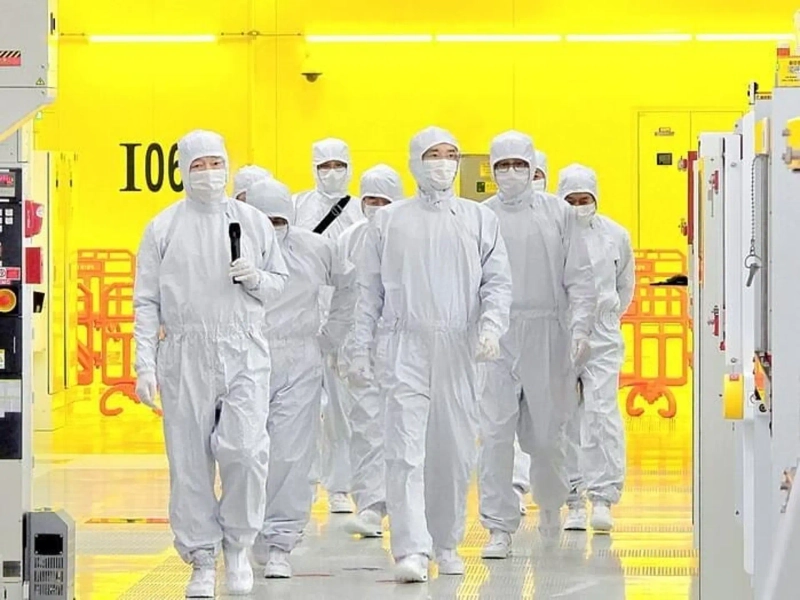
Samsung Electronics is poised to become the top player in the high-bandwidth memory market for the first time next year, powered by its sixth-generation HBM4 chips. UBS said the shift from fifth-generation HBM3E to HBM4 will tilt the market toward Samsung, which moved early into mass production. SK Hynix is also stepping up capital spending and long-term supply agreements, setting the stage for a more intense battle for HBM leadership.
Why HBM4 Is a Game Changer
UBS said in its first initiation report on SK Hynix American depositary receipts on August 1 that Samsung will catch up with SK Hynix in absolute HBM shipment volume from this year through next year, starting with HBM4.
Nicolas Gaudois, an analyst at UBS, wrote that SK Hynix will remain the market leader this year with 48% of HBM bit shipments. Samsung, however, is projected to move slightly ahead next year with a 41% share, compared with 39% for SK Hynix. Micron Technology is forecast to rank third with a 20% share.
UBS said leadership in HBM will shift toward Samsung as the market moves from HBM3E to HBM4. The bank cited Samsung's early HBM4 rollout after it shipped the industry's first mass-produced HBM4 product in February and expanded capacity at its Pyeongtaek and Yongin sites, rapidly narrowing the gap with SK Hynix.
HBM3E is an upgraded version of HBM3. HBM4, by contrast, marks a generational shift that changes the architecture of the memory itself. HBM3E focused on stacking DRAM chips more densely, up to 12 layers, to raise capacity and data throughput.
HBM4 goes beyond simply stacking memory higher. It doubles the input/output channels that move data between memory and graphics processing units to 2,048 from 1,024. In effect, that is like widening an eight-lane road into a 16-lane highway. Even if each car's top speed stays the same, far more vehicles can travel at once. HBM4 similarly boosts bandwidth, or the amount of data that can be processed at one time.
In an era when artificial intelligence systems must read and process huge amounts of data instantly, road width matters more than vehicle speed. Nvidia's adoption of HBM4 for its next-generation Rubin AI graphics processing unit reflects the need to reduce data bottlenecks in AI workloads.
HBM4's edge lies less in raw speed than in manufacturing technology. If the HBM3E race was about building a taller tower without collapse, HBM4 is more like adding a traffic control center beneath that tower. The base die at the bottom of HBM had previously served only as a platform connecting multiple DRAM stacks. In HBM4, it also directs how data moves and how quickly. That means manufacturers need not only DRAM expertise but also logic chip technology.
They also need the ability to connect DRAM precisely with through-silicon vias, electrodes far thinner than a human hair, use hybrid bonding to attach chips without gaps, and apply packaging technology that can dissipate heat generated as many chips operate at the same time. That is why HBM4 is emerging not just as a next-generation memory product, but as an integrated semiconductor platform combining memory, logic chips and advanced packaging.
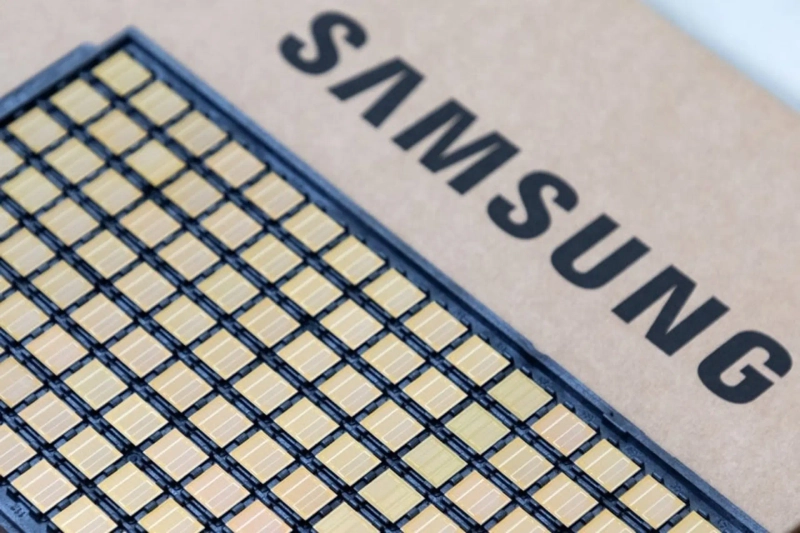
Samsung and SK Hynix Enter Full-Scale HBM4 Showdown
UBS had said in a May report that Samsung would reach parity with SK Hynix by next year. In its latest report, the bank moved up the timing for Samsung to take the lead. Nvidia had been cautious about buying Samsung's HBM3E through last year, but is now showing a more active stance on adopting HBM4.
AMD has also chosen Samsung as its main supplier and is placing Samsung's HBM4 first in its next-generation AI system, Helios. That suggests SK Hynix's dominant position could come under pressure as the market enters the HBM4 generation.
UBS said the timing of HBM4's contribution to earnings is also creating a gap between the two companies. SK Hynix's average DRAM selling price rose 30% in the second quarter from the previous quarter, but the increase was limited because HBM4 shipments only began ramping up in earnest late in the quarter. While Samsung raised HBM4 volumes earlier and expanded supply to Nvidia and AMD, SK Hynix was slower to transition to HBM4, delaying the benefit from higher pricing.
SK Hynix is responding by increasing capital spending. UBS said the company's management raised its full-year capital expenditure guidance to the upper 40 trillion-won range during its second-quarter earnings call. But its expansion pace may still lag Samsung's because Samsung has secured a large amount of idle land for future additions in Pyeongtaek, while SK Hynix relies on existing production bases in Icheon and Cheongju.
SK Hynix also said renegotiations of long-term supply agreements are moving faster than expected. The company has signed 10 such agreements, including contracts with US hyperscalers, or operators of large data centers, and major original equipment manufacturers. UBS said those contracts may limit near-term upside in selling prices, but should support profitability and shareholder returns over the longer term.
Still, UBS said losing the top HBM spot would not mean slower growth for SK Hynix. The bank projects global DRAM bit growth, measured by shipment volume, to accelerate to 36% next year from 22% this year. NAND flash bit demand growth is also forecast to rise to 23% from 20% over the same period.
Supply, however, continues to lag demand. Most newly added DRAM wafer capacity is being allocated to HBM, while new NAND capacity investment remains limited outside China in the short term. UBS said those structural supply constraints could leave the memory market in shortage through 2028.
Kang Kyung-ju, Hankyung.com reporter qurasoha@hankyung.com

Korea Economic Daily
hankyung@bloomingbit.ioThe Korea Economic Daily Global is a digital media where latest news on Korean companies, industries, and financial markets.