Bank of Korea to Buy Physical Gold for First Time Since 2013 on Geopolitical Risks
Summary
- The Bank of Korea said it will buy domestically produced physical gold for the first time in 13 years as it moves to increase the share of gold in its foreign-exchange reserves.
- The Bank of Korea also said it bought a small amount of gold exchange-traded funds (ETFs) for the first time in the second quarter of this year, linking the move to rising interest in safe-haven assets.
- Still, the purchases are limited to export volumes of domestically produced gold totaling 4 to 5 tons a year, prompting views that the effect on increasing the share of gold in foreign-exchange reserves and on the market will be limited.
Forecast Trend Report by Period


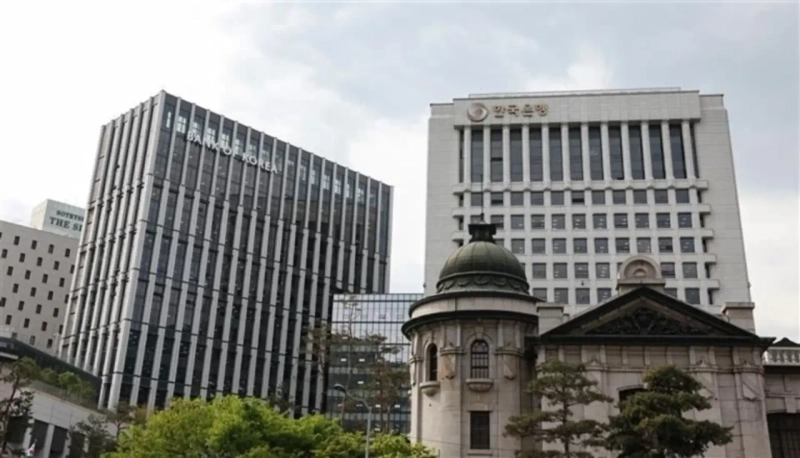
The Bank of Korea will buy physical gold for the first time in 13 years.
The central bank said on Aug. 3 that its reserve management group formed a cooperation framework on July 20 with LS MnM, the Korea Exchange and the Korea Securities Depository to build the infrastructure needed to purchase domestically produced gold.
The scheme covers gold secured during the refining process by domestic smelters including LS MnM and Korea Zinc. It applies to volumes slated for export after domestic demand is met, equivalent to 4 to 5 tons a year.
If a producer requests a sale, the BOK will review market conditions and its reserve management plan before deciding whether to proceed with a transaction.
To prevent price volatility in the domestic exchange market, the central bank will use negotiated block trades in the Korea Exchange's gold market. The Korea Securities Depository will handle custody and settlement.
It will be the BOK's first physical gold purchase since 2013.
The central bank bought a total of 90 tons between 2011 and 2013, lifting its holdings to 104.4 tons. It then halted additional purchases, leaving gold at 3.5% of its foreign-exchange reserves, ranking it around 39th to 40th globally.
The BOK also said it bought a small amount of gold exchange-traded funds in the form of securities for the first time in the second quarter of this year.
Rising geopolitical risks have increased interest in safe-haven assets, while gold still accounts for a small share of the country's foreign-exchange reserves, Lee Chang-heon, head of the investment planning team at the BOK's reserve management group, said. He added that this calls for a medium- to long-term expansion.
The Ministry of Economy and Finance has also prepared support measures through a proposed tax-law revision. The plan would exempt the BOK from value-added tax when it withdraws gold bars purchased on the exchange.
Still, the impact may be limited. Export volumes of eligible domestically produced gold total only 4 to 5 tons a year, limiting any meaningful increase in gold's share of foreign-exchange reserves or broader market effects.
The BOK is not targeting any specific price, Jeong Hee-seop, head of the central bank's reserve management group, said. When companies make requests, it will decide whether to trade after weighing domestic and overseas prices.
Park Sang-kyung, Hankyung.com reporter highseoul@hankyung.com

Korea Economic Daily
hankyung@bloomingbit.ioThe Korea Economic Daily Global is a digital media where latest news on Korean companies, industries, and financial markets.