South Korea to Invest Future-Response Fund Surplus in Stocks, Bonds
Summary
- South Korea’s Ministry of Planning and Budget said it will invest surplus money from the Future-Response Fund, built from higher tax revenue driven in part by the semiconductor boom, in stocks and bonds and other assets to generate returns above market interest rates.
- Minister Park Hong-geun said part of the Future-Response Fund will be deployed directly in strategic areas including future growth sectors, growth engines, regional development, education and talent, while the remaining surplus will be managed as financial assets.
- The government said it is pursuing the creation of the Future-Response Fund so that increased tax revenue is not spent within a single year but instead used for medium- to long-term growth investment and as a resource for responding to economic downturns.
Forecast Trend Report by Period


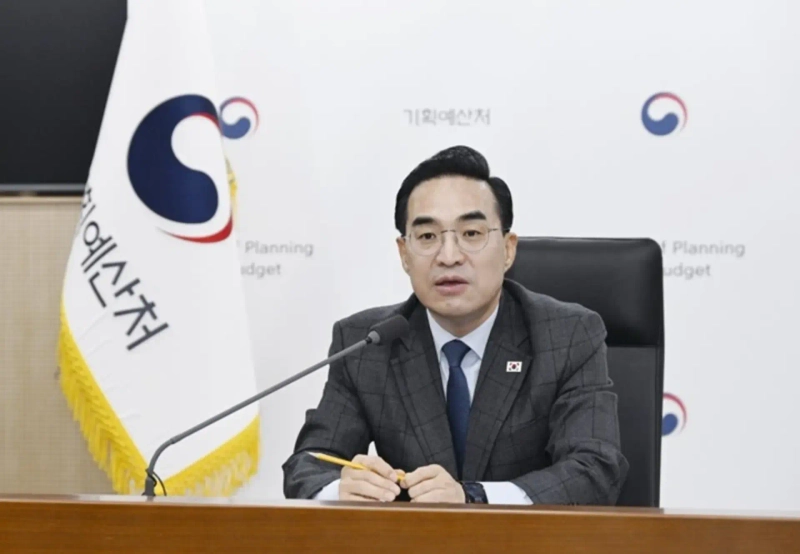
South Korea’s Ministry of Planning and Budget plans to invest surplus money from a proposed future-response fund in assets including stocks and bonds, using higher tax revenue from the semiconductor boom and other factors. The government wants outside asset managers to run the money and earn returns above market interest rates.
Planning and Budget Minister Park Hong-geun said on SBS’s “Joo Young-jin’s News Briefing” on August 5 that the surplus would be invested through asset managers in bonds, stocks and other assets offering returns above prevailing market rates. He outlined two pillars for the fund’s management.
Part of the fund will be deployed directly in strategic areas including future growth sectors, growth engines, regional development, education and talent. The remaining surplus will be managed as financial assets, including stocks and bonds.
The government also plans to keep part of the money available in case tax revenue comes in short or a supplementary budget is needed. The fund will be managed along those two tracks.
The future-response fund is a new vehicle the government is seeking to create so that increased tax revenue is not spent in a single year, but instead used for medium- to long-term growth investment and as a source of funds to respond to economic downturns. Park said the fund’s exact size would be determined after a tax revenue re-estimate in September and the release of next year’s revenue outlook.
Park also reaffirmed the government’s plan to overhaul local education grants. Over the past 20 years, grants fell from the previous year six times, he said, adding that the government would guarantee the existing upward trend in grant allocations even after changing the system.
Rather than simply cutting funding for elementary and secondary education, the government plans to reallocate money to higher education, lifelong education, job-transition training and early childhood education, he said.
The government is reviewing a plan to replace the current formula for education grants, which is automatically linked to a fixed share of domestic tax revenue, with one that reflects the school-age population and economic growth. The aim is to adjust fiscal allocations across the education sector by changing a structure under which grants for elementary and secondary education rise automatically with tax revenue even as births and student numbers decline.
Provincial and metropolitan education offices are opposing the move, saying scrapping the tax-linkage system could reduce funding for elementary and secondary education. It remains unclear whether the government’s pledge to preserve the existing growth trend refers to the total amount of grants, grants per student or a guaranteed rate of increase.
Kim Ik-hwan, Hankyung.com reporter lovepen@hankyung.com

Korea Economic Daily
hankyung@bloomingbit.ioThe Korea Economic Daily Global is a digital media where latest news on Korean companies, industries, and financial markets.