SpaceX Faces Bigger Test Than Earnings as 912 Million Shares Come Off Lockup Starting Aug. 6
Summary
- Starting Aug. 6, the lockup expiration could release as many as 912 million shares into the market, stoking concern about downward pressure on the stock and sharper trading volatility.
- SpaceX shares fell more than 10% in premarket trading despite $7.8 billion in second-quarter revenue, a 66% increase in Starlink revenue, a 250% surge in AI business revenue, and a narrower operating loss.
- With second-quarter capital expenditures surging sixfold to $18.4 billion, investor concern has grown. The CFO said the payback period for AI computing investments is less than one year, while critics questioned the sustainability of relying on Starlink profits.
Forecast Trend Report by Period


Up to 912 million shares could gradually hit the market
Stock sinks more than 10% despite a narrower-than-expected loss in its first quarterly report
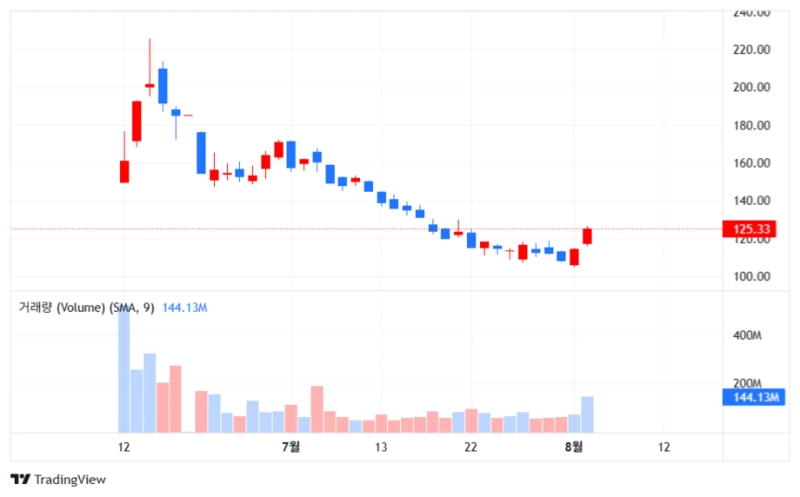
SpaceX shares fell more than 10% in U.S. premarket trading on Aug. 5 even after the company reported a narrower loss and pledged substantial revenue growth. Investor anxiety over a lockup expiration beginning Aug. 6 is dragging on the stock.
At 7:30 a.m. in New York on Aug. 5, the shares were down 11% at $110.
The tougher challenge may start on Aug. 6, when lockup restrictions begin to lift. A large block of stock held by insiders and early investors could then reach the market. As many as 912 million shares may become eligible for sale, potentially adding downward pressure on the stock.
That is a huge volume given that only about 640 million shares initially entered the market, including 555.55 million newly issued shares sold in the IPO and shares from the underwriters' overallotment option.
Who sells, or cuts back holdings, could have a major impact on market sentiment toward the company's outlook, Reuters reported.
Robert Hackel, chief executive officer of institutional brokerage RF Lafferty & Co., said some holders are interested in selling part of their SpaceX stakes to buy private shares in potential IPO candidates including Anthropic, OpenAI and defense-technology startup Anduril.
Matt Kennedy, chief strategist at IPO research and investment-fund provider Renaissance Capital, said SpaceX employees and early investors have made enormous gains, giving them a strong incentive to take profits and diversify their portfolios.
Brian Mulberry, chief market strategist at Zacks Investment Management, said the sharp post-earnings drop likely reflected concern about the lockup expiration.
After an IPO, insiders are typically barred from selling shares for a fixed period. In SpaceX's case, banks arranged for billions of shares to be sold gradually over a year rather than all at once. The lockup expiration will play out over nearly a year. Early backers including Founders Fund, Sequoia Capital, Alphabet and Fidelity, along with employees, are estimated to hold 4.6 billion to 6.4 billion shares.
Because the current public float is so limited, the first lockup expiration alone could more than double the number of tradable shares. If an early-release clause tied to the share price is triggered, the float could more than triple.
Andrew Chanin, chief executive officer of ProcureAM, which manages the Procure Space ETF under ticker UFO, said the shares that come to market after the lockup ends will test whether early investors still back the company for the long term. The exchange-traded fund has about 6% of its assets invested in SpaceX.
Lucas Muhlbauer, a researcher at IPOX, also said the scale of selling by early investors would be a strong signal of confidence in SpaceX's outlook.
Gabriel Shahin, founder of Falcon Wealth Planning, said he is using his network of SpaceX insiders and employees to assess whether large-scale selling is coming. Based on his analysis, insiders generally retain long-term conviction and few are looking to sell aggressively.
Still, he said the upcoming lockup expirations are likely to intensify trading volatility. SpaceX's share swings have already pushed options prices to exorbitant levels, making it difficult for investors to hedge against declines.
Meanwhile, in its first earnings report since going public, SpaceX said revenue totaled $7.8 billion from April through June. That was up from $4.1 billion a year earlier and topped Wall Street estimates. Starlink, which accounts for more than half of total revenue, posted a 66% increase in sales. Revenue from the AI business, which Musk has cast as a future growth engine, jumped about 250%.
The operating loss, which had been expected, narrowed to $143 million in the second quarter from $970 million a year earlier. Operating losses in the AI unit shrank, while Starlink operating profit rose 79%.
Investor concern grew, however, after second-quarter capital expenditures surged more than sixfold to $18.4 billion from $2.83 billion a year earlier.
Chief Financial Officer Brett Johnson said the payback period on new AI-computing investments is less than one year, seeking to calm investor concern over capital spending.
Starlink, the satellite-internet unit that serves as the company's main financial engine, doubled its subscriber base to 12 million by the end of the quarter. But average revenue per user fell 22% from a year earlier after the company introduced lower-cost plans.
Revenue in the space segment rose 29% from a year earlier. The business, which includes commercial launches, government missions and Starship development, remains a source of heavy costs and uncertainty.
In recent years, SpaceX has focused more on launches to build out its own satellite network than on carrying third-party payloads. It has also continued to spend heavily on Starship development. The company said it aims to reach $100 billion in annual revenue by the end of this year, while launching at least 1,000 next-generation V3 Starlink satellites and outlining plans to compete in mobile communications.
Steve Westly, founder of the Westly Group and a former Tesla board member, told CNBC on Aug. 5 that while SpaceX presents itself as the market leader, investors want to know how quickly it can grow and how much it will cost to achieve profitability.
Critics also argue that relying on Starlink profits to fund the AI business and Starship launches until those operations can stand on their own is not sustainable.
Kim Jeong-a, guest reporter

Korea Economic Daily
hankyung@bloomingbit.ioThe Korea Economic Daily Global is a digital media where latest news on Korean companies, industries, and financial markets.