Fitch Says Korea Stock Volatility Poses Limited Short-Term Credit Risk
Summary
- Fitch said the impact of South Korean stock-market volatility on short-term credit risk is limited.
- Fitch said brokerages may face short-term pressure from market volatility, but there are no signs of a meaningful deterioration in financial position.
- Foreign investment banks (IBs) maintained a constructive market outlook despite the Kospi’s plunge, with a 12-month target of 12,000.
Forecast Trend Report by Period


Fitch Ratings Report
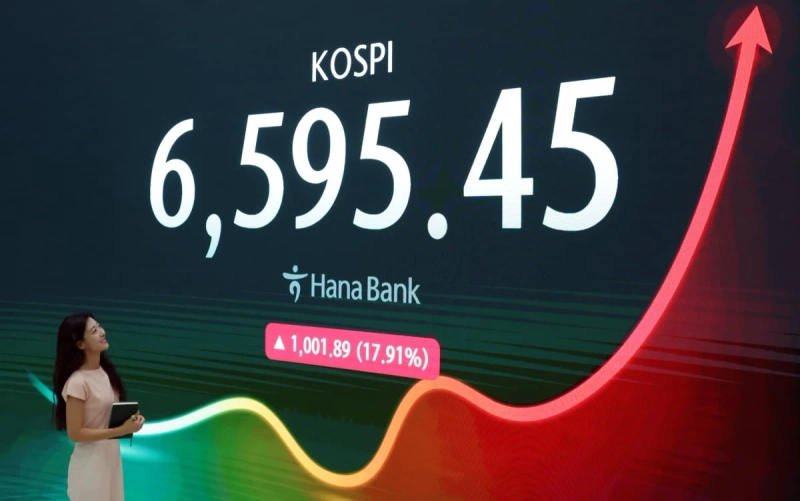
Fitch Ratings said recent volatility in South Korean stocks is having only a limited effect on short-term credit risk, even as the Kospi extends an unprecedented run of sharp swings. Last month, circuit breakers, which halt trading for 20 minutes, were triggered for two straight days in both the Kospi and Kosdaq markets for the first time on record.
In an Aug. 5 report, Fitch said South Korea’s solid economic backdrop and prudential safeguards across the financial system are helping preserve financial-market stability.
Fitch identified consumer sentiment, housing-market activity and financial firms’ earnings as the main channels through which stock-market volatility could affect credit risk.
If share weakness persists, the bigger drag may fall on housing demand and sentiment rather than consumer spending. Fitch cited Bank of Korea research showing that when stock prices rise by 10,000 won, only 1.3% of equity gains are used to fund consumption. The central bank estimated that households without homes directed 70% of profits from stock investments into home purchases. The study, based on consumption and asset data from 2011 to 2024, showed a lower stock-wealth effect than the 3% to 4% seen in Europe and the US.
Brokerages are facing the clearest near-term pressure. Even so, Fitch said there are no signs that current market volatility is leading to a meaningful deterioration in their financial position. Securities firms also entered the current correction with stronger profitability. Most brokerages that reported first-half earnings posted net income that roughly doubled from a year earlier, helped by higher brokerage commissions and margin-loan interest income. Retained earnings built up over the past two years should also help absorb weaker profit and potential losses, Fitch said.
For banks, the near-term impact is more likely to show up in slower business growth and softer profitability. Their direct exposure to stock-market volatility is relatively limited. There is still no clear evidence that households have sharply increased leverage to invest in stocks. Household lending growth at banks remained moderate at 3.8% in January through May from a year earlier. Fitch added that banks’ main exposure comes not from the stock market itself, but through housing and household credit conditions.
Fitch also said South Korea’s economy remains favorable. First-half gross domestic product data suggest growth could slightly exceed Fitch’s June forecast for full-year expansion of 2.6%. Strong exports and investment, led by semiconductors amid rising demand for artificial intelligence, sustained growth, while consumption also remained healthy. The Bank of Korea raised its benchmark interest rate by 25 basis points last month to 2.75% from 2.50%, citing stronger-than-expected growth. The move marked the first shift to a tightening stance since January 2023.
South Korean stocks, meanwhile, have been posting swings even more severe than during the global financial crisis. The Kospi tumbled 33% last month, surpassing the previous record for the steepest monthly drop set during the Asian financial crisis in October 1997, when the index fell 27%. Even so, foreign investment banks have kept a constructive market view. Goldman Sachs said on Aug. 4 that the market is pricing in a more negative fundamental outlook than is justified, and maintained a 12-month target of 12,000.
Oh Jung-min, Hankyung.com reporter blooming@hankyung.com

Korea Economic Daily
hankyung@bloomingbit.ioThe Korea Economic Daily Global is a digital media where latest news on Korean companies, industries, and financial markets.